


What You’ll Learn:
- How house edge and odds shape outcomes
- When betting strategies help—or don’t
- Tips for smarter, disciplined play

Getting Started with Roulette Strategy
Before using any roulette strategy, understand how the game works. Each spin is independent and random, giving the casino a built-in edge. European roulette (37 pockets, 1 zero, 2.7% house edge) offers better odds than American (38 pockets, 2 zeros, 5.26%), making strategies more effective on European tables.
| Feature | European Roulette | American Roulette |
| Total Pockets | 37 | 38 |
| Zeros | 1 (0) | 2 (0, 00) |
| House Edge | 2.7% | 5.26% |
Progressive vs Non-Progressive Strategies
- Progressive (High Risk): Bets increase after losses. Example: Martingale doubles after each loss, requiring a larger bankroll.
- Non-Progressive (Lower Risk): Bets stay consistent. Example: James Bond strategy uses flat betting for steadier play.
Tip: Always pick European roulette when possible to maximize your odds.
Types of Roulette Strategy
Roulette strategies fall into two main types: progressive or non-progressive.
Progressive systems (Martingale, Reverse Martingale, Fibonacci) adjust bets based on previous outcomes. For example, Martingale doubles after each loss to recover past losses. These methods offer strong recovery potential but carry higher risk, require larger bankrolls, and can quickly hit table limits.
Non-progressive systems (James Bond, D’Alembert) keep bets fixed or adjust minimally. James Bond spreads wagers across multiple outside bets for steadier, controlled play.
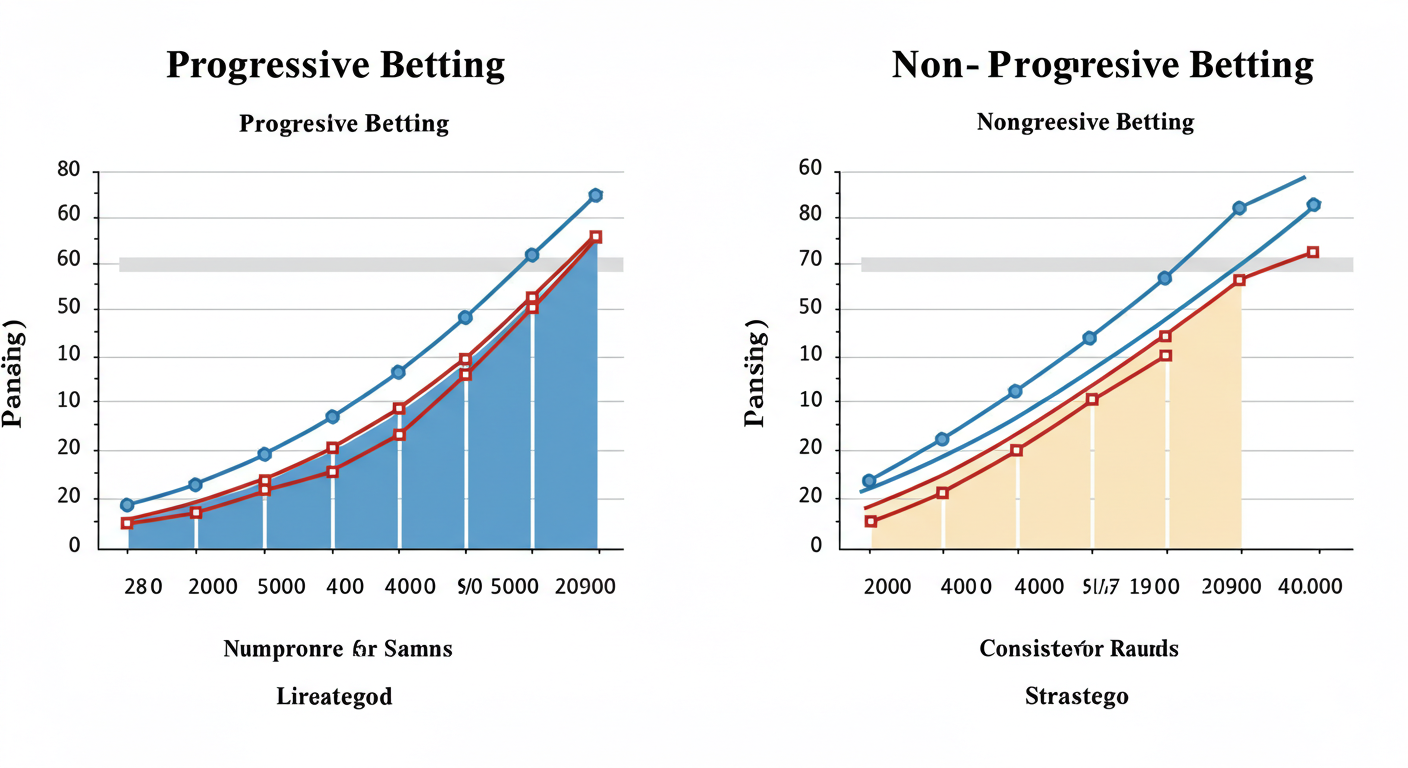
In short, progressive strategies risk more for higher recovery, while non-progressive strategies offer lower-risk, more consistent bankroll management.
The Best Roulette Strategies
Ready to dive deeper? Below are seven of the most popular roulette strategies, each explained in detail. Select any strategy to learn how it works, its advantages and drawbacks, and whether it fits your playing style and goals.
Martingale Roulette Strategy
The Martingale strategy doubles your bet after each loss so a single win recovers previous losses and earns your original stake. The Matringale strategy is high risk, high steaks. While simple, long losing streaks can escalate bets exponentially—e.g., starting at $5, seven losses in a row require a $640 bet to recover $635.
Each spin is independent; doubling bets does not change odds (gambler’s fallacy). High risk and table limits make bankroll depletion likely, especially on American roulette with a higher house edge.
Pros:
- Simple to understand and apply
- One win recovers all losses
- Effective for short-term play
- Popular in casinos
Cons:
- Exponential bet growth
- High risk of rapid bankroll loss
- Table limits can block recovery
- Requires large bankroll and strong discipline
Martingale can be used cautiously in short sessions. Tools and insights at PLG.BET can help you evaluate strategy suitability and manage risk.
Betting progression example:
| Spin | Bet ($) | Result | Profit/Loss ($) |
| 1 | 5 | Lose | -5 |
| 2 | 10 | Lose | -15 |
| 3 | 20 | Lose | -35 |
| 4 | 40 | Win | +5 |
| 5 | 5 | … | … |
Source: Casino.org
Grand Martingale Roulette Strategy
The Grand Martingale greatly increases financial exposure creating high risks. Bets grow faster than standard Martingale, so losses can escalate quickly, consuming large amounts of money.
The Grand Martingale doubles your previous bet and adds the original stake, unlike standard Martingale which only doubles. For example, after a $10 loss:
- Martingale: next bet $20
- Grand Martingale: next bet $30
This sharper progression can recover losses faster but carries much higher risk and requires significantly more capital.
Pros:
- Faster loss recovery than standard Martingale
- Higher short-term profit potential
- Appeals to high-risk players
Cons:
- Extremely high risk compared to Martingale
- Capital requirements escalate rapidly
- Table limits reached sooner
- One losing streak can cause major losses
Best suited for aggressive players on European roulette; not recommended for cautious bettors.
D’Alembert Roulette Strategy
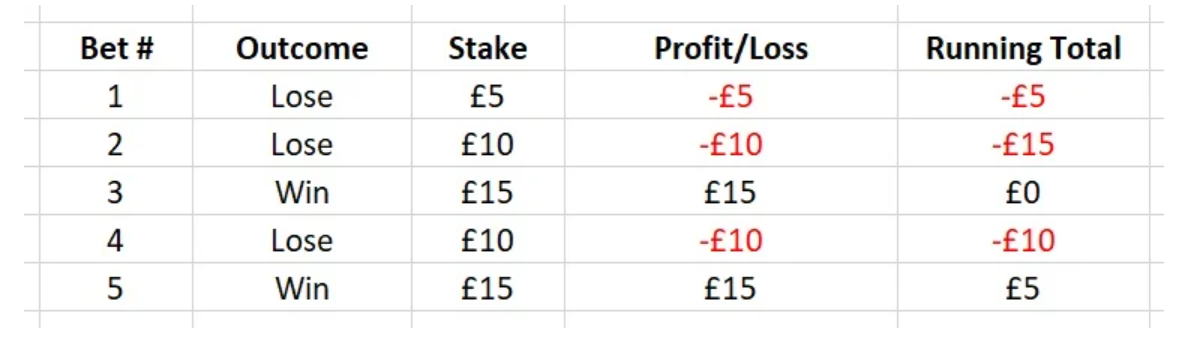
The D’Alembert strategy is a conservative roulette system based on probability’s equilibrium concept: wins and losses tend to balance out over time. After each loss, increase your bet by one unit; after a win, decrease it by one. For example, a $5 loss → next bet $6; win → back to $5. Unlike Martingale’s doubling, this gradual approach limits volatility and supports effective risk management.
Pros:
- Gradual bet progression
- Easier bankroll management
- Less volatile than aggressive systems
- Good for beginners
Cons:
- Slower recovery from losses
- Vulnerable to extended losing streaks
- Requires patience and discipline
This system is considered safer than aggressive strategies because increases are fixed at one unit, not exponential. Works best on European roulette. For more guidance on applying D’Alembert and other strategies, visit PLG.BET.
Andrucci Roulette Strategy
The Andrucci strategy is based on flawed logic. Roulette spins are completely random, and each spin is statistically independent. Past results do not influence future outcomes, no matter how often a number appears, making this strategy the least recommended.
This high-risk system relies on tracking “hot” numbers over 30 spins and betting on them, assuming patterns will continue. This approach is rooted in the gambler’s fallacy and superstition rather than mathematics. Roulette has no memory; every spin has identical odds.
Pros:
- Simple and easy to follow
- Can feel exciting and engaging
Cons:
- No mathematical foundation
- Encourages gambler’s fallacy thinking
- Rapid losses likely
- Not suitable for long-term play
The Andrucci strategy may appeal to players who enjoy pattern-spotting, but experts strongly advise avoiding it due to its lack of statistical validity and high risk.
Fibonacci Roulette Strategy
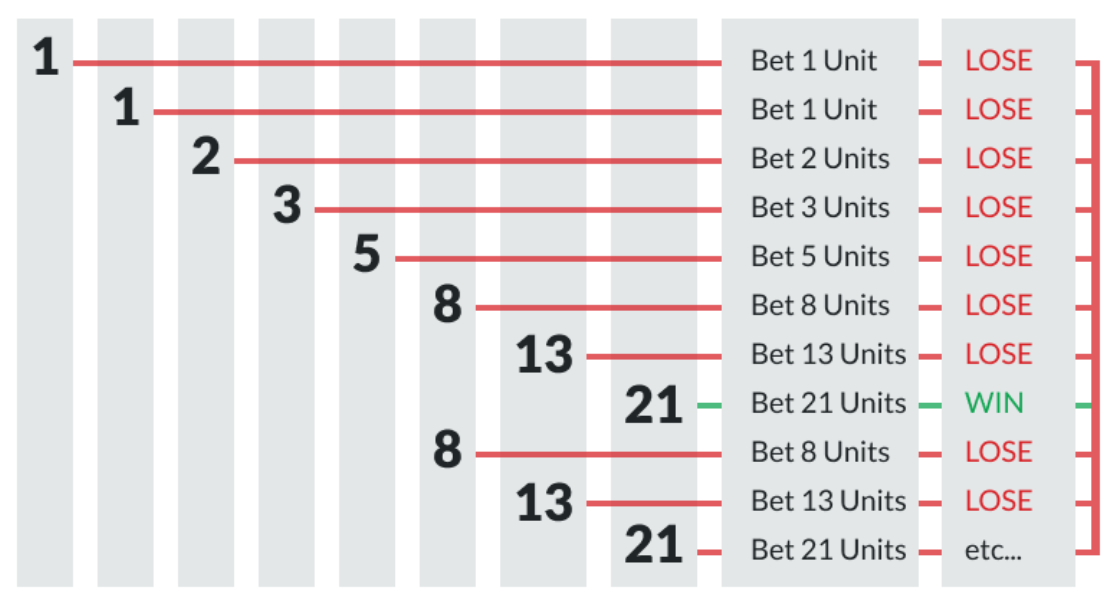
The Fibonacci strategy uses the sequence 1, 1, 2, 3, 5, 8… to set bets. After a loss, move forward one step; after a win, move back two. This gradual progression aims to recover losses slowly, appealing to players who prefer controlled pacing.
Example: base $1 → lose twice ($1, $1), next bets $2, $3. Win at $5 → move back to $2.
While less aggressive than Martingale, long losing streaks can still escalate bets, so careful tracking and discipline are essential.
Pro Tip: Always write down your current position in the sequence to avoid costly mistakes during play.
Pros & Cons
Pros
- Gradual bet increases
- Less aggressive than Martingale
- Based on a well-known mathematical sequence
- Suitable for cautious players
Cons
- Bets can still escalate during long losses
- Requires constant attention and tracking
- Does not overcome the house edge
- Slower recovery than aggressive systems
This strategy works best on even-odds bets in European roulette and is best used for fun rather than guaranteed profit.
James Bond Roulette Strategy
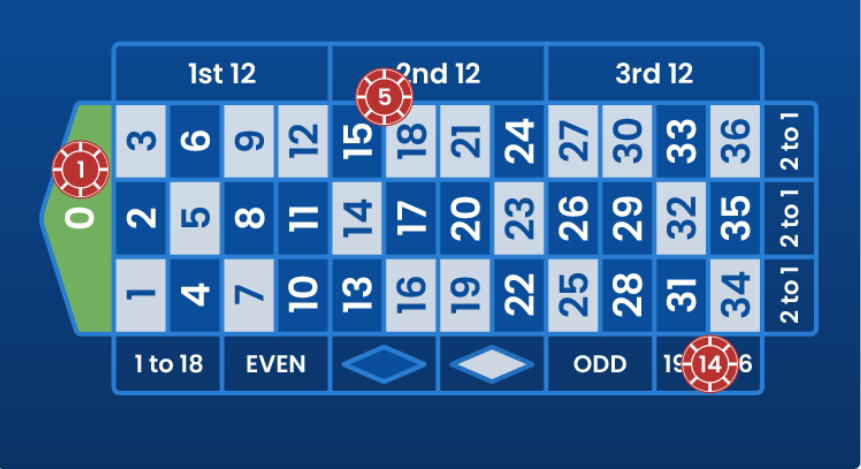
The James Bond roulette strategy is a bold, high-stakes system inspired by the fictional spy’s calculated yet daring style. It uses a fixed $200 flat-bet structure per spin, divided into three wagers: $140 on numbers 19–36, $50 on numbers 13–18, and $10 on zero. This layout covers 25 of 37 numbers on a European roulette wheel, representing 67.6% coverage, which helps players visualize the true odds involved.
If the ball lands on any covered number, the player can win between $80 and $160, depending on the outcome. Only numbers 1–12 result in a full loss, making this approach less risky than betting on a single number—but still significant due to the high entry cost.
Pros & Cons
Pros
- Covers most outcomes on the wheel
- Simple, flat-bet execution
- Exciting, high-reward potential
- Lower risk than straight-up bets
Cons
- Requires a large minimum stake
- One loss is costly
- Uncovered 1–12 range loses everything
- Not suitable for small budgets
For players comparing high-stake systems, resources like PLG.BET can help evaluate whether this strategy fits your budget and risk tolerance.
Paroli Roulette Strategy
The Paroli strategy (Reverse Martingale) increases bets only after wins and resets to the base amount after a loss. This defensive system focuses on risk management, protecting your bankroll while allowing you to capitalize on short winning streaks. Each spin remains independent, so no system changes the probability of outcomes, making the Paroli strategy moderately risky.
Example: Start with $10. Win → bet $20. Win → bet $40. After three wins or a loss, reset to $10. Set a clear win limit to maintain discipline.
Pros:
- Limits losses during losing streaks
- Capitalizes on winning runs
- Psychologically easier than Martingale
- Easier bankroll control
Cons:
- Requires consecutive wins to profit
- Progress resets quickly after losses
- Discipline needed to avoid chasing losses
- Slower growth than Martingale
Paroli works best for short sessions. Platforms like PLG.BET can help compare strategies and plan your progression limits effectively.
666 Strategy
The 666 Strategy is a high-coverage system requiring $66+ per spin and a large bankroll. Bets cover 33 of 37 numbers (red numbers, black splits, 0–2–3 street), giving ~89% win probability. Profit per spin is $6, but one loss wipes ~11 wins. Despite high coverage, losses can grow quickly, and the house edge still applies.
Bet Distribution Example ($66 Minimum Stake):
| Bet Type | Numbers Covered | Stake per Bet | Total Stake |
| Straight-up red numbers | 19, 21, 23, 25, 27, 30, 32, 34, 36 | $2 | $18 |
| Black split bets | 4-7, 12-15, 18-21 | $4 | $12 |
| Red/Black splits & street | 5-6, 8-11, 0-2-3 | $6 | $36 |
| Total | 33 numbers | — | $66 |
Pros:
- Covers most numbers on the wheel (33 of 37)
- High chance of winning individual spins
- Exciting, high-coverage gameplay
Cons:
- Very high capital requirement ($66 minimum per spin)
- Low profit relative to risk ($6 per $66)
- One loss wipes out multiple wins (~11)
- Does not overcome house edge long-term
This system can feel safe due to broad coverage, but the odds and casino game mechanics ensure the house still wins over time. Players exploring high-coverage strategies can use platforms like PLG.BET to compare risk and potential reward before committing large stakes.
Oscar's Grind Strategy
The Oscar’s Grind strategy is a conservative positive progression system designed to achieve a target of one unit profit per cycle. Named after a gambler who reportedly used it successfully in Las Vegas, the system gradually increases bets only after wins and keeps the same bet size after losses. Each cycle continues until one unit of profit is achieved, then resets.
Mechanism Example: Start with a $10 base bet.
| Spin | Bet | Result | Profit | Running Total |
|---|---|---|---|---|
| 1 | $10 | Lose | -$10 | -$10 |
| 2 | $10 | Win | +$10 | $0 |
| 3 | $10 | Win | +$10 | +$10 → Cycle complete |
Pro Tip: Patience is essential. Rushing through spins defeats the conservative purpose of this system.
After reaching a one-unit profit, the next spin restarts the cycle at $10. This slow, methodical approach minimizes risk escalation during losing streaks and makes it suitable for long gameplay sessions.
Pros & Cons
Pros
- Conservative, limits risk per cycle
- Gradual, controlled bet progression
- Moderate bankroll requirements
- Suitable for long-term play
- Easy to understand and follow
Cons
- Slow profit accumulation
- Requires patience and discipline
- Dependent on multiple wins to complete cycle
- Less exciting than high-risk systems
This strategy emphasizes risk management and realistic probability expectations, making it ideal for players seeking steady, low-volatility progression over time.
Factors Affecting Roulette Betting Strategy
Key Factors
- Betting Limits: Minimum and maximum bets set your safe stake range. Adjusting wisely protects your bankroll and keeps you in the game.
- Game Type: European (single-zero) has lower house edge than American (double-zero). Game choice affects probabilities and strategy.
- Bet Choice: Outside bets (red/black, odd/even) are safer with smaller payouts; inside bets (single numbers) pay more but win less often
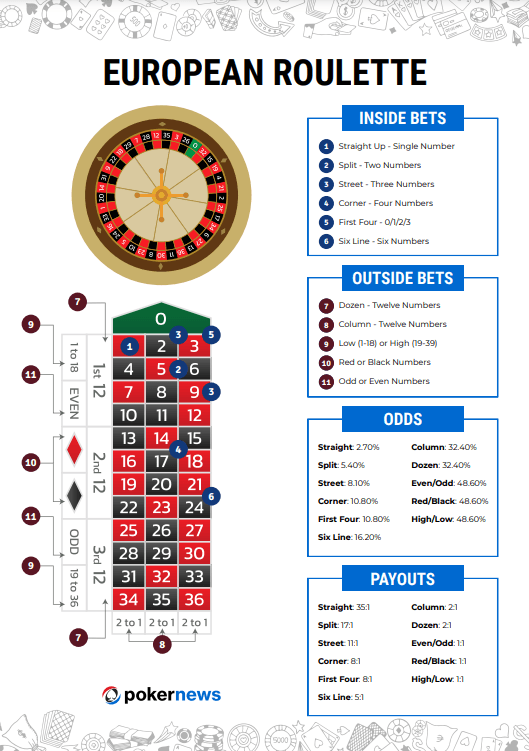
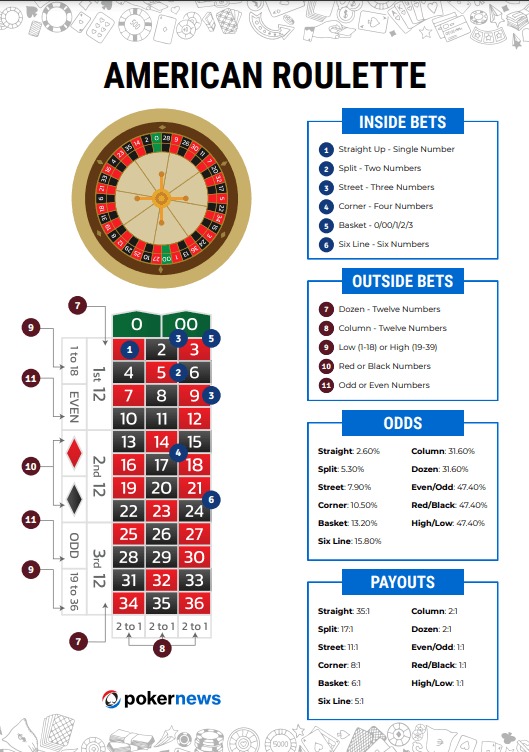
Pro Tip: Choose your bet selection based on your goals—longer play favors outside bets, while high-risk bets offer bigger payouts but higher volatility.
Expected Value Comparison
| Bet Type | House Edge / EV | Notes |
|---|---|---|
| Straight-up | -2.7% | High payout, low probability |
| Split | -2.7% | Moderate payout, moderate probability |
| Red/Black | -2.7% | Even-money, low variance |
| Dozen | -2.7% | Even-money, moderate coverage |
All bets have the same negative EV; only variance and payout differ. Knowing EV helps match your strategy to goals—long play or big wins. Considering limits, game type, bet choice, and risk tolerance lets you manage your bankroll and enjoy longer, smarter sessions.
Roulette Bet Types and Their Odds
Understanding roulette bet types is essential for effective play. Bets are broadly divided into inside bets (higher risk, higher payout) and outside bets (lower risk, lower payout), each with its own odds, probability, and risk profile.
Inside Bets
- Straight-up: Bet on a single number. Payout 35:1. Probability 1/37 ≈ 2.7%.
- Split: Bet on two adjacent numbers. Payout 17:1. Probability 2/37 ≈ 5.4%.
- Street: Bet on three numbers in a row. Payout 11:1. Probability 3/37 ≈ 8.1%.
- Corner (Square): Bet on four numbers. Payout 8:1. Probability 4/37 ≈ 10.8%.
- Line (Six Line): Bet on six numbers. Payout 5:1. Probability 6/37 ≈ 16.2%.
Outside Bets
- Red/Black: Even money, 1:1 payout. Probability 18/37 ≈ 48.6%.
- Odd/Even: Even money, 1:1 payout. Probability 18/37 ≈ 48.6%.
- High/Low (1–18 / 19–36): 1:1 payout, probability 18/37 ≈ 48.6%.
- Dozens: Bet on 1–12, 13–24, or 25–36. Payout 2:1. Probability 12/37 ≈ 32.4%.
- Columns: Bet on vertical columns. Payout 2:1. Probability 12/37 ≈ 32.4%.
| Bet Type | Payout | Probability (European) | House Edge |
| Straight-up | 35:1 | 2.7% | 2.7% |
| Split | 17:1 | 5.4% | 2.7% |
| Street | 11:1 | 8.1% | 2.7% |
| Corner | 8:1 | 10.8% | 2.7% |
| Line | 5:1 | 16.2% | 2.7% |
| Red/Black | 1:1 | 48.6% | 2.7% |
| Odd/Even | 1:1 | 48.6% | 2.7% |
| High/Low | 1:1 | 48.6% | 2.7% |
| Dozens | 2:1 | 32.4% | 2.7% |
| Columns | 2:1 | 32.4% | 2.7% |
Risk Comparison:
- Inside bets: high variance, larger payouts, suitable for flat betting systems.
- Outside bets: lower variance, steady returns, ideal for beginners or progressive betting systems.
Key Takeaway: All bets share the same house edge (2.7% on European roulette).
For additional insights and strategies tailored to European and American roulette, check PLG.BET.
Mathematical Analysis: Can You Beat Roulette?
Myth Buster: You cannot predict spins. Each spin is statistically independent, and the ball has no memory.
Roulette is a casino game grounded in mathematics, probability, and randomness. The house edge ensures the casino profits over time, regardless of betting strategies. On a European wheel, the house edge for even-money bets can be calculated as:
House Edge = (36/37 × -1) + (1/37 × 36) = -2.7%
This means that for every €100 wagered, the expected value (EV) is approximately €97.30.
| Bet Amount | Expected Return (1 Spin) | Expected Return (100 Spins) | Expected Return (500 Spins) | Expected Return (1000 Spins) |
| €10 | €9.73 | €973 | €4,865 | €9,730 |
| €50 | €48.65 | €4,865 | €24,325 | €48,650 |
Different betting systems don’t change probabilities. Short-term wins/losses vary, but long-term results follow the law of large numbers.
Myth Buster: No system beats the house edge—believing otherwise is the gambler’s fallacy.
Key Takeaway: Strategies help manage bankroll and risk, but the house always wins over time; roulette is chance, not prediction.
Is Roulette Skill or Luck?
Roulette is entirely luck-based; each spin is governed by physics and randomness. No skill, formula, or strategy can affect the outcome.
Players can control:
- Choice of strategy (Martingale, Fibonacci, etc.)
- Bet size and bankroll
- Session length and when to stop
Players cannot control:
- The number the ball lands on
- Spin results
| Control | No Control |
| Bet sizing | Spin outcome |
| Bankroll management | Ball landing number |
| Session length | Randomness of wheel |
| Stopping point | Probability of hits |
Pro Tip: Focus on what you can control—bet sizing, bankroll, and session length—and accept the outcomes you cannot.
Key Takeaway: Luck determines the results of roulette, but skill lies in how you manage your money, your decisions, and your discipline while playing a casino game of pure chance.
How to Choose the Best Roulette Strategy for You
Beginners may favor small, steady bets, while experienced players might try advanced systems like the James Bond strategy. Knowing your objectives is essential.
Ask yourself these three quick self-assessment questions to guide your strategy choice:
1. What’s your risk tolerance?
- Conservative: Opt for gradual progression strategies like D’Alembert or Paroli.
- Aggressive: Systems like Martingale or Grand Martingale can maximize potential short-term gains but increase risk.
2. What’s your bankroll size?
- Small: Stick to outside bets or flat betting systems to protect capital.
- Large: Progressive systems can be explored, but only with careful risk management.
3. What’s your goal?
- Long session: Conservative systems help extend gameplay while controlling losses.
- Quick big win: Aggressive strategies and inside bets offer higher payouts but greater volatility.
Finally, always pair your chosen system with solid bankroll management. Know how much money you’re willing to risk and when to stop.
Pro Tip: Start conservative. Only increase aggression if your bankroll and experience support it.
10 Practical Tips for Smarter Roulette Play
Looking to improve your chances at the spinning wheel? These ten experience-backed tips will help you navigate this classic casino game with more confidence and control. Whether you’re a casual player or exploring advanced strategies, these insights guide smarter, responsible gameplay.

1. Start with Free Practice Rounds
Before risking your own funds, try demo modes at reputable sites or free roulette apps. This helps you understand wheel mechanics, test strategies, and build confidence without financial pressure.
2. Understand the Layout and Rules
Know the differences between single-zero (European) and double-zero (American) wheels, as well as how numbers are grouped.
3. Stick to Low-Risk Options
Focus on nearly 50/50 bets like red/black or odd/even. These bets offer steadier gameplay and allow you to manage your bankroll over longer sessions.
4. Avoid Chasing Losses
Resist the urge to increase bets after a loss. Each spin is independent, and chasing losses often leads to larger financial setbacks.
5. Use Small Wagers Over Time
Risk no more than 5% of your bankroll per session, and place 1–2% per individual bet. This spreads risk, allows longer play, and makes testing different strategies manageable.
6. Take Advantage of Casino Offers
Use welcome bonuses or loyalty rewards to extend your session without dipping further into your own money.
7. Set a Clear Limit
Decide exactly how much money you’re willing to spend before playing. This protects you from emotional decisions and ensures fun remains the focus.
8. Don’t Rely on Patterns
The wheel doesn’t “owe” anyone a win. Avoid reading too much into previous results; roulette outcomes are completely random.
9. Know When to Walk Away
Set profit targets or time limits. Sometimes the best decision is simply stepping away when you’re ahead.
10. Play for Enjoyment, Not Profit
Roulette is a game of chance. Improving your odds is possible through strategy and risk management, but the goal should always be entertainment.
Quick Fact: European roulette offers a 2.7% house edge, slightly better than American roulette’s 5.26%, giving you better long-term odds.
Whether trying methods like the James Bond strategy or playing casually, these tips encourage responsible gambling, balanced money management, and more enjoyable gameplay.
Common Roulette Myths Debunked
Roulette is a game of chance, yet superstition and the gambler’s fallacy mislead many players. Below are six common myths, why they’re false, and key takeaways based on probability, randomness, and regulation.
| Myth | Reality | Key Takeaway |
| 1. Hot and Cold Numbers Exist | Every number has equal 1/37 probability on a European wheel every spin. | Each spin is independent; hot or cold numbers are purely psychological. |
| 2. Previous Spins Affect the Next Spin | Roulette outcomes are statistically independent from prior spins. | Each spin is a fresh event; past results do not influence probability. |
| 3. You’re Due for a Win After Losses | Belief in “due” wins is the gambler’s fallacy. Probability stays the same regardless of streaks. | Losing streaks don’t increase future chances; each spin remains random. |
| 4. Dealers Can Control the Ball | Physical factors like wheel speed and ball dynamics make precise control impossible in regulated casinos. | Dealer manipulation is a myth; outcomes are determined by random physics. |
| 5. Betting Systems Guarantee Profits | Systems like Martingale or Fibonacci face the same house edge. No strategy can ensure winnings. | No betting system can overcome casino probability; risk management is key. |
| 6. Casinos Manipulate Online Roulette | Licensed online operators use certified RNGs, audited to guarantee fairness. | Online roulette is mathematically fair when played on regulated platforms. |
Why These Myths Persist
Psychological biases, superstition, and desire to find patterns make these myths appealing. Understanding randomness, probability, and the gambler’s fallacy helps players maintain rational and enjoyable gameplay.
Responsible Gambling Tips
- Set time and loss limits before playing.
- Treat roulette as entertainment, not income.
- Use casino tools for self-exclusion or deposit limits.
Warning Signs of Problem Gambling
- Chasing losses or increasing bets impulsively
- Hiding gambling activity or spending essential money
- Anxiety, guilt, or irritability related to gambling
Self-Assessment Questions
- Do you often think about your next gambling session?
- Have you bet more than you could afford?
- Has gambling affected relationships or work?
Help & Resources
- BeGambleAware.org
- Gamblers Anonymous
- National Council on Problem Gambling
How to Practice Roulette Strategy
Practicing different roulette strategies helps refine skills and understand each system. This guide shows seven popular methods with examples, risks, and practical tips.

Martingale Method
Overview: Double your wager after each loss to recover all previous losses with a single win.
Implementation:
- Initial Wager: $10
- After a Loss: Double previous stake (e.g., $10 → $20)
- After a Win: Return to base wager ($10)
Example Sequence:
Stake $10 → Lose
Stake $20 → Lose
Stake $40 → Win
Return to $10
Risks: Can lead to significant losses during long losing streaks or reach table limits.
Reverse Martingale (Paroli) Method
Overview: Double your bet after each win to ride winning streaks.
Implementation: Start $10; win → double, loss → reset $10.
Example: $10 → Win, $20 → Win, $40 → Lose, reset $10.
Risks: Needs consecutive wins to profit; streaks may not last.
D’Alembert Method
Overview: Increase 1 unit after losses, decrease 1 after wins.
Implementation: Start $10; after loss $10 → $20, after win $20 → $10.
Example: $10 → Lose, $20 → Lose, $30 → Win, $20 → Win, $10 → Win.
Risks: Safer than Martingale, but long losing streaks can still hurt bankroll.
Fibonacci Method
Overview: Follow Fibonacci sequence after losses; move back two steps after wins.
Implementation: Start $10; loss → next number, win → back two numbers.
Example: $10 → Lose, $10 → Lose, $20 → Lose, $30 → Win, next $10.
Risks: Tracking needed; long losing streaks can raise bets quickly.
James Bond Method
Overview: Cover over half the wheel with multiple bets.
Implementation: $200 total: $140 on 19–36, $50 on 13–18, $10 on 0.
Outcomes: 19–36 → $80, 13–18 → $100, 0 → $160, 1–12 → lose $200.
Risks: High stake; large loss if ball lands outside covered numbers.
Oscar’s Grind Method
Overview: Conservative progression aiming for 1-unit profit per cycle.
Implementation: Base $10; increase 1 unit after wins, keep same after losses; reset after 1-unit gain.
Example: $10 → Lose → $10 → Win → $20 → Win → cycle complete, back to $10.
Risks: Slow; requires patience.
Pro Tip: Practice cycles in free games to learn the rhythm.
666 Strategy
Overview: High-coverage strategy covering most wheel numbers.
Implementation: Total stake $200+; $10 on 0, $140 on 19–36, $50 on 13–18.
Outcomes: 19–36 → small profit; 13–18 → moderate profit; 0 → higher profit; 1–12 → full loss.
Risks: Large stake needed; big losses if uncovered numbers hit.
Pro Tip: Practice in demo games to master coverage and risk.
Practice Recommendations:
Use free/demo games to try strategies without risk. Track bets, wins, and losses to learn patterns and manage risk. Move to real-money play only once comfortable. Practicing this way builds skills, deepens strategy understanding, and improves bankroll control.
General Practice Tips
- Start Small: Begin with low wagers to familiarize yourself with each method.
- Use Free Games: Practice using free online versions to gain experience without financial risk.
- Set Limits: Establish a budget and stick to it to manage potential losses.
- Track Results: Use a spreadsheet or notebook to record bets, outcomes, and bankroll changes for pattern analysis and learning.
- Stay Informed: Continuously educate yourself on different approaches and adapt your playstyle accordingly.
By following these tips, you can build confidence, understand the mechanics of each strategy, and make better-informed decisions during your sessions. For more resources and practice opportunities, visit PLG.BET.
Conclusion
Roulette is a game of chance, but structured strategies help manage bankroll, extend play, and guide decisions. This guide explained progressive vs. non-progressive and aggressive vs. conservative approaches with their risks.
Key Points:
- No system beats the house edge; strategies manage risk, not guarantee wins.
- Treat roulette as entertainment, not income.
- Practice with free games, set limits, then move to real money.
- Track bets, monitor bankroll, and seek help if needed.
Final Takeaways:
- Know strategy types: progressive, non-progressive, aggressive, conservative.
- Use strategies to manage risk and extend play.
- Play for fun, not profit.
- Practice responsibly and set pre-session limits.For practice platforms and responsible gambling guidance, visit PLG.BET or BeGambleAware.
FAQ: Roulette Strategy Questions Answered
Most successful roulette strategy?
Roulette—skill or luck?
Can roulette spins be predicted?
What is the 666 strategy?
Oscar’s Grind strategy?
Smartest roulette bet?
Is roulette 100% random?
What number hits most?
Can casinos control the wheel?
Is there a roulette formula?
Practice Safely: Try these strategies risk-free at PLG.BET.
