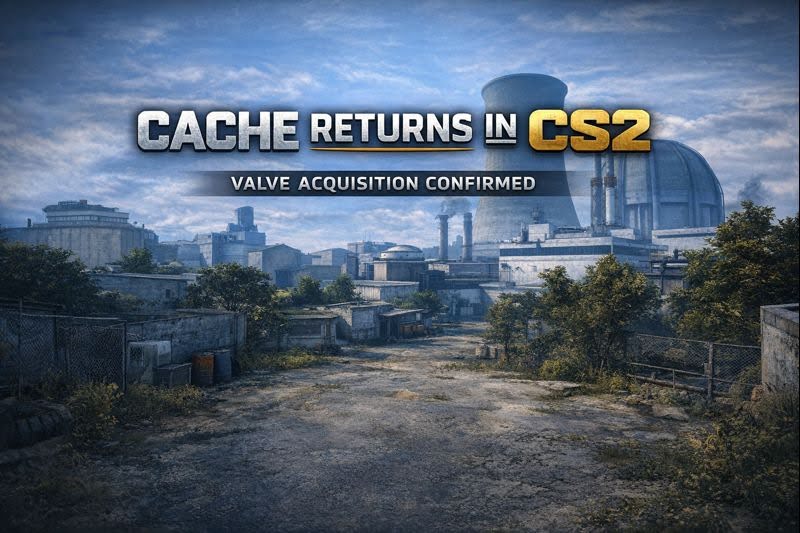
Interest in the return of the Cache map has surged as Counter-Strike 2 evolves. This article directly answers the question “Is Cache coming to CS2?”, clarifies the current state of Cache CS2 and CS2 Cache, and explains why Valve’s confirmed acquisition matters, while framing what the March 4, 2025, Workshop release means for long-term Cache Counter-Strike support and official timeline expectations.
Cache Official Return Confirmed - Valve Acquisition Details
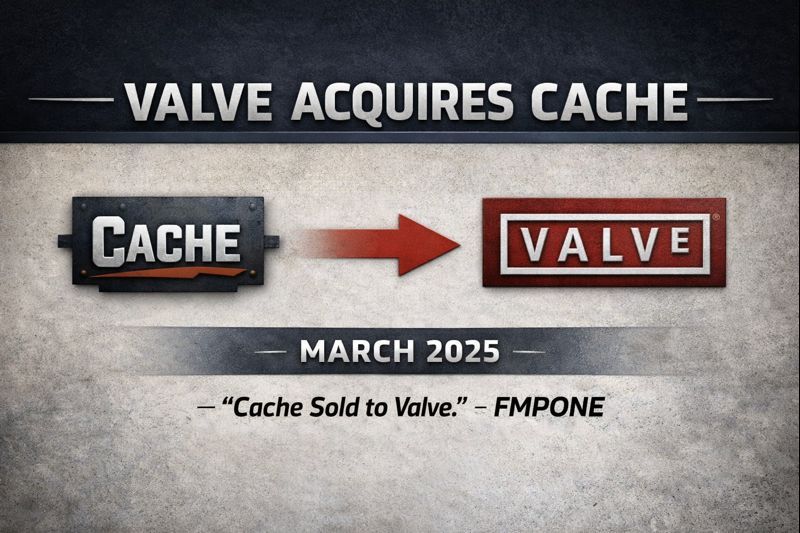
Reports surrounding the official return of Cache to Counter-Strike 2 moved from rumor to confirmation in March 2025. The classic map was formally acquired through an acquisition completed by Valve Corporation, ending years of licensing uncertainty.
Confirmation came directly from FMPONE, who acknowledged that ownership had transferred, allowing long-term integration planning. This development answers a key community question: Did CS2 add Cache? The answer is yes, but in stages.
The first visible step was the release on the Steam workshop on March 4, which was offered to players immediately as a playable version rather than a teaser. Internally, the move aligns with how Valve has previously secured legacy competitive maps. While no purchase price was disclosed, industry observers cited a prior $150,000 benchmark for high-profile Counter-Strike map rights, placing the deal within a familiar range.
Additional context emerged through Gabe Follower leaks dated May 6 and May 23, suggesting early testing pipelines. Validation followed via an ESL showmatch and FACEIT hub usage, confirming stability. For those asking, will there be Cache in CS2? The appearance of cache CS2 is now established.
With Cache validated through FACEIT hubs and ESL showmatches, competitive CS2 is accelerating. Platforms like PLG.BET fit naturally into this ecosystem, offering fast payouts and secure transactions for tournament-focused fans. Explore competitive markets on the trusted platform here that align with organizer credibility and professional match integrity standards.
How to Play Cache in CS2 Right Now
If you’re wondering how to play Cache in Counter-Strike 2 today, the process is straightforward. The Cache CS2 Remake is currently distributed through the Steam Workshop, following its public release on March 4, 2025.
To access the cache CS2 experience, open the Workshop, search for “FMPONE Cache”, subscribe, and launch it directly from your community map list. This workshop version is entirely free and requires no additional setup.
Beyond solo or private matches, players can also find Cache running on FACEIT hubs and selected community servers, offering structured play and competitive rule sets. However, it’s important to note that Cache is not yet part of official matchmaking.
Despite this, reception has been strongly positive, with players praising visual upgrades and familiar layouts. For now, this remains the primary way to enjoy Cache in CS2 while awaiting further integration updates.
Cache History - From CS:Source to CS:GO Dominance
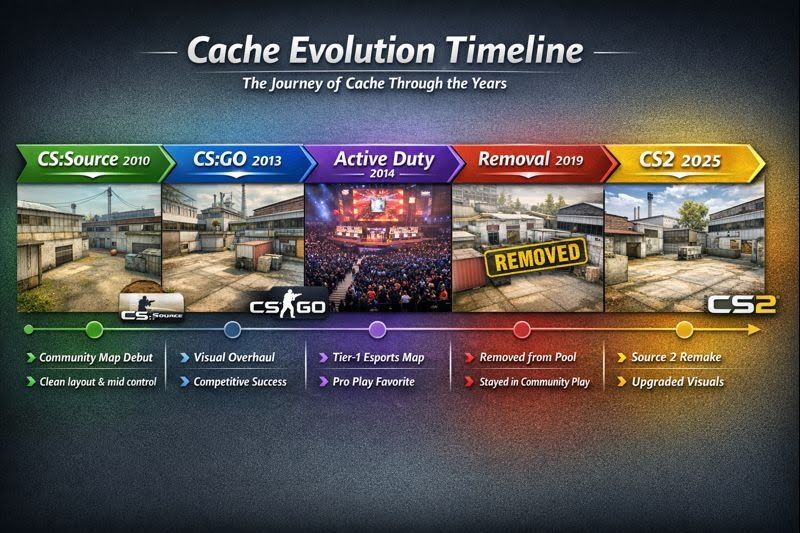
Before becoming a competitive staple, Cache built its reputation through steady evolution. Originally appearing in Counter-Strike: Source, the map gained attention for balanced lanes and tactical clarity. Its early competitive history was shaped by Volcano, before FMPONE later refined and reimagined it.
The transition into CS:GO marked a turning point, where cache csgo and csgo cache became synonymous with high-level play across ESEA leagues. From modest beginnings to widespread adoption, Cache’s journey reflects community-driven design meeting professional standards.
This overview sets the stage for its creation, remake, and eventual dominance in professional Counter-Strike circles globally during the Active Duty era.
Original Creation by Volcano (2010-2011)
Cache was created by Volcano (Sal Garozzo) during the Counter-Strike Source era between 2010 and 2011. A former professional player for Team 3D, Volcano was already respected for his tactical understanding, having won the World Cyber Games in 2004 and 2005 before transitioning into design.
Built as a custom map, Cache drew inspiration from the abandoned industrial zones of Chernobyl and Pripyat, emphasizing clean sightlines and balanced engagements. The map first appeared in ESEA in April 2010, with its first recorded competitive match played in July 2011. Its structured layout quickly distinguished it from other experimental community creations.
CS:GO Remake and Operation Bravo Explosion
The modern rise of Cache began when it was remade by FMPONE in 2013, working alongside penE to adapt the map for CS:GO. This remake introduced significant engine-driven improvements, including cleaner visuals, refined bombsite balance, and performance optimization tailored for competitive play.
The preserved Chernobyl theme, centered on abandoned industrial zones, gave Cache a distinctive identity. Its debut in Operation Bravo made it the most-played map in the operation’s matchmaking pool, a rare achievement for a community design. Cache was later returned during Operation Phoenix in 2014, cementing its status. This surge explains why competitive modes dominate play discussions today.
Active Duty Addition and Esports Dominance
Cache entered Counter-Strike history when it was added to the Active Duty Pool in June 2014, becoming the first community-made map to reach Valve’s official rotation. Its inclusion reshaped the competitive pool, and by 2015, Cache was the most played map across top-tier esports events.
Iconic moments followed. S1mple delivered his legendary no-scope AWP shot at ESL One Cologne 2016, while NiKo’s 1v5 deagle ace and Shroud’s boost triple kill further defined the map’s legacy. Valve later immortalized several plays with in-map graffiti, transforming Cache into a cultural landmark, shaping modern viewing expectations worldwide competition.
2019 Removal Controversy and Visual Rework Rejection
Cache’s removal from Valve competition sparked one of Counter-Strike’s most controversial decisions. In 2019, Cache was removed from the Active Duty Pool and replaced by Vertigo, a move that shocked players and professionals alike.
Many viewed the swap as discarding a proven favorite for an unpopular experiment, igniting widespread backlash. Seeking redemption, FMPONE unveiled a visual rework at ESL One New York in September 2019. The redesign leaned heavily into green foliage, but the approach backfired.
Dense colors reduced visibility, especially alongside new agent skins, making opponents harder to read in fast engagements. Critics argued the changes compromised competitive clarity rather than enhancing identity. Ultimately, the rework was rejected, and Cache remained sidelined. This episode became a learning moment, shaping how future remakes balanced aesthetics, readability, and competitive integrity principles.
Biggest Changes in Cache CS2 Remake
The Cache CS2 Remake represents more than a simple port, signaling a deliberate remake built for CS2’s updated engine. While the core identity remains intact, the project introduces targeted visual improvements and subtle layout changes designed to preserve competitive balance.
Lighting, textures, and environmental depth have been refined without compromising clarity, a lesson drawn from past redesign missteps. At the gameplay level, adjustments focus on spacing, angles, and flow around each bombsite, ensuring familiarity while improving readability.
This overview sets the foundation for examining how visual presentation and tactical structure evolved separately. The following subsections break down these enhancements in detail, highlighting where the remake modernizes Cache without sacrificing the precision that defined its competitive legacy.
Visual Overhaul - Rustic Aesthetic and Lighting
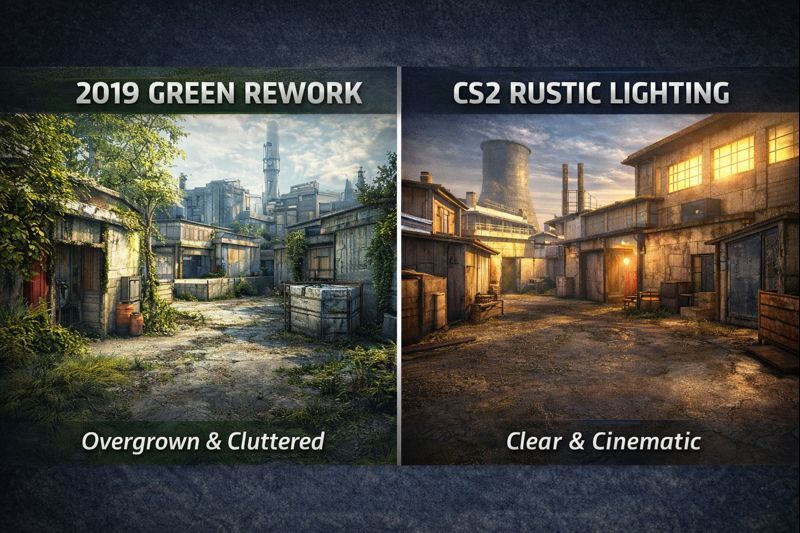
The Cache CS2 Remake delivers a clear visual shift without sacrificing competitive clarity. Foliage has been reduced, allowing high-resolution textures and improved lighting to define the map’s renewed visual identity.
The preserved Chernobyl theme now feels more cinematic, with weathered surfaces, murals, and industrial decay resembling a carefully staged film set. Unlike the 2019 redesign, colors are bolder yet controlled, improving visibility across key angles.
A standout example is the stained-glass detail in Tree Room, where light diffusion enhances atmosphere without obscuring player silhouettes, confirming Cache does look meaningfully different in CS2.
| Feature / Attribute | Cache (CS:GO) | Cache (CS2) |
| Engine & Rendering | Source engine visual style with older lighting system | Source 2 engine enhanced lighting, improved textures & visuals |
| Color Palette | Classic muted industrial tones with stronger greens in vegetation areas | Brighter overall lighting; more balanced color highlights, less overwhelming green hue |
| Textures & Detail | Simpler texture work consistent with CS:GO aesthetic | High-resolution textures, enhanced environment detail and props |
| Connector / "Z" Area | CT mid window and ledge provided strong peeking advantage for CTs | Mid window removed; now more of a utility feature with roof crack for grenades |
| Boost / Crates | Self-boost in Checkers to crates was standard behavior | Checkers allows further jump to new ledge and slightly shifts sightlines |
| A Site Visuals | A site with forklift and classic truck position | A site retains structure with raised ceilings, new open windows, updated lighting |
| B Site Layout | Enclosed B with checkers and heaven positions | Very similar in layout but some windows now unbreakable; slight positional tweaks |
| Graffiti & Props | Included iconic community graffiti (e.g., s1mple's AWP moment) | Some original graffiti removed in the workshop version |
| Gameplay Feel / Balance | Classic Cache balance refined over years of pro play | Largely preserved core gameplay, but some transitions (mid & boosts) adjusted |
| Map Presence | Official competitive CS:GO map (historically in Active Duty rotation) | Workshop remake in CS2 with community play; not yet in official competitive pool |
Major Layout Modifications and Gameplay Changes
In the Cache CS2 Remake, gameplay evolution comes from precise structural tweaks rather than radical redesigns. Both bombsite layouts remain familiar, but meaningful adjustments reshape engagements.
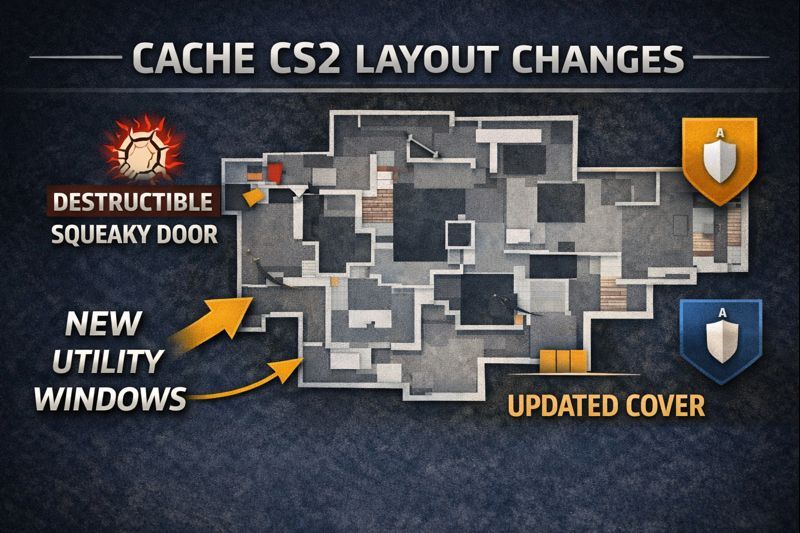
On A-site, the Squeaky Door is now destructible with explosives, opening new entry timings and altering sightlines. B-site sees improved clarity through adjusted cover objects, while the CT mid window has been removed and replaced with a wall crack usable only for utility.
Additional utility windows near CT spawn support retakes, and illuminated positions highlight common hold spots. These changes preserve Cache’s core while deepening tactical decision-making and flow.
Technical Performance Issues and Optimization
The Cache CS2 Remake currently faces noticeable technical issues, with FPS drops reported in high-detail areas, making it more demanding to run than Mirage. These performance concerns are expected in a Workshop build, where full optimisation is still pending.
Micro stutters stem from shaders, lighting complexity, and LOD handling, explaining why CS2 can feel laggy. Valve’s involvement typically brings deeper engine-level tuning, suggesting smoother performance once Cache approaches an official Active Duty–ready release.
Release Date Speculation and Timeline
Speculation around the release date of Cache in CS2 is now driven by evidence rather than hope. Data miners, including Gabe Follower, previously identified Cache-related assets embedded in CS2 files, suggesting a near-finished state tied to the competitive pool framework.
This aligned with Valve Corporation’s established habit of preparing maps well ahead of public rollout. Further credibility came from FMPONE’s confirmation that development had effectively concluded, though without sharing scheduling authority.
Attention briefly shifted to the Austin Major, as Valve historically aligns major content drops with flagship events. However, the Austin Major passed without Cache entering matchmaking, tempering expectations of an immediate debut. Similar to earlier cycles, Valve also updated Counter-Strike’s social media branding during this period, a move often interpreted as a soft teaser rather than a release signal.
Realistically, Cache’s return depends on final optimization, balance testing, and an official announcement. Valve must also consider Active Duty rotation stability before introducing changes. Based on prior patterns, a post-major update, potentially tied to a future Operation, represents the most plausible window, especially as FMPONE has stated that remaining decisions rest entirely with Valve.
Conclusion - Cache's Inevitable Return
The return of Cache in cache cs2 is no longer speculative; it is structurally inevitable. With Valve Corporation confirming acquisition, Cache is secured for long-term competitive integration.
Players already have access through the Workshop, while optimization and balance remain the final steps before broader rollout. From its Counter-Strike: Source roots to CS:GO Active Duty dominance and now CS2 revival, Cache’s legacy is unmatched.
Validation through ESL and FACEIT reinforces confidence. While official timing remains uncertain, Valve’s ownership guarantees the return. Until then, players can download the Workshop version and experience the future firsthand.