


The first online casino launched in 1994, forever changing how people experience gambling entertainment. What began as primitive software over dial-up connections has evolved into a sophisticated multi-billion dollar industry. Internet gambling transformed from a technological curiosity to mainstream entertainment, attracting millions of players worldwide. This comprehensive exploration traces online gambling's remarkable journey from its humble origins through regulatory battles, technological breakthroughs, and cultural shifts that reshaped the entertainment landscape.
The online casino industry now offers thousands of games, live dealer experiences, virtual reality environments, and cryptocurrency transactions. Understanding this evolution helps players appreciate modern conveniences while recognizing the challenges overcome. From the Free Trade and Processing Act that enabled the industry's birth to today's AI-powered platforms, every milestone contributed to creating accessible, secure, and entertaining gambling experiences.
This guide examines how pioneers like Microgaming and CryptoLogic laid foundations for an industry that would eventually generate over $60 billion annually, employ hundreds of thousands globally, and entertain millions daily through innovative digital platforms.
The Birth of Online Gambling (1994-1997)
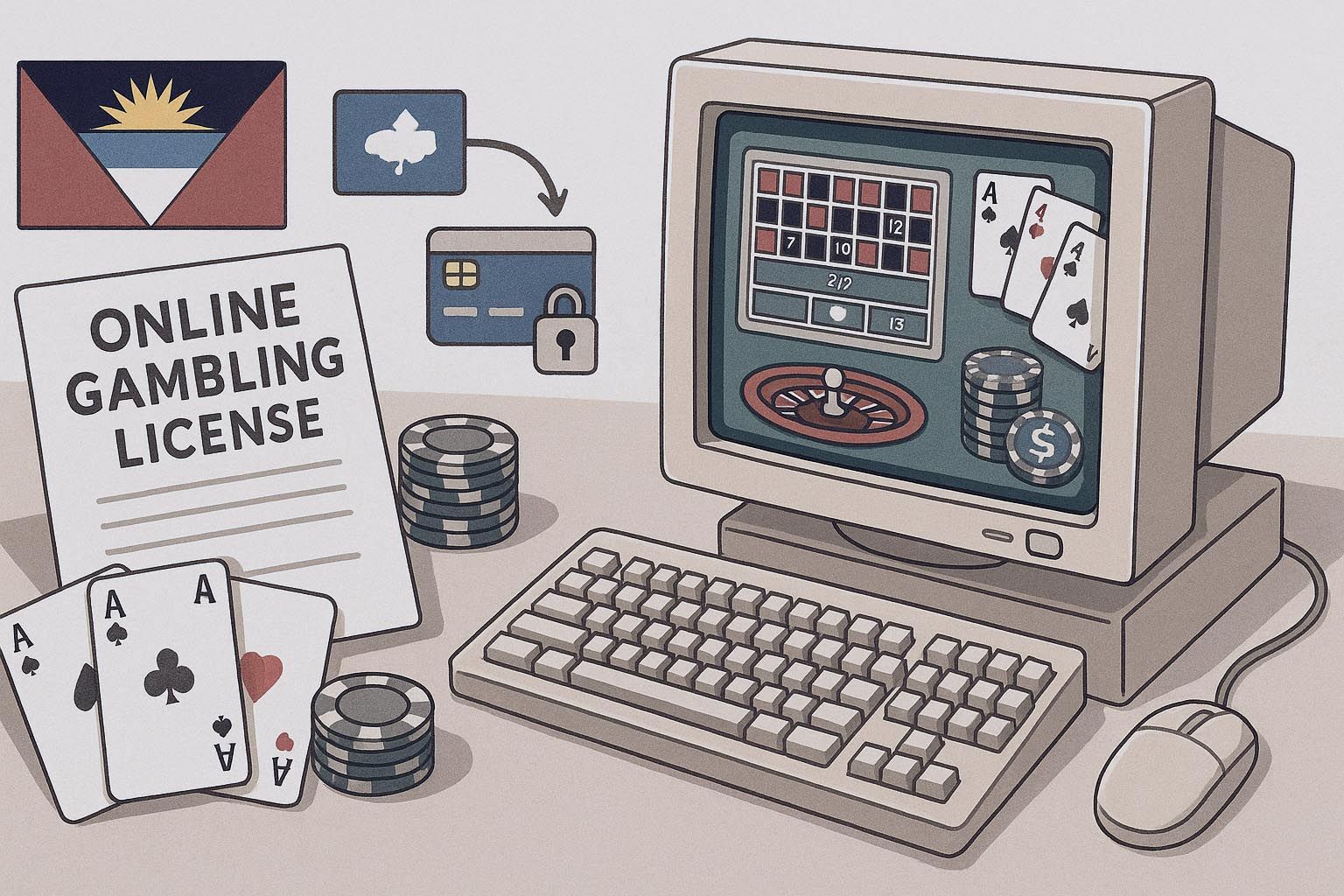
The Free Trade and Processing Act passed by Antigua and Barbuda in 1994 created the legal framework that birthed internet gambling. This Caribbean nation recognized the economic potential of licensing online casinos, establishing the foundation for a global industry. Microgaming, a software company based in the Isle of Man, developed the first fully functional gambling software that same year. Their pioneering platform enabled real money wagering over internet connections, though the technology remained primitive by today's standards.
CryptoLogic, founded by brothers Andrew and Mark Rivkin in Toronto, addressed the critical security concerns plaguing early internet transactions. Their e-cash system provided encrypted payment processing, giving players confidence to wager real money online. The Gaming Club, powered by Microgaming software, claimed the title of first online casino in 1994, though it offered limited games and required lengthy software downloads.
InterCasino launched in 1996 with 18 casino games, establishing many industry standards still followed today. By 1997, over 200 online gambling sites operated globally, generating nearly $1 billion in revenue. The rapid growth attracted entrepreneurs, investors, and regulators' attention. These foundational years established patterns of innovation, regulation, and market expansion that continue shaping the online casino industry today.
Early Gambling Technology and Game Experience
Dial-up internet connections created significant challenges for early online casinos. Players endured download times exceeding several hours for basic software packages containing simple games. The 56k modem speeds meant frequent disconnections during gameplay, frustrating players and operators alike. Graphics consisted of basic pixels reminiscent of early Nintendo games, while sound effects rarely exceeded simple beeps and electronic noises. User interfaces confused newcomers with text-heavy menus and counterintuitive navigation systems requiring extensive tutorials written in plain language.
Early online casino games included digital versions of blackjack, roulette, baccarat, and basic slot machines. Progressive jackpot online slot games like Microgaming's Cash Splash attracted players seeking life-changing wins, though jackpots rarely exceeded six figures. The same game might play differently across platforms due to varying software interpretations. Download requirements meant players committed to single casinos rather than exploring multiple options.
Payment processing posed monumental obstacles for the emerging online gambling industry. Credit card companies hesitated supporting internet gambling transactions, citing fraud concerns and regulatory uncertainty. Wire transfers took days to complete, while paper checks required weeks for processing. CryptoLogic's secure payment solutions revolutionized the industry by enabling instant deposits and faster withdrawals. Despite technological limitations, players embraced the convenience of home gambling. No dress codes, travel expenses, or restricted hours appealed to casual players. The foundation for modern online gaming platforms was established through these early innovations and player feedback.
Regulatory Evolution and Industry Growth (1998-2006)
The Kahnawake Gaming Commission, established in 1996 by the Mohawk Territory of Kahnawake in Canada, became one of the most respected regulatory bodies in online gambling. They created comprehensive standards for player protection, fair gaming, and operator accountability that influenced global regulatory approaches. By 1998, over 700 online gambling sites processed billions in wagers annually, attracting serious governmental attention worldwide. The explosive growth raised concerns about money laundering, problem gambling, and underage access to gambling services.
American lawmakers responded with multiple attempts to ban online gambling entirely. Senator Jon Kyl of Arizona introduced the Internet Gambling Prohibition Act repeatedly between 1997 and 2003, though none passed initially. The Federal Wire Act of 1961, originally targeting telephone betting on sporting events, created legal ambiguity about whether it applied to internet casinos. Different interpretations led to ongoing legal battles and uncertainty for operators serving American players.
The Australian government passed the Interactive Gambling Act in 2001, prohibiting online casinos from offering services to Australian residents while allowing sports betting and lottery sales. This nuanced approach influenced other jurisdictions seeking balanced regulation. European countries developed varied approaches, with some embracing licensing and taxation while others maintained state monopolies.
The Unlawful Internet Gambling Enforcement Act (UIGEA) shocked the industry in 2006. Attached to the SAFE Port Act as a last-minute addition, it prohibited financial institutions from processing gambling transactions. Major publicly-traded companies like PartyGaming immediately ceased serving American players, losing billions in market value overnight. The legislation reshaped global online gambling, forcing operators to focus on regulated European and emerging markets while American players turned to offshore options.
The Emergence of Online Poker and Sports Betting
Planet Poker dealt the first real money online poker hands in January 1998, revolutionizing how people played cards. The platform struggled with software reliability but proved the concept viable. Paradise Poker launched in 1999 with improved software and marketing, quickly becoming the industry leader. The real transformation came with PokerStars (2001) and PartyPoker (2001), which offered superior software, bigger tournaments, and aggressive marketing campaigns. These poker sites created vibrant online communities where players competed globally 24/7.
The poker boom exploded in 2003 when Chris Moneymaker, an accountant from Tennessee, won the World Series of Poker Main Event after qualifying through a $39 satellite tournament on PokerStars. His $2.5 million victory story captivated mainstream media, inspiring millions to try online poker. Television coverage on ESPN and the Travel Channel glamorized poker, transforming it from gambling into a skillful competition. Online poker players flooded sites, with PartyPoker processing over 80,000 simultaneous players during peak hours.
Sports betting evolved parallel to poker's rise. Early online sportsbooks offered limited markets with fixed odds on major sporting events. The introduction of live betting in 2002 revolutionized the industry. Players could wager during games with constantly updating odds reflecting real-time action. Mobile devices enhanced accessibility, allowing bets from anywhere. Asian handicap betting, player proposition bets, and statistical markets expanded options beyond simple win/loss wagers.
In-play betting transformed passive viewing into interactive entertainment. Every play mattered financially, intensifying emotional investment. Online sports betting merged fandom with potential profit, attracting new demographics. Traditional bookmakers scrambled to develop online platforms or risk obsolescence. The convergence of poker and sports betting legitimized online gambling as mainstream entertainment rather than vice.
Technological Transformation and Market Maturation (2007-2015)
The iPhone's 2007 launch catalyzed online gambling's mobile revolution. Suddenly, casino games needed optimization for touchscreens and smaller displays. Playtech had developed basic mobile casino software in 2005, but Apple's innovation accelerated industry-wide mobile adoption. By 2010, every major online casino offered mobile gaming options. Android's emergence created healthy competition, driving rapid improvements in mobile user experiences. HTML5 technology eventually enabled instant-play games across all devices without downloads.
Live dealer technology emerged as a game-changer, bridging virtual and physical casino experiences. Evolution Gaming pioneered high-quality video streaming of real dealers operating actual casino equipment. Players enjoyed authentic atmospheres with human interaction from home comfort. Multiple camera angles, chat functions, and professional dealers created immersive experiences. Competitors like Playtech and NetEnt developed their own live platforms, driving innovation through competition.
Security advancements reassured skeptical players about online gambling safety. 256-bit SSL encryption became industry standard, matching bank-level security. Two-factor authentication added extra protection layers. Payment options expanded beyond credit cards to include e-wallets like PayPal, Skrill, and Neteller. Prepaid cards offered anonymous deposits. Faster withdrawal times improved player satisfaction. Some casinos processed payments within hours rather than days.
User interface design evolved from functional to beautiful during this period. Intuitive navigation replaced confusing menu systems. One-click registration simplified account creation. Games loaded instantly without downloads. Responsive design ensured seamless experiences across devices. Gamification elements like progress bars, achievements, and missions enhanced engagement. The online gambling industry invested heavily in user experience, recognizing its importance for player retention and satisfaction.
Industry Consolidation and Brand Development
Market consolidation accelerated as online gambling matured into big business. Major operators acquired smaller competitors to gain market share, technology, and player databases. 888 Holdings exemplified this strategy, systematically purchasing brands like Wink Bingo and expanding into new markets. Economies of scale became crucial as marketing costs escalated and regulatory compliance expenses increased. Larger operators could spread fixed costs across bigger player bases, improving profitability.
Software providers consolidated similarly. Playtech acquired numerous game developers, building massive content libraries. These acquisitions brought unique games, talented developers, and existing operator relationships. Exclusive content deals followed, with online casinos differentiating through unique game offerings. The relationship between operators and game providers evolved into strategic partnerships rather than simple vendor arrangements.
Marketing strategies grew increasingly sophisticated as competition intensified. Welcome bonuses evolved from simple match deposits to complex packages including free spins, cashback, and tournament entries. Loyalty programs borrowed concepts from airlines and hotels, rewarding regular players with points redeemable for bonuses or prizes. VIP schemes pampered high-rollers with personal account managers, exclusive events, and customized rewards. Data analytics enabled personalized promotions targeting individual player preferences.
Brand development became crucial for standing out in crowded markets. Some brands emphasized luxury and exclusivity, others focused on game variety or specific niches like slots or live dealers. Mobile-first brands emerged targeting younger demographics. Successful brands created distinct identities through consistent messaging, unique features, and superior customer experiences. Generic online casinos struggled competing against well-positioned brands with clear value propositions. The industry's maturation phase established today's major players while eliminating weaker operators unable to compete effectively.
The Modern Era of Online Gambling (2016-Present)
Cryptocurrency revolutionized online gambling by solving longstanding payment processing challenges. Bitcoin casinos emerged offering anonymous gambling without traditional banking restrictions. Blockchain technology enabled provably fair gaming where players could verify game integrity mathematically. Approximately half of transactions on some platforms now use cryptocurrency, demonstrating mainstream adoption. Smart contracts automate payouts, eliminating processing delays. Traditional online casinos added crypto options to remain competitive.
Virtual reality promises to transform online gambling fundamentally. Early VR casinos allow players to walk through digital environments, sit at tables, and interact with others through avatars. While adoption remains limited by hardware costs, improving technology and falling prices suggest mainstream viability approaching. Augmented reality experiments overlay digital elements onto physical spaces, creating hybrid experiences.
Artificial intelligence revolutionizes personalization and operations. Algorithms analyze player behavior to predict preferences and customize experiences. Chatbots handle routine customer service queries instantly in multiple languages. AI-powered fraud detection systems identify suspicious activities protecting both operators and players. Machine learning improves game recommendations, bonus offers, and retention strategies. Responsible gambling tools use AI to identify problematic behaviors early, enabling timely interventions.
The COVID-19 pandemic unexpectedly accelerated online gambling adoption. Land-based casino closures drove players online en masse. Poker sites reported 43% usage increases with first-time players surging 255%. Online casinos invested heavily in capacity and features to accommodate demand. The forced digital migration introduced online gambling to demographics previously preferring physical venues. Many discovered online platforms' convenience and variety, permanently changing their gambling preferences.
Future Trends and Industry Predictions
Metaverse integration represents online gambling's next frontier. Virtual worlds like Decentraland already host casinos where players gamble using cryptocurrency. Future metaverse casinos might offer completely immersive experiences indistinguishable from physical venues. Social elements could include avatar customization, virtual events, and persistent communities. NFT integration might enable owning unique virtual casino assets or exclusive access privileges. Early experiments demonstrate significant potential though widespread adoption remains years away.
Augmented reality will likely precede full VR adoption due to lower barriers. AR glasses could overlay betting information during live sports or transform home poker games with digital enhancements. Physical playing cards might trigger digital animations. Home roulette wheels could connect to online betting pools. The technology exists; consumer adoption depends on compelling use cases and affordable hardware.
Skill-based gambling attracts younger players raised on video games. Traditional pure-chance models fail engaging millennials and Gen Z. Hybrid games combining skill elements with chance components show promise. Competitive tournaments, leaderboards, and achievement systems borrowed from gaming increase engagement. Esports betting already demonstrates younger demographics' gambling interest when combined with familiar competitive formats.
Regulatory harmonization progresses slowly but steadily. International cooperation increases as online gambling's borderless nature demands coordinated responses. Shared blacklists, unified technical standards, and mutual recognition agreements simplify compliance. Stricter responsible gambling requirements become universal. Technology enables better age verification, identity confirmation, and problem gambling detection. The global online gambling market benefits from regulatory clarity and consistency, encouraging innovation while protecting consumers effectively.
Cultural Impact and Social Considerations
Online gambling's accessibility fundamentally altered societal perceptions of betting activities. Physical casino visits once required planning, travel, and social commitment. Now anyone can gamble privately from home without stigma or judgment. This normalization dramatically increased participation rates across demographics previously excluded by geography or social barriers. Gambling transformed from destination entertainment to casual pastime available anywhere, anytime.
Advertising proliferation raises ethical concerns about vulnerable population exposure. Sports broadcasts feature constant betting advertisements. Social media platforms promote casino bonuses aggressively. Concerns about normalizing gambling for children watching sports with family prompted regulatory responses. Many jurisdictions mandate responsible gambling messages in advertisements. Some ban certain advertising channels entirely. The industry increasingly self-regulates through voluntary codes limiting aggressive marketing tactics.
Preventing underage access remains challenging in digital environments. Age verification technology improves constantly but determined minors find workarounds. Identity confirmation systems balance security with user convenience. Parental control tools help but require active implementation. Online casinos invest millions in compliance systems avoiding regulatory penalties. Both the house and society share responsibility for protecting minors from gambling exposure.
Problem gambling resources expanded dramatically as online accessibility increased concerns. Mandatory self-exclusion tools let players ban themselves across multiple sites. Deposit limits, reality checks, and session timers help maintain control. AI systems detect problematic patterns early, triggering interventions. Support services offer 24/7 assistance through chat, phone, and email. The online gambling sector acknowledges its responsibility to protect vulnerable players while providing entertainment for the majority who gamble responsibly.
Conclusion
The online gambling industry's transformation from primitive 1994 software to today's sophisticated platforms demonstrates remarkable technological and cultural evolution. What started with basic games over dial-up connections now encompasses live dealers, virtual reality, and blockchain technology. Players access thousands of games instantly through platforms like plg.bet, enjoying unprecedented variety and convenience. Mobile gaming dominates as smartphones become primary gambling devices. The industry successfully balances innovation with responsibility, implementing tools protecting vulnerable players while entertaining millions globally. Two decades transformed online gambling from curious experiment to mainstream entertainment generating billions annually while employing hundreds of thousands worldwide.
