Season 17 has completely transformed the competitive landscape, with balance changes that have shifted which heroes dominate the meta right now in ways not seen since Season 14. Through analysis of hundreds of matches since launch and data from players climbing the ranked ladder, this comprehensive Overwatch 2 hero tier list combines hard data with practical insights from high-level play.
The introduction of perks and hero bans has fundamentally altered team composition strategies in Overwatch 2's current state. This tier list represents not just raw power levels, but real viability in the evolving meta where adaptability matters more than ever. Understanding these rankings will transform any player's approach to competitive play.
Understanding Tier Lists in Overwatch 2
The Overwatch 2 tier list season acts as a strategic roadmap rather than a strict rulebook. Context behind rankings often matters as much as the placements themselves. Even a C tier hero like Mei can shut down a push on King’s Row when played in the right hands, proving off-meta picks can still work.
This Overwatch 2 characters tier list is based on patterns across skill brackets, showing whether you’re a casual or competitive player, mastery can overcome tier limitations. The meta constantly shifts, and what dominates in pro play may differ on the ranked ladder. Understanding why certain heroes rank highly is more important than blindly following placements.
At its core, the tier list reflects high-level performance, but the principles apply across all ranks, helping teams adapt to the current meta and strengthen their comps.
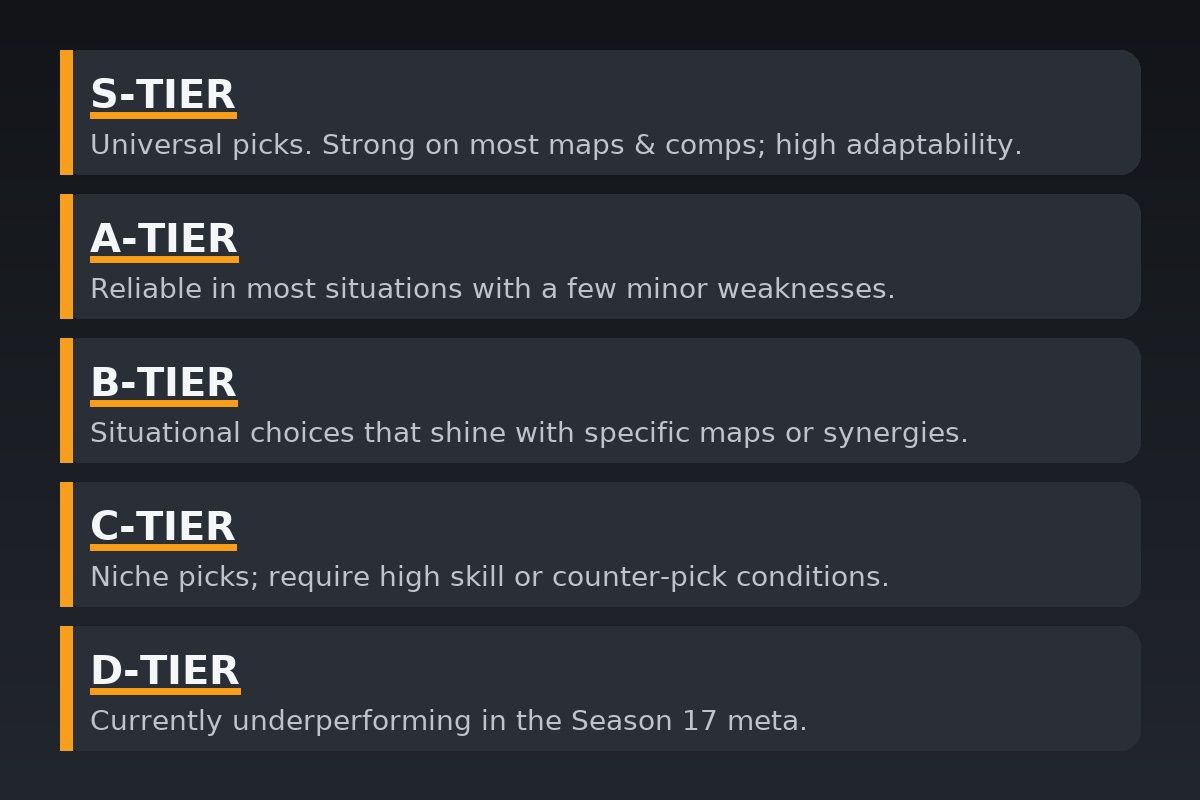
- S-Tier: Universally powerful across all maps and team comps – one of the best characters choices in the current meta.
- A-Tier: Strong picks that excel in most situations with minor weaknesses.
- B-Tier: Situational heroes that shine in specific scenarios or with particular team synergy.
- C-Tier: Niche picks requiring exceptional skill or specific counter-pick situations.
- D-Tier: Currently underperforming heroes struggling against the current meta.
How This Tier List Was Created
This hero tier list Overwatch 2 combines multiple data sources for accuracy, including win rates from competitive matches, pick rates across ranks, and results from professional tournaments such as the Overwatch Champions Series. In the recent EMEA event, Sigma and Orisa dominated tank selections.
Extensive testing across team comps highlights how perks influence each hero’s viability, revealing synergies that can turn weaker picks into effective options within the evolving meta.
How Tiers Work
The tier classification system reflects more than raw power — it highlights consistency and versatility. S-tier heroes like Tracer excel across most scenarios, while lower tiers depend heavily on map or team comp. Placement in S-tier often comes from adaptability as much as damage potential.
Even B tier and C tier picks can succeed in the right hands, as the gap between tiers has narrowed, with several heroes strong this season, making mastery vital for climbing ranks in the evolving meta.
Current Meta Overview: Season 17
Season 17’s meta marks the biggest shift since Season 15, with healing reduction and the introduction of the perk system changing how teams approach fights. Tank players feel it most, as sustain-heavy comps from Season 16 now struggle against faster, aggressive playstyles.
Pro teams lean on coordinated rush comps, while ranked play favors hybrids mixing dive and brawl. Different heroes dominate the meta at various skill levels, rewarding adaptability.
Recent patches elevated underused picks and balanced stronger ones, creating one of the most competitive environments in Overwatch 2, where skill outweighs pure hero choice.
| Aspect | Season 16 | Season 17 |
|---|---|---|
| Dominant Comp Style | Full Dive | Hybrid Brawl/Rush |
| Top Tank | Doomfist | Orisa/Ramattra |
| Healing Output | High Sustain | Reduced Healing |
| DPS Priority | Burst Damage | Consistent Pressure |
| Support Meta | Main Healers | Utility/Damage Hybrids |
Hero Perks Impact on Season 17
The perk system has redefined hero viability, turning mid-tier picks into real threats. Kiriko’s Fortune Teller perk illustrates this by combining precise kunai damage with strong healing output, raising overall support value.
Synergies between perks and playstyles are clear: tank heroes gain sustain, while DPS benefit from mobility. The introduction of perks adds strategic depth, rewarding adaptation and experimentation in the evolving meta.
Major perk choices often decide outcomes more than initial hero picks, especially in longer matches where full effects activate.
Most Impactful Perks in Current Meta:
- Nanite Repair (Tanks): Exceptional sustain for frontline heroes.
- Fortune Teller (Kiriko): Transforms damage into healing value.
- Reactive Barrier (Sigma): Enhanced shield management and survivability.
- Combat Medic (Baptiste): Increased healing during critical moments.
- Berserk (Junker Queen): Amplifies aggressive playstyles.
Hero Bans and Their Impact
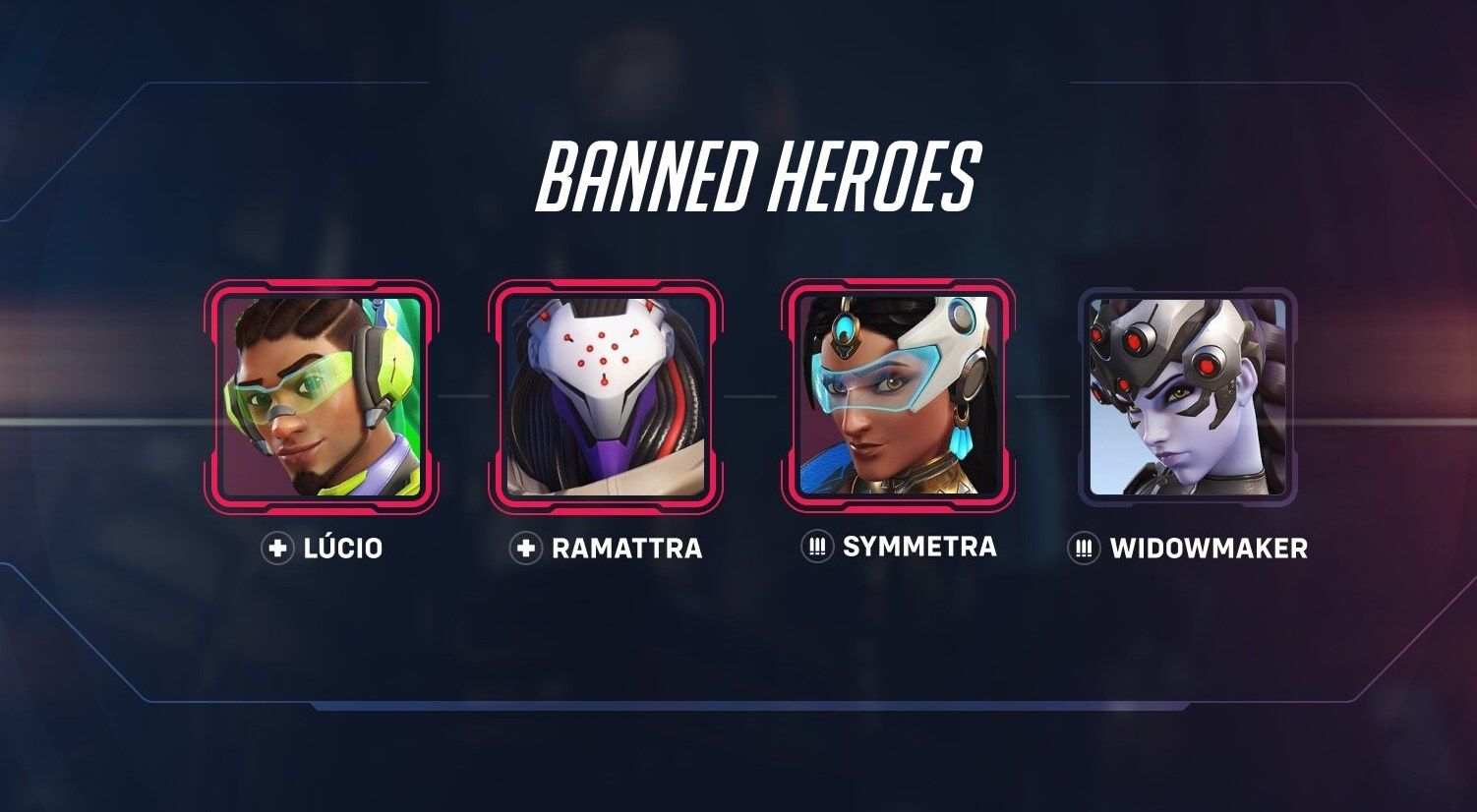
Strategic hero bans are now vital for success in Overwatch 2, targeting picks that enable full team comps rather than single threats. Removing Ana, for example, disrupts nano-boost strategies central to many lineups.
The ban system also allows overlooked heroes to shine. When top-tier tanks are removed, options like Winston or Junker Queen emerge as strong alternatives within the shifting meta.
Leveraging Hero Knowledge for Overwatch 2 Esports
Recognizing hero strength and meta trends clarifies professional team comps, where specific tank–DPS pairings align with tier rankings and counter-pick potential.
Identifying which heroes are S-tier shows how teams adapt and prepare, as flexible rosters exploiting the current meta consistently outperform outdated strategies in competitive Overwatch.
Apply your hero tier list knowledge by following Overwatch League tournaments and professional competitions on plg.bet/bets, where understanding team compositions and meta strategies can enhance your esports viewing experience.
Tips for Analyzing Professional Overwatch Matches:
- Track hero swap timing and reasoning based on tier advantages.
- Identify comfort picks versus meta selections.
- Notice how teams exploit tier differences in mirror matchups.
- Observe perk progression strategies in longer matches.
- Analyze map-specific hero selections beyond standard tier rankings.
How to Apply This Tier List in Your Games
Effective hero selection balances the meta with player proficiency and team needs, helping players pick the best option for every situation. Forcing an uncomfortable S-tier pick often underperforms compared to a practiced B tier main.
Choosing Mei over Sojourn, for instance, can deliver stronger results when mechanics and map knowledge align, proving that tier lists are guides rather than absolute rules.
Climbing or holding rank depends not only on tier placement but also on synergy, map geometry, and counters within the current meta, making adaptability essential in Overwatch 2.
Steps for Making Hero Selection Decisions:
- Assess team composition needs (role balance, synergy potential).
- Consider map-specific advantages for different heroes.
- Evaluate your proficiency with meta picks versus comfort heroes.
- Analyze enemy team composition for counter-pick opportunities.
- Factor in likely hero bans if playing competitive.
- Adapt based on match progression and perk development.
Team Composition Strategies
In Season 17, effective team comps blend heroes from different tiers to maximize synergy. The “Fortress” comp pairs Orisa with double hitscan DPS, creating overwhelming firepower behind a strong tank frontline.
The “Rush” setup with Ramattra, Kiriko, and aggressive picks like Tracer thrives on coordinated pressure, proving that S and A-tier heroes can exceed individual value when combined.
A “Hybrid Dive” with Winston, Genji, and Ana shows how synergy across tier lists often outweighs raw placement, shaping the current meta in Overwatch 2.
| Comp Name | Tank | DPS Heroes | Support Heroes | Key Strength |
|---|---|---|---|---|
| Fortress | Orisa/Sigma | Sojourn, Ashe | Baptiste, Kiriko | Sustained pressure |
| Rush | Ramattra | Tracer, Genji | Lucio, Ana | Aggressive engagement |
| Hybrid Dive | D.Va/Winston | Echo, Sombra | Ana, Mercy | Backline disruption |
Adapting to Maps and Enemy Picks
Map geometry shapes hero viability beyond standard tier placement. Widowmaker may sit in C tier overall, but on Havana’s long sightlines she becomes far more dangerous. Mid-match swaps are often decisive: if an enemy Tracer overwhelms support despite strong DPS from Ashe, switching to Mei can shift the tide of a match. Certain heroes excel on specific maps regardless of tier lists, allowing teams to struggle against the current meta more effectively when terrain provides the advantage.
Key Maps and Excelling Heroes:
- King's Row: Reinhardt, Mei, Symmetra (close quarters favor brawl).
- Circuit Royal: Widowmaker, Sigma, Baptiste (long sightlines).
- Ilios: Lucio, Roadhog, Pharah (environmental kill potential).
- Numbani: D.Va, Tracer, Mercy (high ground control).
- Dorado: Hanzo, Ana, Junkrat (elevation advantages).
Tank Tier List for Season 17
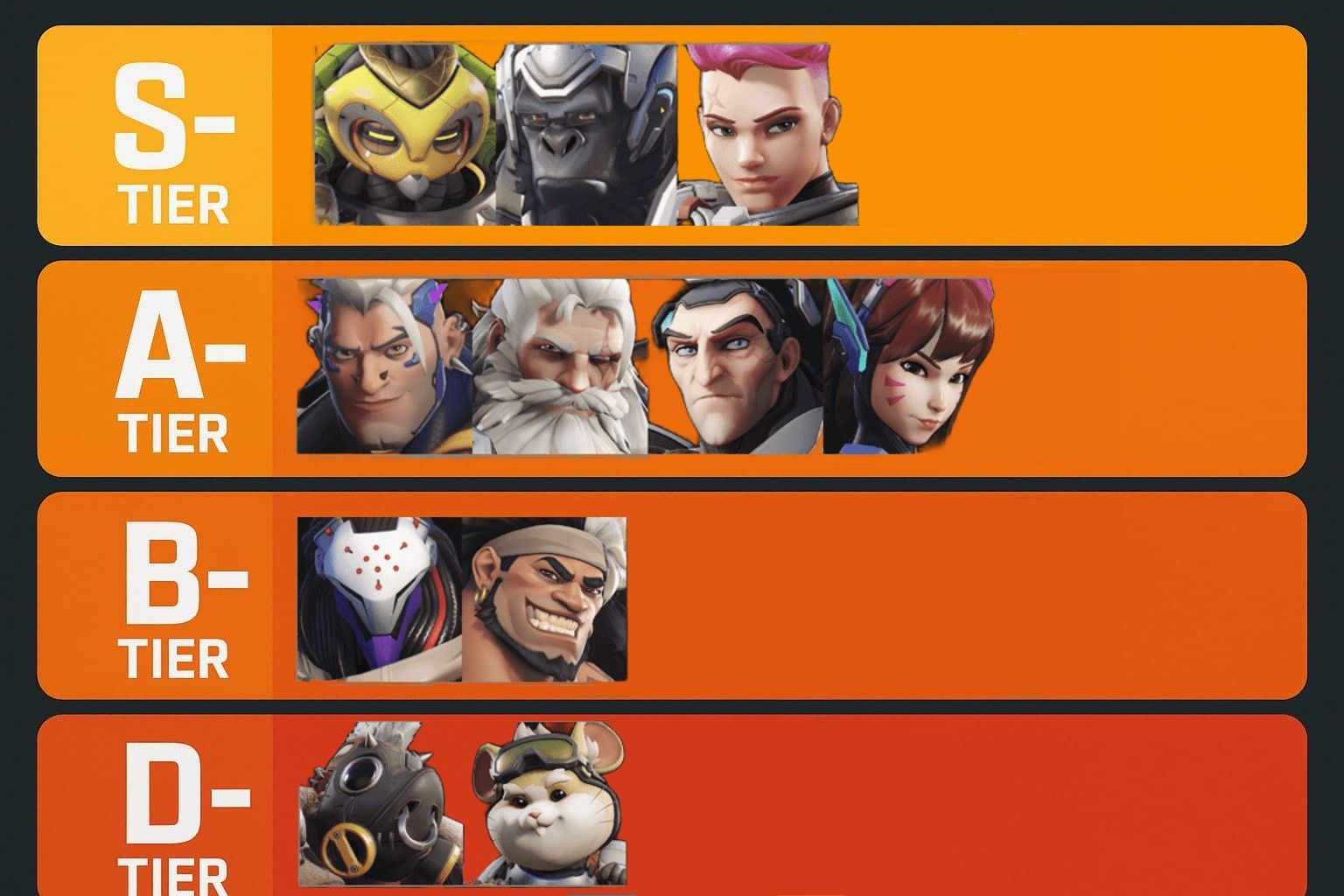
Tank heroes in Season 17 face new challenges under the single-tank format, shifting the tank meta away from Season 16’s dive focus toward a balance of aggressive and defensive styles, especially important for any tank main. In Overwatch 2, tank selection often dictates overall team strategy.
The best tanks combine survivability with playmaking, as pure mitigation no longer secures wins. Modern tank heroes must generate threats and control space to succeed within the evolving meta.
S-Tier and A-Tier Tanks
Orisa remains dominant despite armor nerfs, combining survivability with steady damage output. Fortify resists crowd control, while Terra Surge offers a game-changing ultimate. Synergy with Baptiste’s Immortality Field creates nearly unkillable objective holds.
Ramattra rose to S-tier after buffs to Annihilation, using dual-form flexibility to shift from poke to brawl. Proper Nemesis timing maximizes impact in committed fights. Sigma stays in A-tier with versatile barrier control and Accretion picks. D.Va adds mobility and defense, excelling as a dive tank when coordination is strong.
Key Strengths for S/A-Tier Tanks:
- Orisa: Unmatched survivability, area denial, consistent damage pressure.
- Ramattra: Form flexibility, strong ultimate, excellent against other tanks.
- Sigma: Versatile barrier placement, high damage potential, self-sustain.
- D.Va: Superior mobility, Defense Matrix utility, dive capabilities.
- Mauga: Overwhelming firepower, strong against barriers, excellent sustain.
B-Tier and C-Tier Tanks
Junker Queen fills a niche as an aggressive off-angle tank, using Commanding Shout and self-heal to stay durable, especially on close-quarter maps. Winston struggles in the current meta but punishes comps without burst damage, while Zarya relies on precise bubble and energy control to remain threatening. These lower-tier tanks find value in niche scenarios, turning perceived weaknesses into strategic advantages when enemy coordination falters.
Specific Scenarios Where B/C-Tier Tanks Excel:
- Junker Queen: Against immobile compositions on control maps.
- Winston: Versus sniper-heavy teams lacking peel for support.
- Zarya: Paired with aggressive DPS creating bubble value.
- Reinhardt: Hollywood streets phase, King's Row final push.
- Roadhog: Ilios Well, Nepal Sanctum (environmental kills).
DPS Tier List: The Damage Dealers of Season 17
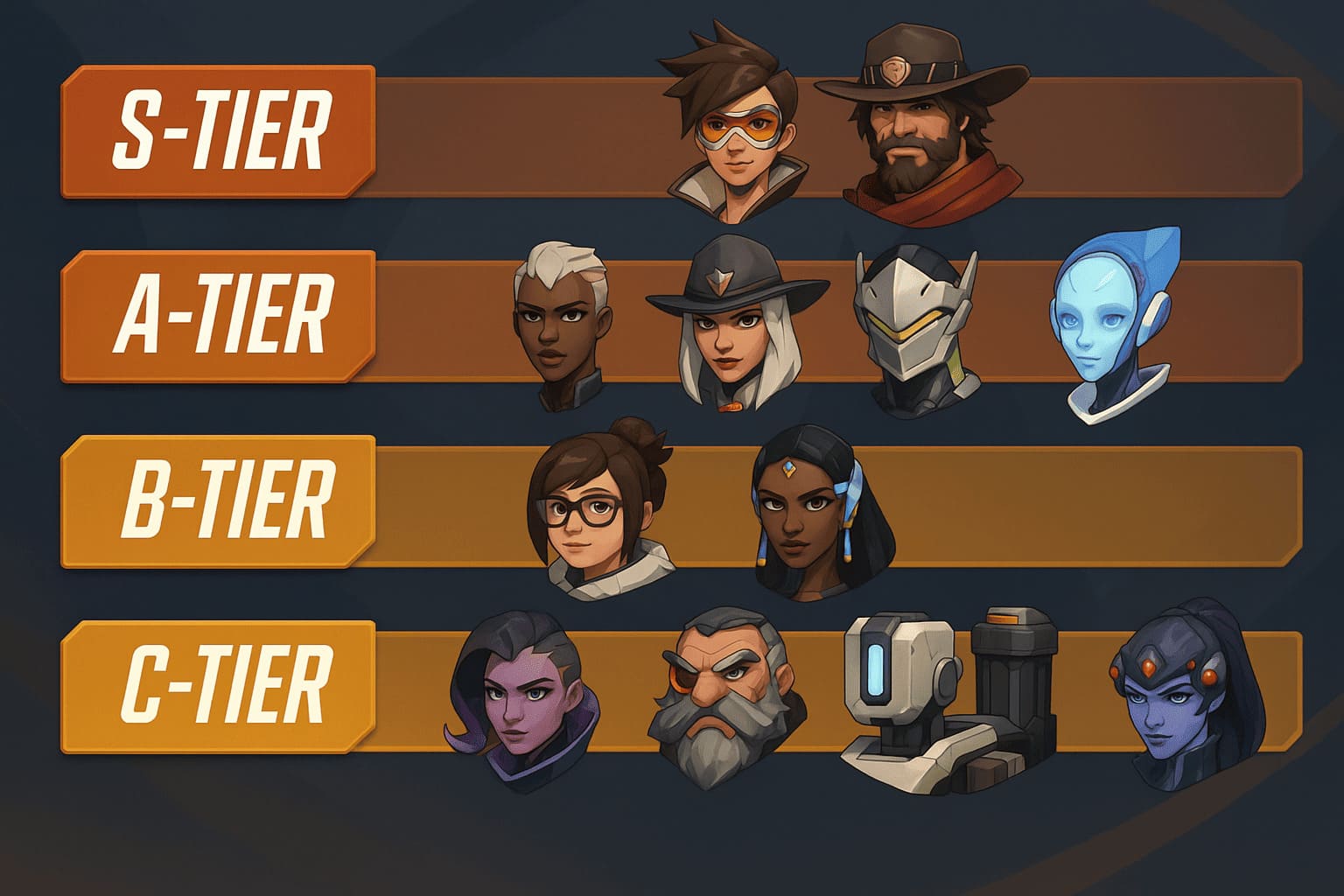
The damage role in Season 17’s meta shows strong diversity, with both hitscan and projectile heroes thriving. Recent updates reduced burst potential and rewarded steady pressure, shifting the DPS tier list toward sustained damage output. Tracer remains one of the best DPS, flexing between assassination and consistent pressure.
Balance across archetypes is higher than ever, though some Overwatch 2 DPS characters still outperform others. Success depends on adapting playstyle to team comps and fulfilling the role effectively within the tier list and meta.
S-Tier and A-Tier DPS Heroes
Tracer dominates with mobility and steady damage output, pressuring backlines and shaping the current meta. Her Pulse Bomb threat forces supports into cautious play. Cassidy excels as a mid-range hitscan, with Magnetic Grenade punishing dive heroes and Deadeye zoning effectively. Sojourn holds A-tier through railgun bursts and slide mobility, while Ashe provides long-range pressure. Echo and Genji remain strong DPS, adding unique utility to diverse tier lists in Overwatch 2.
Key Strengths for S/A-Tier DPS:
- Tracer: Unrivaled mobility, backline pressure, fast ultimate generation.
- Cassidy: Consistent mid-range damage, anti-dive utility, strong ultimate.
- Sojourn: Railgun pick potential, slide mobility, area denial.
- Ashe: Long-range pressure, Bob sixth-player value, dynamite control.
- Genji: Dive synergy, deflect value, team-wipe ultimate potential.
- Echo: Flight advantage, beam tank-busting, ultimate copying versatility.
B-Tier and C-Tier DPS Heroes
Mei provides unique utility through wall placement and freeze potential, though her damage struggles against current meta heroes. I've successfully used Mei on control maps where her ultimate and walls segment fights favorably. Her self-sustain through Cryo-Freeze offers value when supports focus elsewhere.
Symmetra's turret and teleporter enable creative strategies but require team coordination rarely found in ranked play. Certain heroes like Torbjörn protecting supports from dive can swing matches despite tier placement. These best damage heroes excel in specific scenarios rather than universally.
Specific Scenarios Where B/C-Tier DPS Excel:
- Mei: Chokepoint control on Hanamura, King's Row first point.
- Symmetra: Lijiang Control Center, turret-friendly spaces.
- Sombra: Against ability-dependent heroes.
- Torbjörn: Protecting supports with turret pressure.
- Bastion: Bunker strategies on payload maps.
- Widowmaker: Circuit Royal's long sightlines.
Support Tier List: Healers That Make a Difference
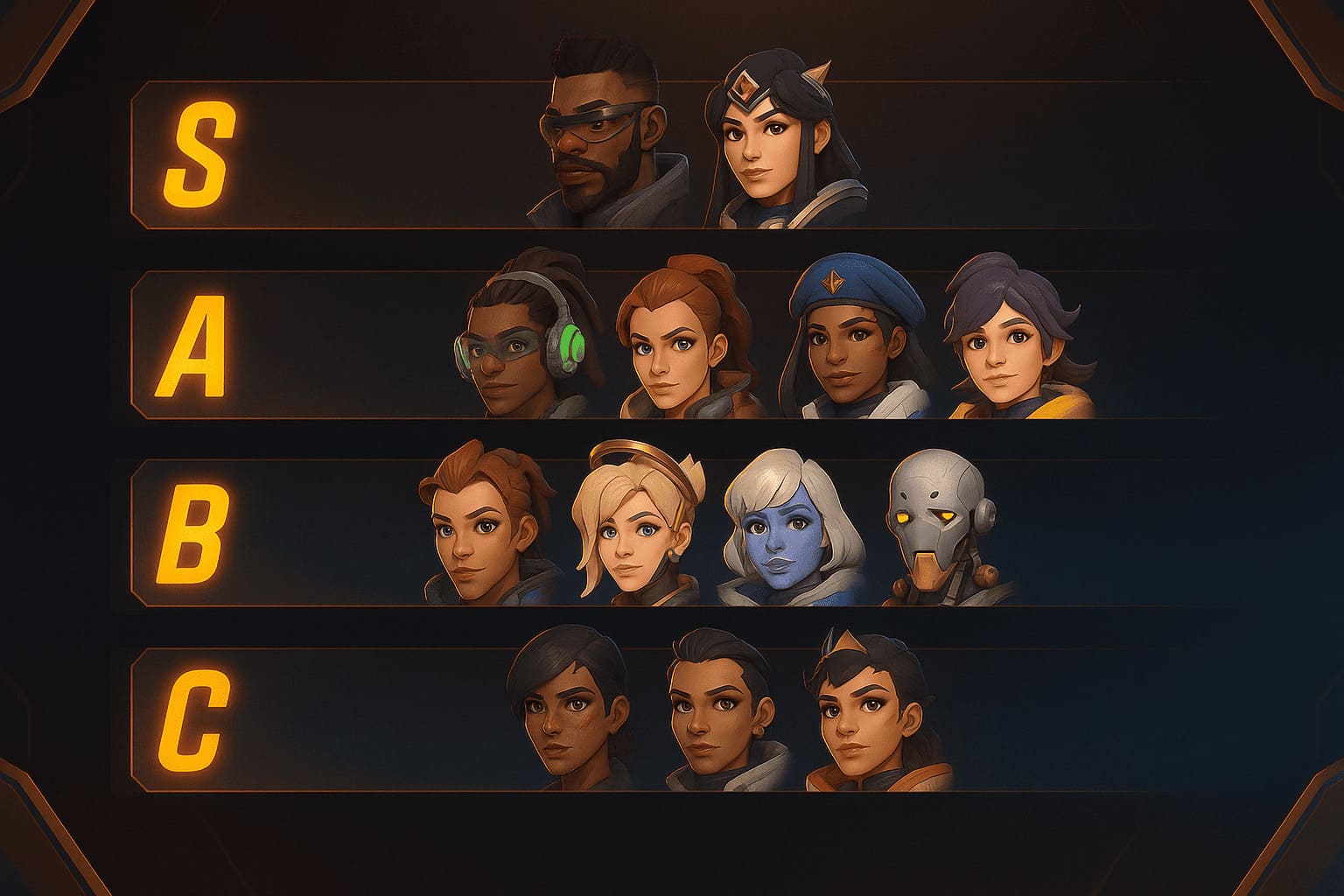
Support heroes define team survivability in Season 17's reduced-healing environment. The support tier list Overwatch 2 rewards utility-focused play over pure healer output. My experience shows damage contribution from supports often determines outcomes more than raw healing numbers.
The support meta rewards aggressive positioning and resource management. Understanding when to prioritize damage over healing separates good supports from great ones. Baptiste and Kiriko exemplify this balance perfectly.
S-Tier and A-Tier Support Heroes
Baptiste blends high healing with strong damage and utility. His Immortality Field remains unmatched among support heroes, while Amplification Matrix can swing fights. Kiriko offers burst healing, mobility, and survivability. With the Fortune Teller perk, she sustains pressure while Suzu counters key ultimates. Lucio powers rush comps with speed and healing, while Ana provides anti-heal utility. These support picks add value through biotic abilities and fight-changing ultimates in Overwatch 2’s meta.
Key Strengths for S/A-Tier Supports:
- Baptiste: Immortality Field utility, high healing output, damage potential.
- Kiriko: Teleport survivability, burst healing, clutch Protection Suzu.
- Lucio: Speed boost enablement, environmental kills, ultimate defense.
- Ana: Anti-heal utility, Sleep Dart picks, Nano Boost synergy.
- Brigitte: Anti-dive potential, armor provision, consistent inspiration.
- Juno: Mobility support, consistent healing, ultimate coordination.
B-Tier and C-Tier Support Heroes
Lifeweaver offers unique utility through Life Grip and Petal Platform but struggles with healing output. Mercy's damage boost remains valuable with Pharah, though limited otherwise. Zenyatta's discord provides value but vulnerability limits impact. These niche healer heroes work best in specific scenarios. Understanding when their unique utilities outweigh weaknesses enables strategic advantages in the right hands.
Specific Scenarios Where B/C-Tier Supports Excel:
- Lifeweaver: Protecting immobile DPS, enabling positioning.
- Mercy: Pharah compositions, resurrection value.
- Zenyatta: Discord enabling dive targets.
- Illari: Poke compositions on long-range maps.
Beyond the Tier List
This ultimate Overwatch 2 tier list and comprehensive Overwatch 2 hero tier list serve as guides, not absolutes. The best heroes may differ from theory, as comfort and enjoyment often outweigh small tier advantages when climbing the ranked ladder.
Exploring Overwatch 2’s roster means balancing optimization with fun. Mastering heroes in the game makes the ultimates in the game more rewarding, regardless of placement. Compared with a Marvel Rivals tier list, the 2 tier list for Season 17 remains a flexible roadmap for anyone looking for the best guidance rather than strict law.