In this Rainbow Six Siege review, we explore what makes Ubisoft Montreal’s tactical shooter a lasting force in the competitive gaming scene. Released in 2015, Tom Clancy’s Rainbow Six Siege redefined the genre with its 5v5 format, destructible environments, and respawn-free rounds that emphasize teamwork and precision over reflex. Each match becomes a test of coordination and map awareness, where every wall or floor can alter the outcome. Early R6 reviews — including those from IGN’s Ryan McCaffrey — noted its limited launch scope but praised its unique strategic depth. Over time, continuous updates have turned it into one of the highest-rated tactical experiences in the field. So, is Rainbow Six Siege a good game? Its enduring popularity suggests a confident yes.

What Makes Rainbow Six Siege Unique: Core Gameplay Mechanics
Rainbow Six Siege gameplay stands apart in the tactical shooter genre through its layered design philosophy built around destruction, positioning, and sound. Every match unfolds as a battle of information and timing, where breaking a single wall can shift the entire balance of power. The destructible environment transforms maps into living tactical puzzles, creating multiple sightlines and approaches. Vertical gameplay — attacking from above or below — adds another layer of strategy, forcing players to think in three dimensions. Sound-based gameplay further deepens this tension: footsteps, gadget use, and breaching charges reveal hidden movements. Unlike Call of Duty or Halo, where reflexes dominate, Siege rewards planning, patience, and teamwork. Each respawn-free round raises the stakes, making every decision count. This cerebral pace defines what’s truly special about Rainbow Six Siege as a team-based shooter built on precision and communication.
Destruction System: Walls, Floors, and Strategic Depth
The destructible environment is Rainbow Six Siege’s defining mechanic. Every bullet, breach, and explosion reshapes the map’s tactical flow. Operators use unique gadgets to open new angles or deny enemy sightlines. Sledge can instantly smash soft walls and floors, enabling aggressive entry routes. Thermite, on the other hand, carries exothermic charges capable of burning through reinforced walls that resist standard breaches. This layered fortification system — reminiscent of cover-breaking mechanics from Gears of War 3 — forces both sides to plan reinforcement and breaching strategies carefully. The result is a constant interplay between creation and destruction, where the environment itself becomes a weapon.
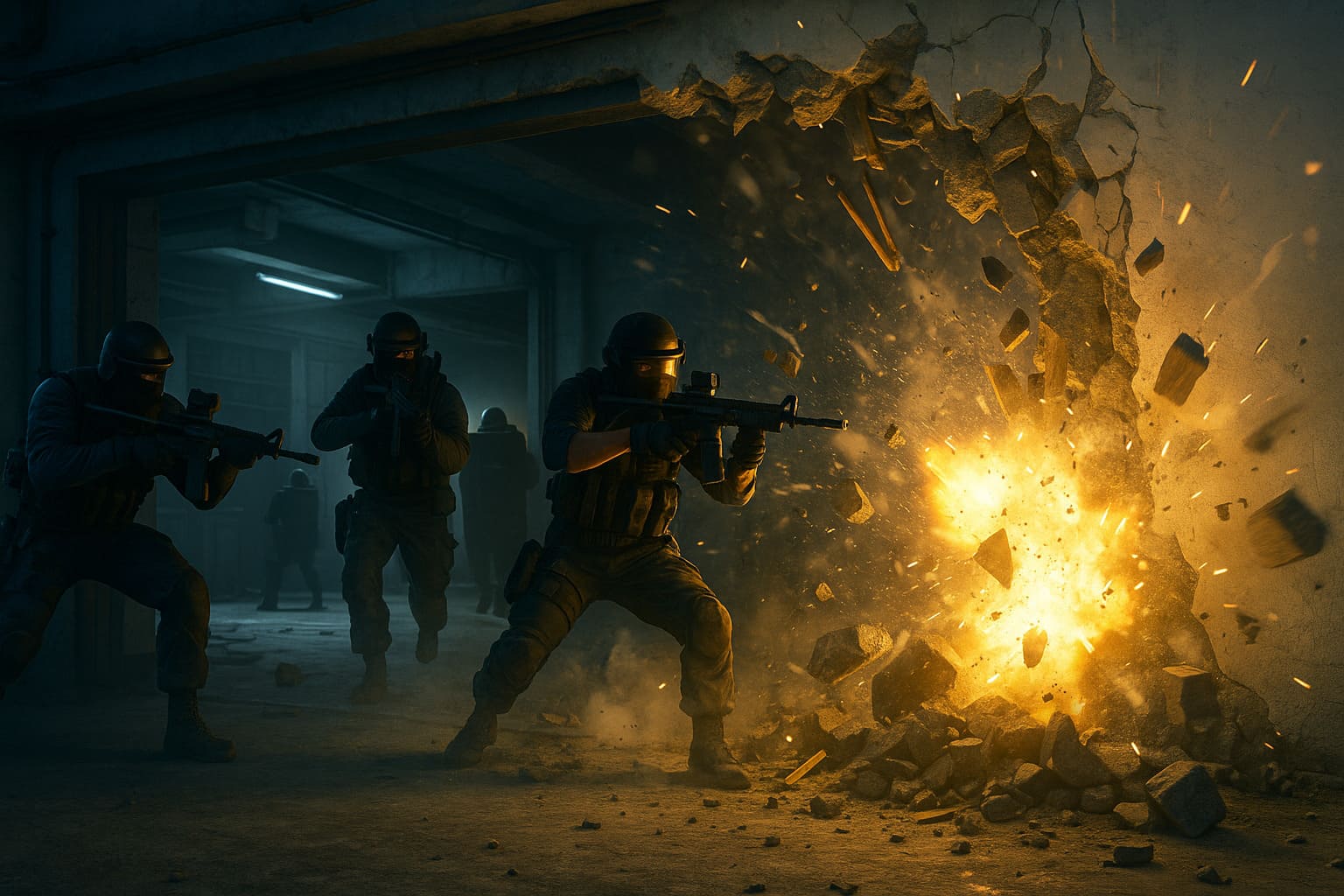
Operator Breach Comparison Table
| Operator | Breach Type | Function | Tactical Advantage |
|---|---|---|---|
| Sledge | Soft walls/floors | Uses breaching hammer for quick openings | Creates instant vertical or lateral access |
| Thermite | Reinforced walls | Deploys exothermic charge to burn reinforced surfaces | Opens critical choke points for team pushes |
Operator System: 20 Unique Characters with Specialized Roles
At launch, Rainbow Six Siege introduced 20 operators — 10 attackers and 10 defenders — each equipped with distinctive gadgets and tactical roles. This operator selection defines team composition and strategic diversity. Pulse uses a heartbeat sensor to detect enemies through walls, providing crucial intel. Mute counters this with a signal jammer that disables drones and remote detonations. Doc supports teammates with healing injections, sustaining defenses during prolonged engagements. Operators are unlocked using Renown, the in-game currency earned through matches, which encourages gradual progression. For newcomers, balanced choices like Sledge or Rook offer accessible entry points without complex mechanics. The system ensures that even beginner players can contribute meaningfully, while veterans explore advanced synergies between abilities — core to Rainbow Six Siege gameplay’s long-term appeal.
Rainbow Six Siege for Beginners: Learning Curve & Accessibility
Rainbow Six Siege is often described as a beginner-friendly game only in theory. In practice, it has a steep learning curve that demands patience and adaptability. To unlock ranked gameplay, players must reach character level 20, which usually takes over 10 hours. During this period, newcomers are encouraged to complete Situations — a set of 10 guided missions plus a bonus scenario that teach core mechanics like breaching, droning, and defending. Compared to Fortnite, where action is immediate and progression fast, Siege rewards slow mastery and tactical understanding. The game’s progression system is deliberately paced, sometimes nudging players toward the microtransaction system for faster operator unlocks. IGN’s Ryan McCaffrey once referred to its early content model as “a skeleton waiting to be built upon,” a criticism Ubisoft has since addressed with continuous updates. Successful play and competitive gaming strategies require map knowledge and consistent teamwork.
Training Modes: Situations and Terrorist Hunt
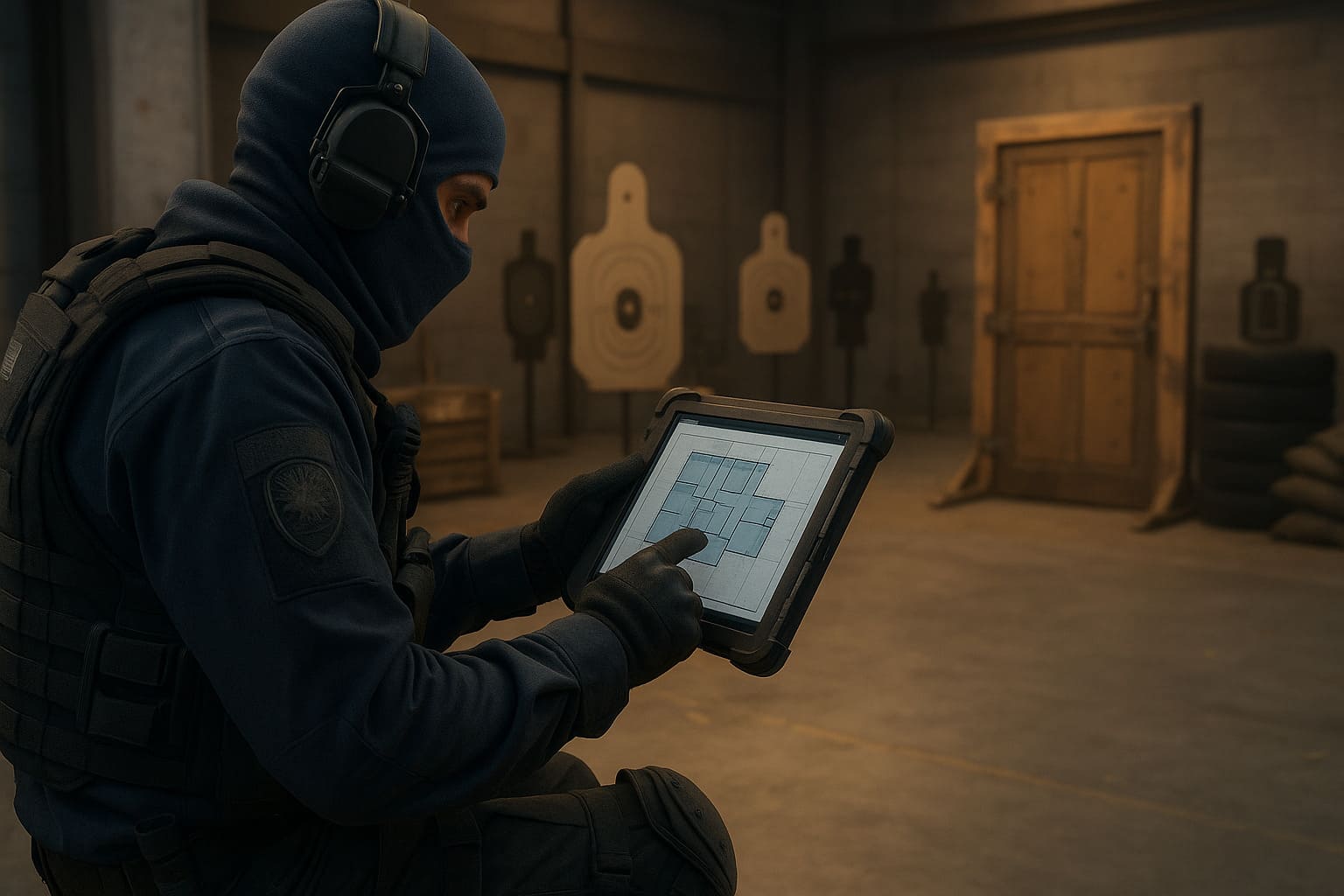
For players wondering how to play R6 casually, the training modes in Rainbow Six Siege provide a forgiving start. The Situations mode offers 10 solo tutorial-style missions plus one bonus challenge against AI enemies, designed to teach basic tactics like entry, defense setup, and gadget use. Terrorist Hunt expands this by allowing both solo and co-op PvE play, scaling difficulty from Normal to Hard and beyond. It’s a safe space for experimentation without the pressure of ranked matches. These modes help beginners transition smoothly into multiplayer, building comfort with weapons, recoil, and map layouts while keeping the experience beginner-friendly and flexible for casual play.
Competitive Positioning: How Siege Compares to Other Shooters
Within the tactical shooter genre, Rainbow Six Siege holds a distinct identity built on methodical pacing and competitive gameplay that prioritizes coordination over speed. While Call of Duty and Halo reward fast reflexes and aggressive movement, Siege demands patience, planning, and communication. Compared to Counter-Strike 2 (formerly Global Offensive), which still revolves around economy-dependent decision-making and static environments, Rainbow Six Siege offers destructible maps that constantly evolve mid-match. Valorant adds ability-driven tactics, but its maps remain fixed, making Siege’s destructibility its key differentiator. The result is a uniquely cerebral experience — less about twitch reactions, more about spatial awareness and teamwork. Even when compared to Fortnite, Siege feels harder because each mistake is permanent due to its no-respawn system.
Tactical Shooter Comparison Table
| Game | Core Focus | Map Design | Key Mechanics | Pace & Skill Type |
|---|---|---|---|---|
| Rainbow Six Siege | Team coordination, strategy | Destructible & vertical | Operator abilities, intel, fortification | Slow, cerebral, tactical |
| CS2 (formerly CS:GO) | Round economy, precision | Static & predictable | Weapon purchases, bomb defusal | Medium, reflex-based, economic |
| Call of Duty | Reflex shooting, mobility | Static & linear | Loadouts, killstreaks | Fast, twitch-reaction |
| Valorant | Team tactics with abilities | Static & symmetrical | Hero abilities, plant/defuse | Moderate, hybrid |
| Fortnite | Construction & speed | Dynamic terrain via building | Resource gathering, building | Fast, creative reflex play |
Siege vs Counter-Strike: Destruction vs Economy
Counter-Strike 2 (formerly Global Offensive) and Rainbow Six Siege both emphasize teamwork and precision, yet their foundations differ sharply. CS2 relies on economy management — players earn money each round to purchase weapons, armor, and utility, creating a rhythm of economic risk and reward. Its static maps emphasize repetition and mechanical mastery. In contrast, Siege replaces economic play with environmental strategy. Every wall, floor, and ceiling can be breached or reinforced, and operator abilities replace weapon-buying with tactical specialization. This tactical shooter dynamic shifts focus from budget control to spatial control — every round is about reshaping the battlefield rather than managing finances, making competitive gameplay in Siege more unpredictable and multi-dimensional.
Game Modes: Attack-Defend Variety and Casual Options
Rainbow Six Siege structures its game modes around a clear attack-and-defend gameplay loop, where coordination and timing determine success. The most common is Bomb Mode, in which attackers must plant and defenders defuse explosives, emphasizing map control and communication. Hostage Mode focuses on rescuing or protecting a hostage, though it’s less popular due to the high risk of accidental failure. Secure Area challenges teams to capture and hold a single zone until time runs out, testing defensive setups and crowd-control tactics. These three core formats keep the experience dynamic for both serious and casual play. For those who prefer to play R6 casually, the variety of objectives offers flexible engagement levels without sacrificing tactical depth.
Casual vs Ranked: Playing Without Pressure
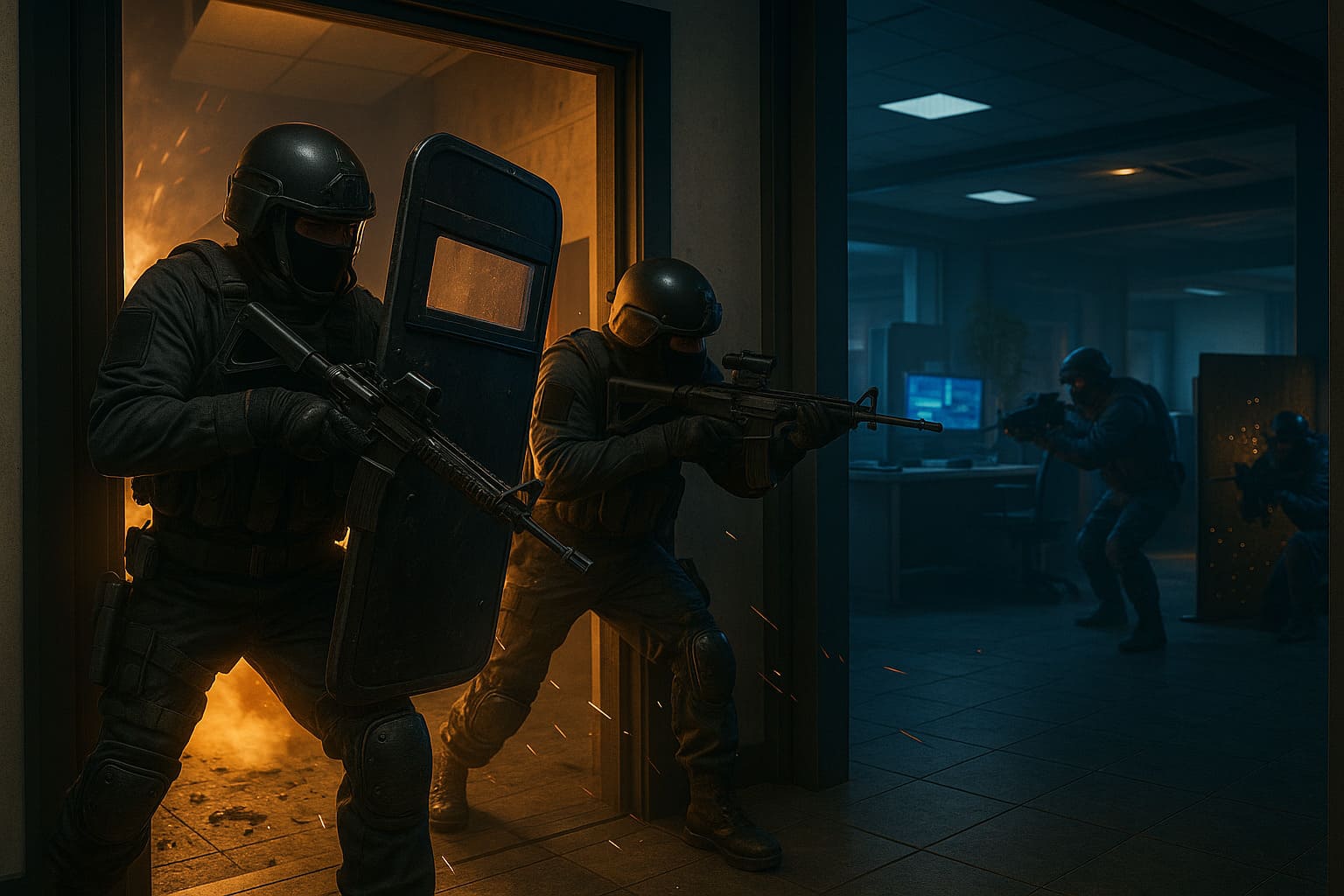
Casual play in Rainbow Six Siege is ideal for players seeking tactical depth without competitive stress. Ranked gameplay becomes available only after reaching character level 20, ensuring new players have time to learn maps and operator roles. In Casual Mode, matchmaking is faster, team composition is flexible, and mistakes carry less weight — perfect for testing strategies or experimenting with gadgets. For additional low-pressure training, Terrorist Hunt provides cooperative PvE missions against AI enemies, allowing players to refine aim, positioning, and gadget use. This system ensures that both new and seasoned players can play R6 casually or competitively, adjusting the level of challenge to their comfort and goals.
Evolution Since Launch: From Limited Content to Live Service Success
When Rainbow Six Siege launched in 2015, it offered just 11 maps and 20 operators — content that many critics, including IGN, described as thin for a full-priced release. However, Ubisoft’s long-term Games as a Service strategy transformed the title from a modest start into a thriving, continually evolving platform. Through consistent live service updates, Siege expanded its operator roster, reworked older maps, and refined balancing to maintain competitive integrity. This steady flow of content updates kept the player base engaged and growing. Unlike failed multiplayer-only titles such as Evolve or Star Wars Battlefront, Siege adapted, improved, and listened to its community. Today, it stands as a model example of why Rainbow Six Siege is so popular — a live game that truly earned its longevity.
Final Verdict: Is Rainbow Six Siege Worth It?
In this Rainbow Six Siege review, the game stands as one of the most distinctive titles in the tactical shooter genre. Developed by Ubisoft Montreal, it combines deep strategy, destructible environments, and unique operator mechanics to create matches that feel endlessly variable. IGN’s Ryan McCaffrey initially critiqued its limited launch content but later acknowledged its transformation into a rich, evolving experience under the Games as a Service model. While the R6 rating reflects its enduring popularity, newcomers should be prepared for a steep learning curve and slow progression. For players who value teamwork, communication, and tactical depth over instant gratification, Rainbow Six Siege remains a good game — and a benchmark for thoughtful, skill-driven design in modern competitive shooters.