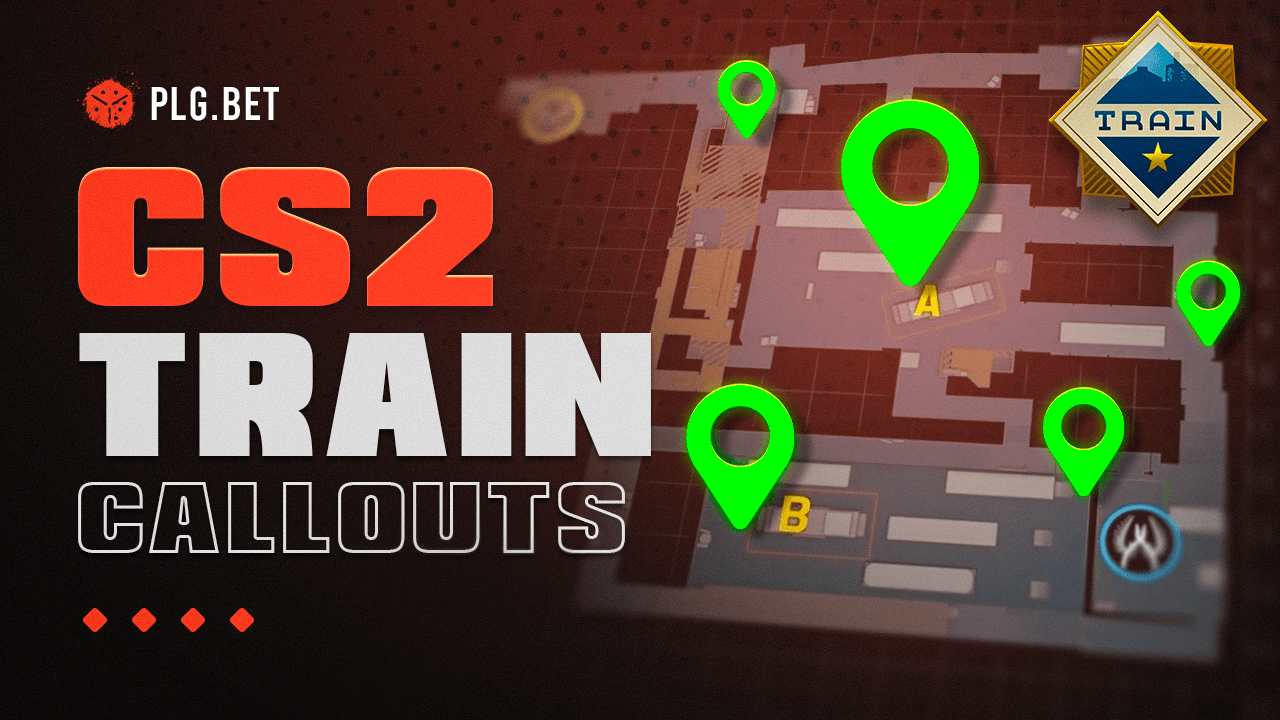
The train returned to CS2 in 2024 with major updates. Clear communication wins rounds on this industrial map. Professional players know every position by name. Team coordination depends on precise callouts. This guide covers all essential Train locations for both sides.
Want to dominate Train matches? Master these callouts first. Every position name matters in clutch situations. Communication speed often decides the round outcome.
Understanding Train in CS2: Map Overview and Changes
The train features two bombsites across multiple elevation levels. The industrial layout creates unique tactical challenges. A Site sits northeast with multiple entry points. B Site occupies the northwest corner with limited access routes.
The map heavily favors CT defenders. Counter-Terrorists spawn centrally between both sites. Quick rotations give CTs a significant advantage. Terrorists must coordinate executes to break defenses.
The train's complexity demands precise position calling. Multiple trains provide cover across both sites. Vertical gameplay adds another communication layer. Players move between upper and lower levels constantly. Clear callouts prevent confusion during fast rotations.
The industrial aesthetic makes landmarks easily recognizable. Colored trains help identify exact positions quickly. This visual clarity supports faster team communication.
Key Changes from CS:GO to CS2 Train
CS2 Train removed several iconic positions. Pop Dog no longer has its famous ladder. Heaven underwent significant modifications affecting sightlines. The Underpass area received a complete redesign.
These changes require updated callout knowledge. Old CS:GO terminology no longer applies everywhere. Players must learn the new position names. Misusing outdated callouts confuses teammates badly.
The ladder removal from Pop Dog changed A Site approaches. Teams adjusted their execute strategies accordingly. CT setups evolved to match new map geometry. Understanding these changes improves tactical decision-making.
Hallmark CS2 Train Changes
Wider corridors improve movement across the map. T Main now offers better approach angles. The Underpass corridor connects more areas smoothly. Z Connector gained increased strategic importance.
Heaven removal opened new defensive angles. CTs adapted their A Site holds significantly. Pop Dog's simplified design speeds up entries. These modifications balance gameplay between sides better.
Professional teams quickly developed new utility setups. The wider corridors enable improved grenade executions. Movement through chokepoints feels less claustrophobic now.
Want to see how pros adapted? Watch top-tier Train matches on PLG.bet and study their updated strategies. Professional team revolutionary Pop Dog executes after the ladder removal. Their innovative approaches save weeks of trial and error.
Essential Train Callouts for T-Side
Terrorist communication drives successful site takes. T-side requires offensive coordination and timing. Clear position calls enable synchronized executes. Understanding spawns and routes determines round starts.
Multiple attack paths demand organized callouts. Teams split across different entry points regularly. Everyone must know standard position names. Miscommunication leads to failed executes and lost rounds.
T-Spawn and Initial Routes
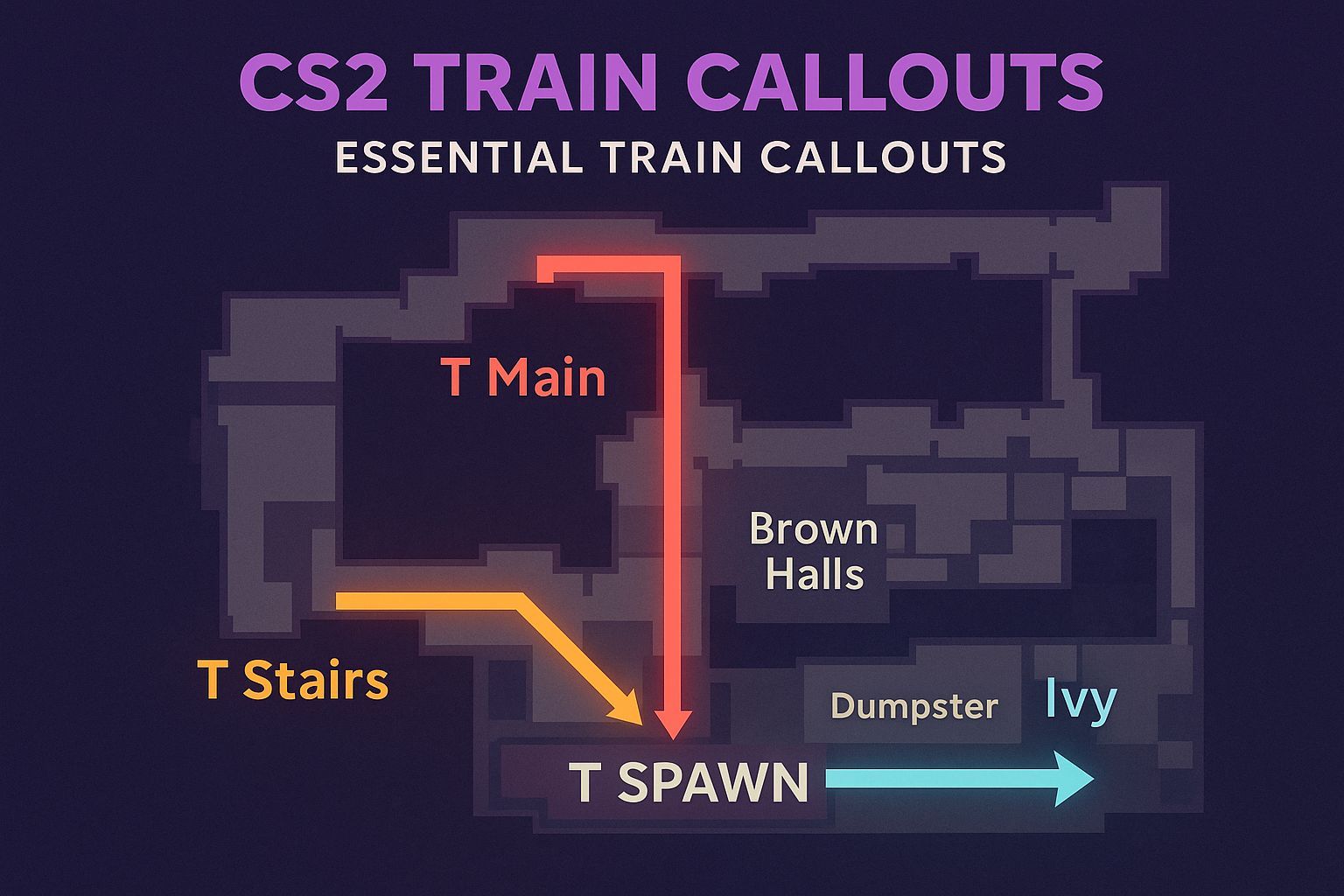
- T Spawn - Terrorist starting area at map south.
- T Stairs - Stairway leading from spawn toward B.
- T Main - Wide corridor connecting spawn to A Site. Primary A approach with good width for movement.
- Brown Halls - Northwest corridor running parallel to B Halls. Connects to B Site through multiple angles.
- Ivy - Eastern passage from Pigeons to A Site. Popular flanking route with limited visibility.
- Alley - Long back corridor from T Spawn toward Ivy.
- Dumpster - Container outside Ivy providing cover angles.
- Kitchen - Area between T Stairs and Showers.
Initial movement determines map control early. Teams divide spawn exits strategically. Fast players rush key positions first. Communication starts immediately at round beginning.
A Site Approach Callouts
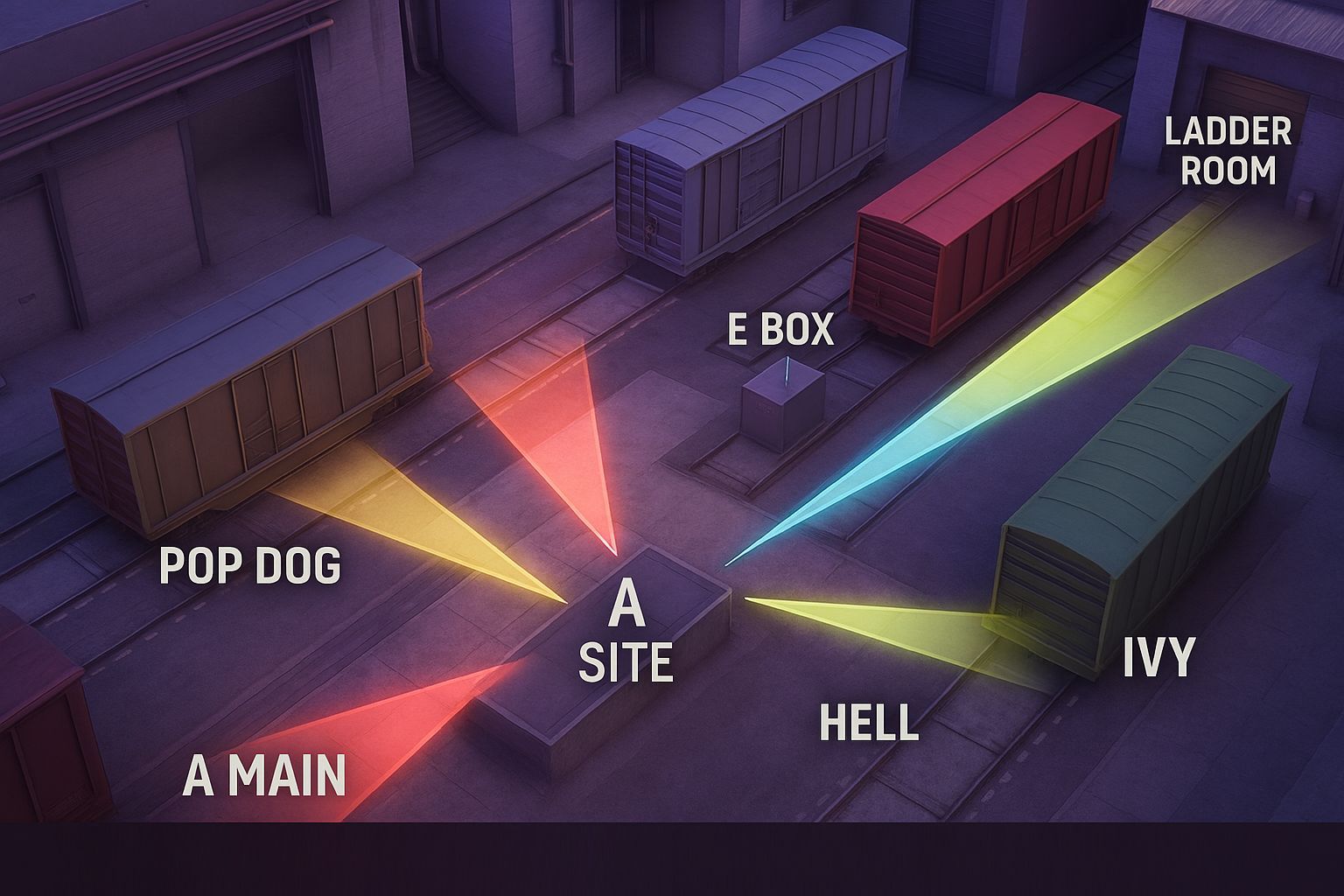
- A Main - Main entrance facing Blue Train directly.
- Ivy - Eastern connector with high flanking value. Risky approach but offers surprise angles.
- Pop Dog - Small room near ladder providing A access. Simplified in CS2 but remains important.
- Squeaky - Noisy door creating distinct audio cues. Alerts defenders immediately when opened.
- Ladder Room - Central position with vertical movement options.
- E Box - Electrical box between Pop Dog and Bomb Train. Common defensive position against Pop Dog pushes.
- Olof - Cubby near Blue Train facing A Main. Named after a famous pro player position.
- Hell - Cubby beside Green Train facing Ivy entrance.
- Sandwich - Narrow gap between Green and Blue trains.
A Site entries require utility support always. Smokes blind crossfire angles effectively. Flashes clear common holding positions fast. Coordinate pushes through multiple entries simultaneously.
B Site Approach Callouts
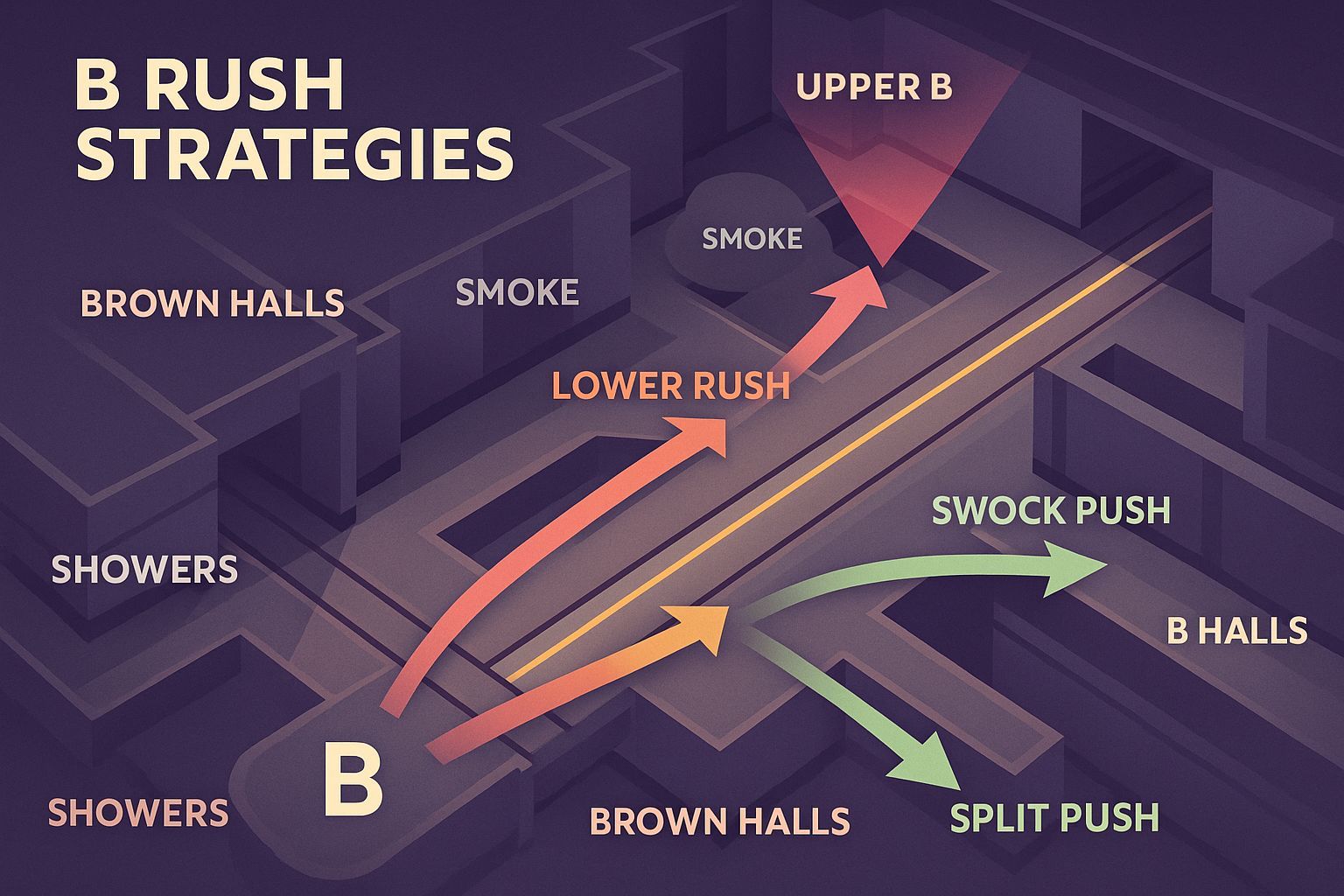
- Upper B - Elevated catwalk above B Site. High position with excellent visibility.
- Lower B - Ramp entrance at ground level. Primary plant area for B executes.
- Brown Halls - Corridor leading behind B Site defenses.
- Z Connector - Central passage between A and B. Critical rotation path for both teams.
- B Halls - Area directly behind B Site. Terrorists prepare executes here safely.
- Showers - Space beside Brown Halls with narrow sightlines.
B Site's limited entrances create predictable approaches. CTs easily cover both entry angles. Success demands perfect timing and utility. Upper and Lower pushes must synchronize precisely.
Essential Train Callouts for CT-Side
Counter-Terrorist defense relies on information gathering. Quick enemy reports enable fast rotations. CT calls focus on defense and position holding. Communication must stay clear under pressure.
Defenders spread across both sites initially. One player typically watches connector mid. Others hold bombsite angles carefully. Fast rotation capability defines CT success.
CT-Spawn and Defensive Positions
- CT Spawn - Northern starting area for defenders. The central position enables quick rotations.
- Z Connector - Z-shaped path connecting both bombsites. High priority control area.
- CT Stairs - Stairway from spawn toward A Site area.
- Heaven - Elevated position overlooking A Site. Excellent visibility across multiple angles.
- Hell - Ground level beneath Heaven position.
- Backlines - Area behind A trains near CT spawn.
CT positioning depends on team economy decisions. Players adjust setups based on opponent tendencies. Z Connector control provides critical mid information. Early connector presence denies Terrorist map control.
A Site Defense Callouts
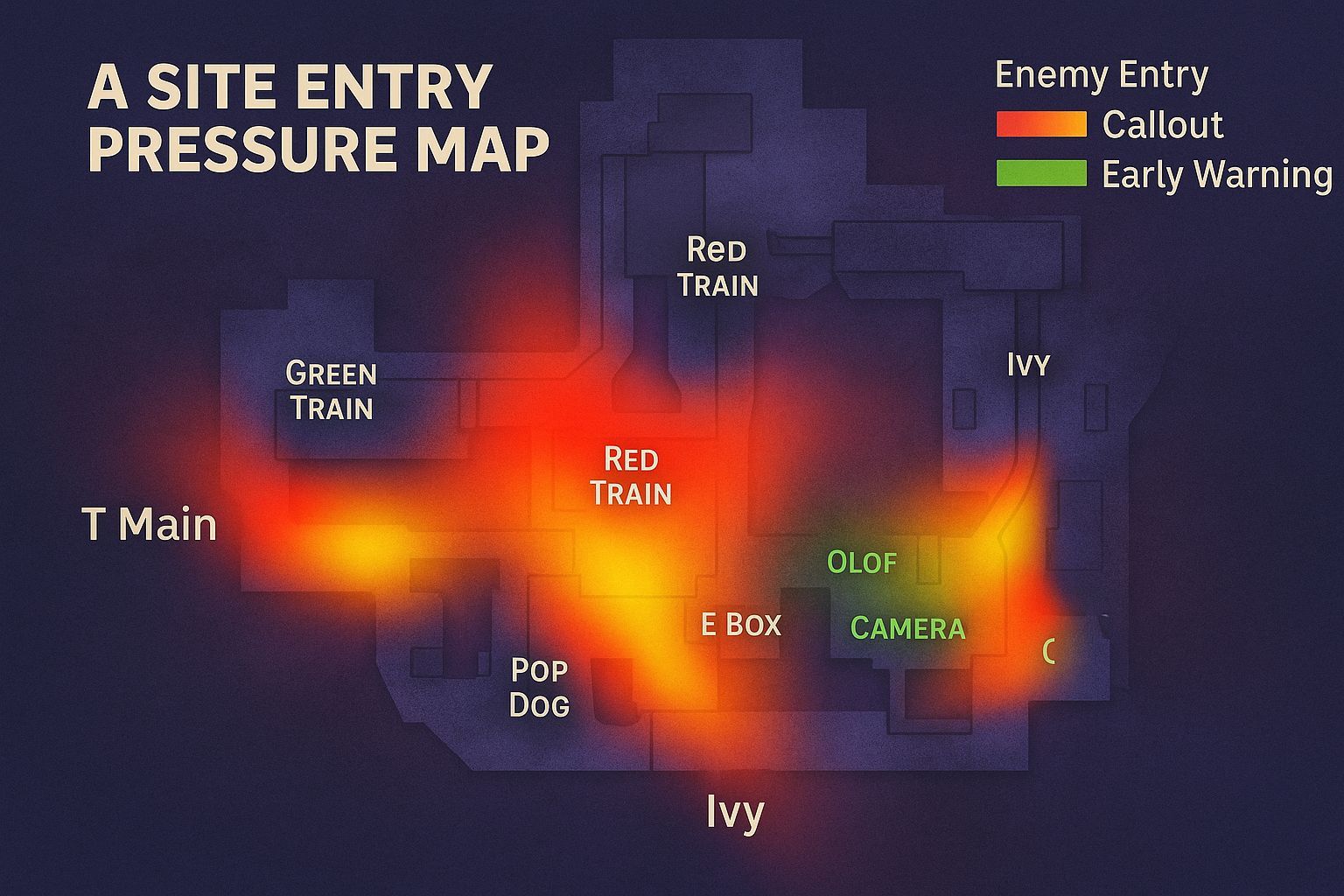
- A Site - Main bombsite with high callout density.
- Bomb Train (A) - Central train marking plant positions.
- Old Bomb - Train near CT Stairs referencing historical plant spot.
- Green Train - First train near A Site bomb area.
- Red Train - Train closer to T Main entrance.
- Blue Train - Train near CT Connector area.
- Yellow Train - Train positioned toward Ivy side.
- E Box - Electric box providing cover from Pop Dog.
- Camera - Wall between A3 and A2 positions.
- A1 - Alley between Old Bomb and CT side wall.
- A2 - Alley between Old Bomb and Ivy side wall.
- A3 - Path from Ivy onto A Site.
A Site defense requires crossfire setups. Multiple trains provide various cover positions. Height advantages from elevated spots help significantly. Defenders must communicate enemy positions precisely.
B Site Defense Callouts
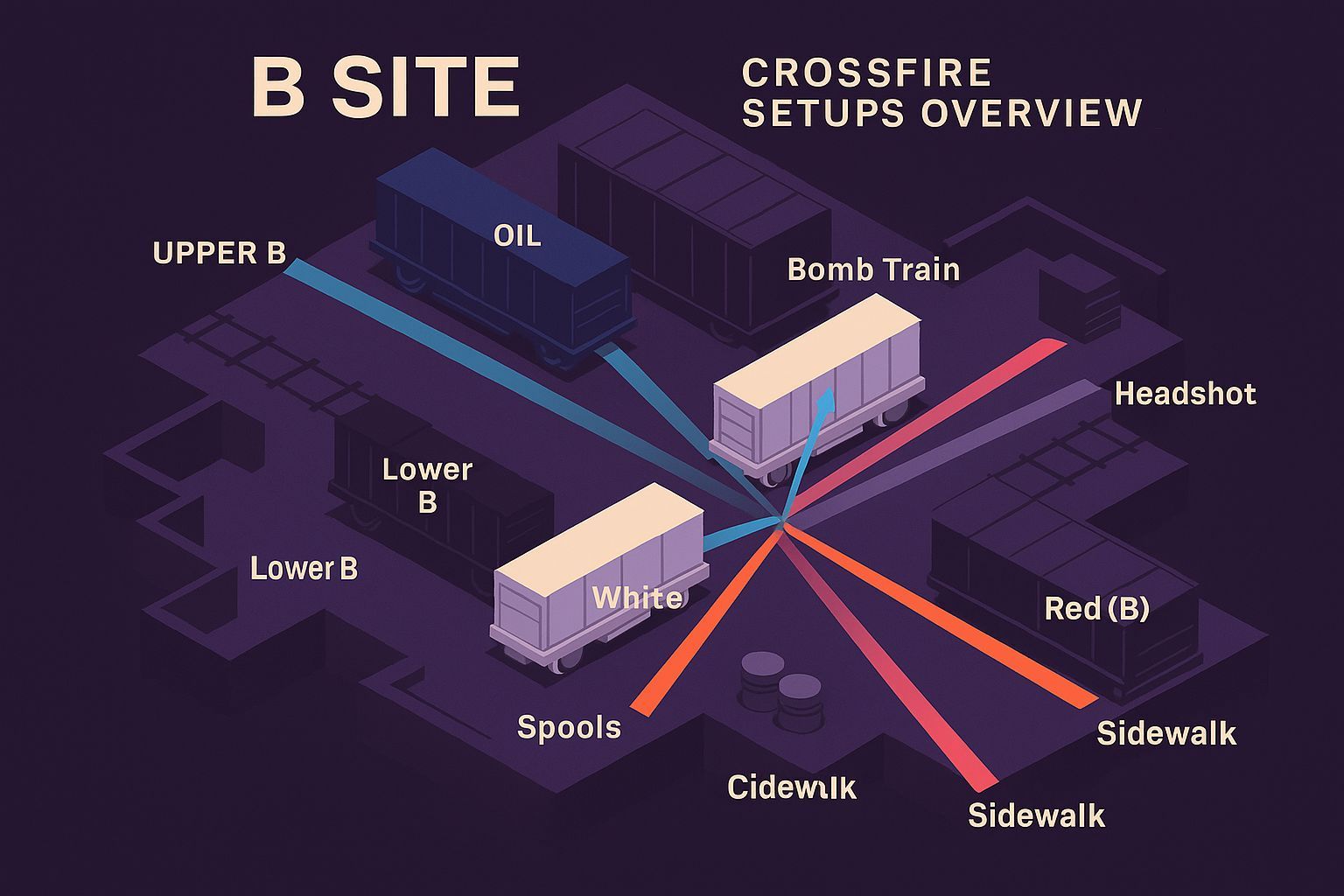
- B Site - Northwestern bombsite with very high defensibility.
- Upper B - Elevated area with dominant position.
- Lower B - Ground level primary plant zone. Vulnerable to Upper B angles.
- Bomb Train (B) - Central B Site plant train.
- Oil - Black train near Headshot position.
- White - White train outside Lower B ramp.
- Yellow - Yellow train behind Bomb Train.
- Red (B) - Red train next to Z Connector.
- Back Site - Deep area behind Oil and Red trains.
- Spools - White cylinders providing cover near bombsites.
- Catwalk - Path after Upper B toward site.
- Headshot - Catwalk end where players crouch-peek.
- Sidewalk - Platform running from Lower toward Z Connector.
B Site's vertical complexity demands careful communication. Upper positions dominate Lower angles heavily. Defenders coordinate crossfires between elevation levels. Proper callouts prevent friendly fire accidents.
Mid and Connector Callouts
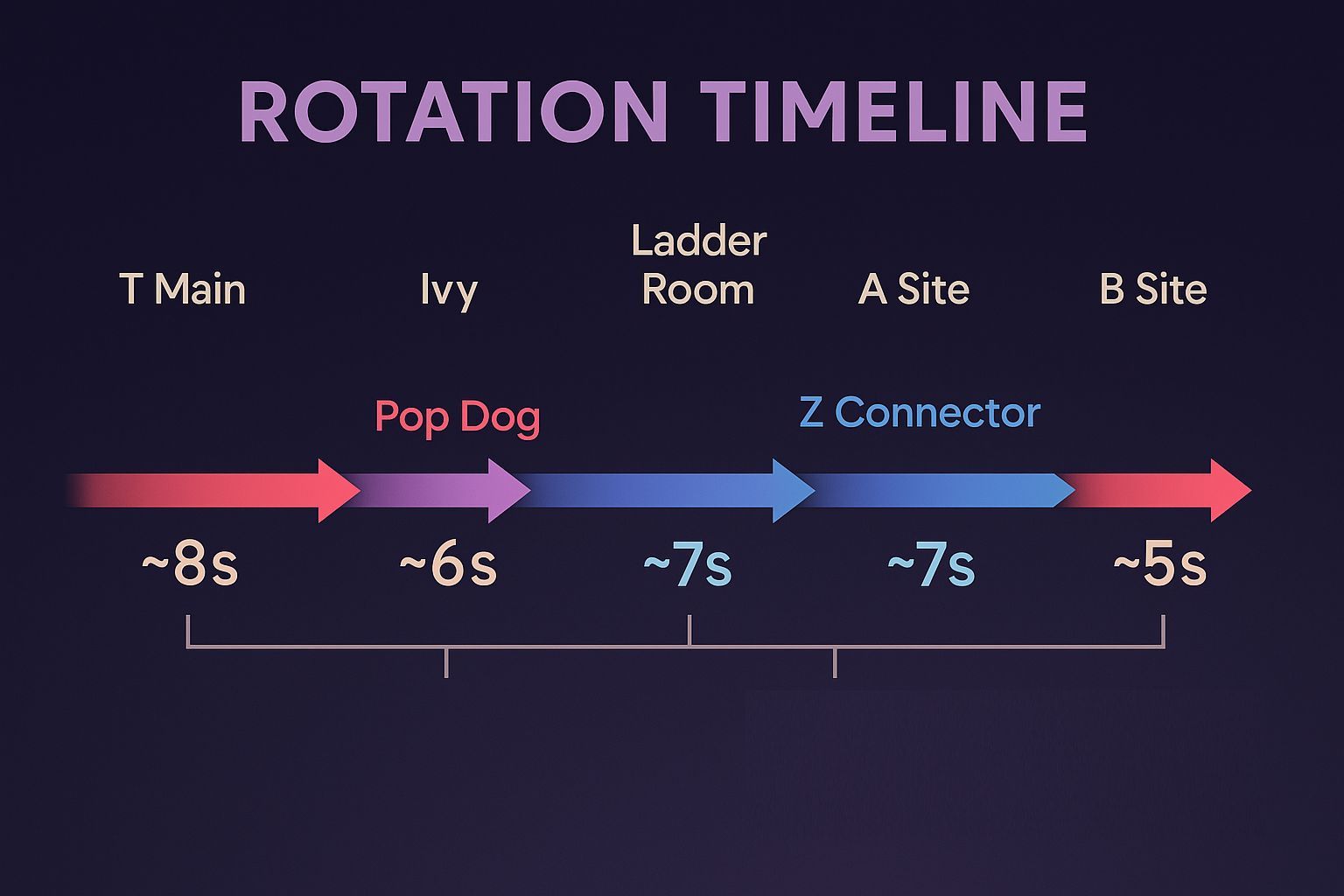
- Z Connector - Z-shaped central passage between sites. Very high strategic value for rotations.
- Pop Dog - Position near ladder room. Provides multiple site access routes.
- Ladder Room - Central area with vertical movement. High risk but important rotation point.
Mid control determines map flow significantly. Both teams contest connector areas regularly. Fast rotations through mid save crucial seconds. Information from connectors impacts all decisions.
Strategic Chokepoints
- T Main - Wide primary approach with high control priority. Teams fight for this early.
- Pop Dog - Critical connector with very high strategic value.
- Ivy - Important flanking route with medium control priority.
- Brown Halls - Medium value corridor toward B Site.
- Z Connector - Highest priority control point connecting everything.
Chokepoint control wins rounds consistently. Early dominance establishes map pressure. Defenders must contest key positions immediately. Losing connector control forces risky retakes.
Advanced Strategic Callouts and Positions
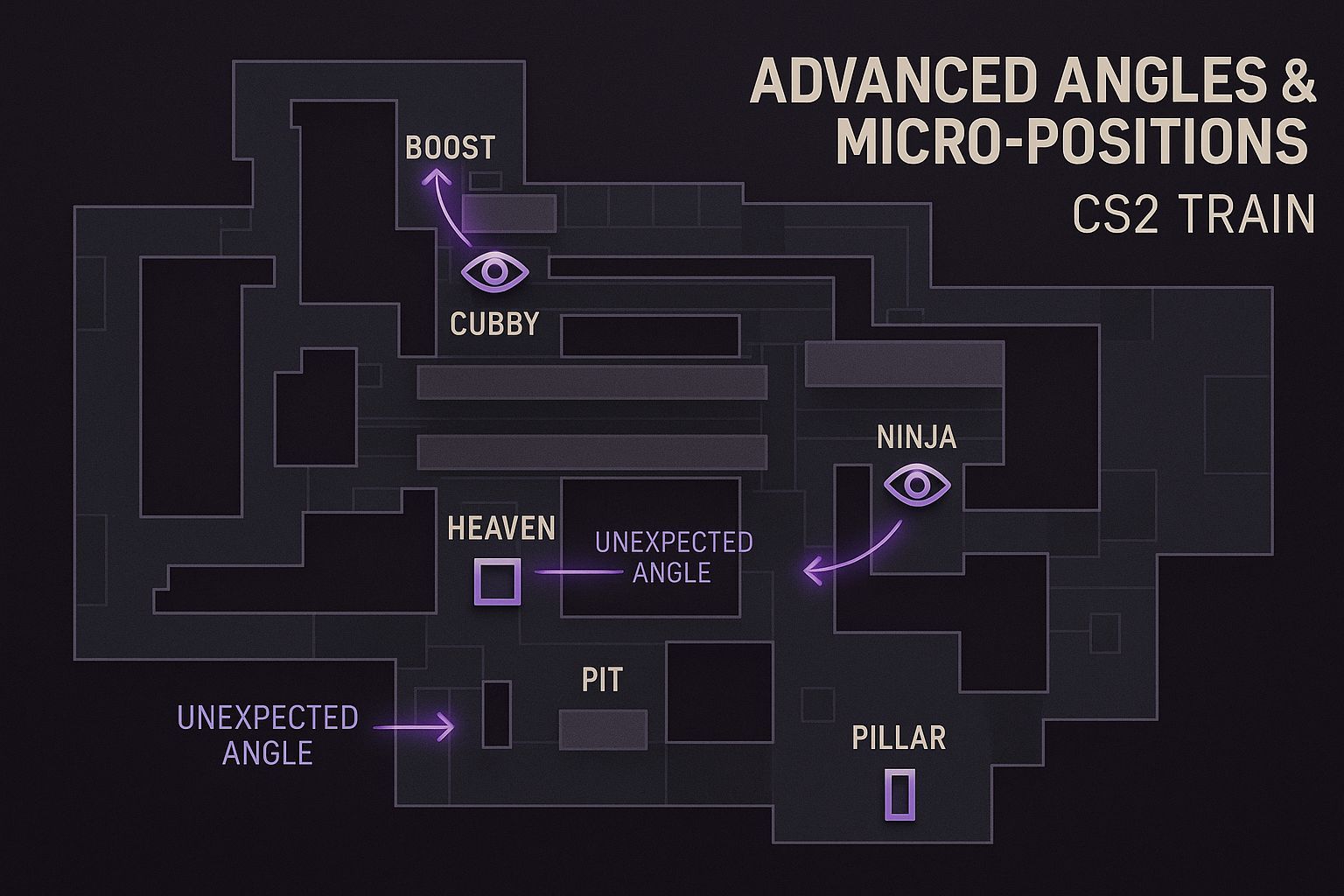
Professional terminology enhances team coordination. Uncommon positions separate good players from great ones. Advanced callouts provide precise location information. High-level play demands detailed position knowledge.
Teams develop specialized terms over time. Consistency in advanced calls improves coordination. Study professional matches to learn new terminology. Better communication directly improves performance.
Advanced Positioning Terms
- Default - Standard plant positions on both sites.
- Cubby - Small alcoves throughout the map.
- Ninja - Hidden defuse spots behind cover.
- Boost - Team-boost positions reaching unexpected angles.
- Heaven - Any elevated position overlooking sites.
- Pit - Lower positions beneath elevated areas.
- Pillar - Various support columns across the map.
Micro-positions within major areas need specific names. Detailed calls enable sophisticated strategies. Professional players use consistent regional terminology. These terms evolve continuously with meta changes.
Communication Techniques for Train
Keep calls clear and brief always. Prioritize critical information first. Don't overtalk during tense moments. One sharp call beats long explanations.
Use standardized terminology with your team. Practice callouts on private servers. Review demos to spot miscommunication. Consistency builds automatic response patterns.
Structure information hierarchically: location, count, equipment. Example: "Two A Main, full utility" provides complete intel instantly. Dead players should stay silent during clutches.
Practicing Train Callouts: Tips and Exercises
Load Train in practice mode regularly. Walk through every position while saying names. Consistency builds muscle memory faster. Team drills ensure everyone uses the same terminology.
Watch professional Train demos actively. Pause when calls happen and identify positions. Compare your terminology with pro usage. This trains both knowledge and application.
Study map overhead views thoroughly. Visual memory reinforces verbal callouts. Connect position names with physical locations. Understanding spatial relationships improves calls.
Tactical Tips for Train
- T-Side Strategy: Control mid early for information. Split executes across multiple entries. Use utility to isolate defender positions. Time pushes after utility lands.
- CT-Side Defense: Contest Z Connector immediately. Establish crossfires on both sites. Rotate quickly through the mid connector. Don't overcommit to fake executes.
- Economic Considerations: Train rewards utility usage heavily. Buy full grenades on important rounds. Smokes block crucial CT angles. Molotovs delay pushes effectively.
Site takes require synchronized timing. Everyone must understand their role. Practice standard executes repeatedly. Muscle memory enables automatic execution.
Why Train Is CT-Favored
Train structurally advantages defenders significantly. A Site offers high defensibility positions. B Site features very limited entry routes. CT spawn enables lightning-fast rotations.
The central spawn location helps CTs tremendously. Quick connector access provides information early. Defenders reach setup positions before Terrorists. This timing advantage is massive.
B Site's accessibility limitation creates predictable approaches. CTs easily cover both Upper and Lower entries. A Site's multiple entrances spread but don't overwhelm. Superior coordination overcomes this disadvantage on the T-side.
Conclusion
Mastering Train callouts directly improves competitive performance. Clear communication creates winning teams consistently. These position names form CS2's tactical language. Practice makes callouts automatic under pressure.
Train's complexity rewards dedicated players heavily. The map has remained competitive since CS 1.6. The modern CS2 version maintains strategic depth. Consistent callout practice yields noticeable improvement quickly.