Introduction: Mastering the Climb
Ever wondered why your Valorant rank seems stuck while your friend climbs effortlessly? Understanding Valorant's ranking system isn't just about knowing which badge looks cooler—it's the key to unlocking your competitive potential.
Valorant's ranking system blends performance metrics with win-based progression, creating a unique challenge different from other FPS games. The ranking system explained here reveals mechanics that separate successful climbers from those who plateau. This guide covers everything about the Valorant rank system, from progression mechanics to proven strategies when playing Valorant competitively.
Understanding Valorant's Competitive Requirements
Before diving into ranked matches, you need to unlock competitive mode through specific requirements designed to protect all players from frustrating experiences.
Requirements to Access Ranked Mode:
- Account Level 20 (minimum requirement)
- Complete agent contract introductory missions
- No active restrictions or penalties
Reaching account level 20 requires roughly 20-30 hours of gameplay. This period teaches essential maps, agent abilities, and core mechanics crucial in ranked play. Riot Games implemented this requirement to prevent newcomers from struggling before understanding Valorant's tactical depth.
All Valorant Ranks: Complete Breakdown from Lowest to Highest
The Nine Rank Tiers Explained
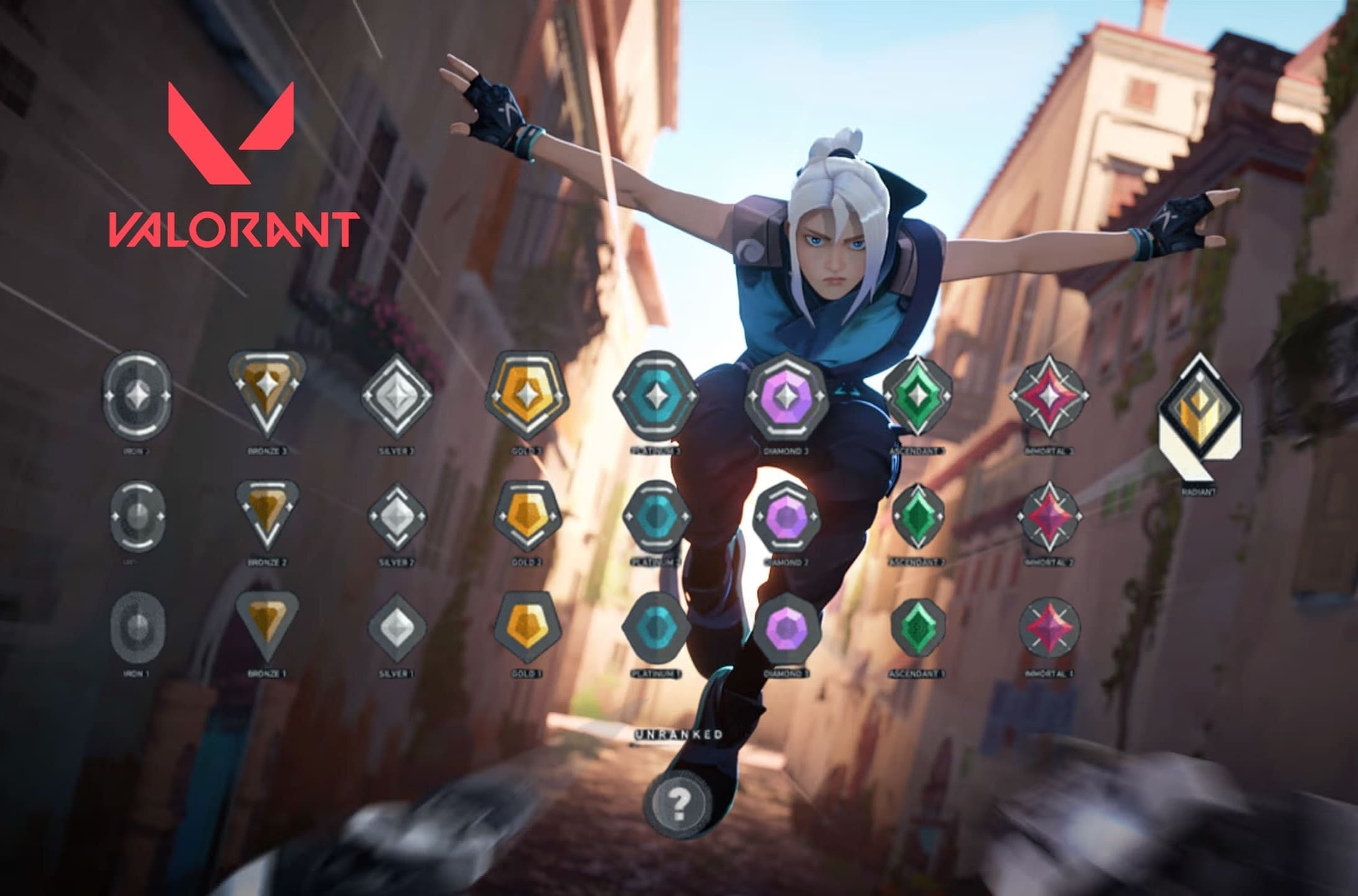
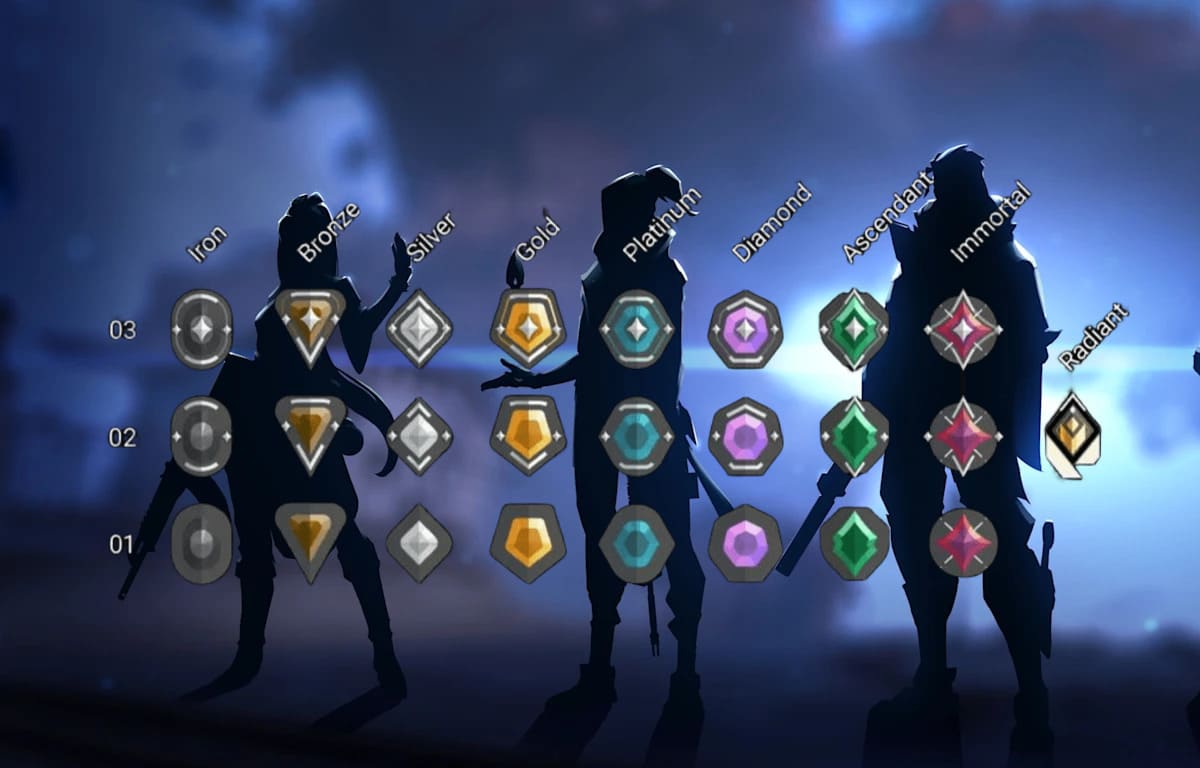
Valorant features nine main rank tiers where ranks are split into three divisions (except Radiant), creating 25 distinct ranks total. This Valorant tier structure provides frequent promotions that keep players motivated to climb through every rank.
The Valorant ranks order follows logical progression from Iron to Radiant, with each tier representing skill improvements. When examining Valorant ranks in order, you'll notice Riot Games created balanced tiers with enough players for healthy matchmaking while maintaining prestige at higher ranks.
| Rank Tier | Percentage of Players (2025) |
|---|---|
| Iron | 6.84% |
| Bronze | 18.81% |
| Silver | 23.12% |
| Gold | 20.97% |
| Platinum | 14.56% |
| Diamond | 9.13% |
| Ascendant | 5.27% |
| Immortal | 1.26% |
| Radiant | 0.04% |
Iron: The Starting Line
Iron represents your foundation in Valorant competitive play. Players struggle with basic movement, crosshair placement, and economic management. Focus on learning one agent thoroughly rather than switching constantly.
Bronze: Building Fundamentals
Bronze players understand basic agent abilities but use them reactively. Your crosshair placement improves, but consistency remains elusive. The key to rank up in Valorant from Bronze lies in mastering core mechanics one at a time.
Silver: The Average Player's Proving Ground
Silver hosts the largest player population, making it competitive yet achievable. Mechanical skill emerges here, but game sense lags behind. Consistent crosshair placement and basic map awareness become your tickets out, not flashy plays.
Gold: Developing Consistency
Gold marks where raw aim duels stop carrying games. Players possess decent mechanics but must develop teamwork and strategic depth. Learn to trade kills, support teammates with utility, and avoid unforced errors.
Platinum: The Gateway to High-Elo
Platinum represents true team-based Valorant where individual skill must integrate with strategy. Strong mechanics must combine with proactive adaptation. Start tracking enemy economy and ultimate abilities for precise predictions.
Diamond: Refining Strategy
Everyone in Diamond can aim effectively—mechanical skill becomes the baseline. The difference-maker becomes decision-making speed and executing complex strategies flawlessly. Minimizing mistakes becomes more important than highlighting plays.
Ascendant: Bridging the Gap
Ascendant serves as the final hurdle before elite tiers in Valorant, demanding near-professional consistency. Players here master their role completely but must now understand entire game flows, becoming leaders or reliable fraggers.
Immortal & Radiant: The Apex Predators
The immortal and radiant ranks represent Valorant's absolute pinnacle. Immortal encompasses roughly 1% of players, featuring near-professional skill levels with flawless mechanics and innovative strategies.
Radiant remains exclusive to the top 500 players per region—approximately 0.04% of the player base. The leap to Radiant isn't purely about mechanical skill; it's about innovation and setting meta trends rather than following them.
How Do Valorant Ranks Work: The RR and MMR System
Rank Rating (RR) Mechanics
Your visible rank operates on a 100 RR system that determines progression through tiers in Valorant. Starting at 50 RR in any new rank, you need to play effectively to reach 100 RR for promotion and avoid dropping below 0 RR for demotion. This rating system provides clear progression milestones.
Four factors determine your RR gains and losses:
- Win/Loss (primary factor)
- Round differential (performance modifier)
- Individual performance bonus (lower ranks only)
- MMR convergence (hidden adjustment)
Starting at 50 RR in Gold 1, a typical win grants +20 RR. However, winning 13-5 with strong performance while your matchmaking rating sits above your current rank could provide +25 or more. Focus on round differential—a 13-3 victory provides more RR than a 13-11 squeaker.
Understanding how Valorant goes about calculating these rewards helps optimize your climbing strategy. Performance bonuses matter most in lower tiers, while wins dominate higher ranks where team coordination matters more.
The Hidden MMR and Its Impact
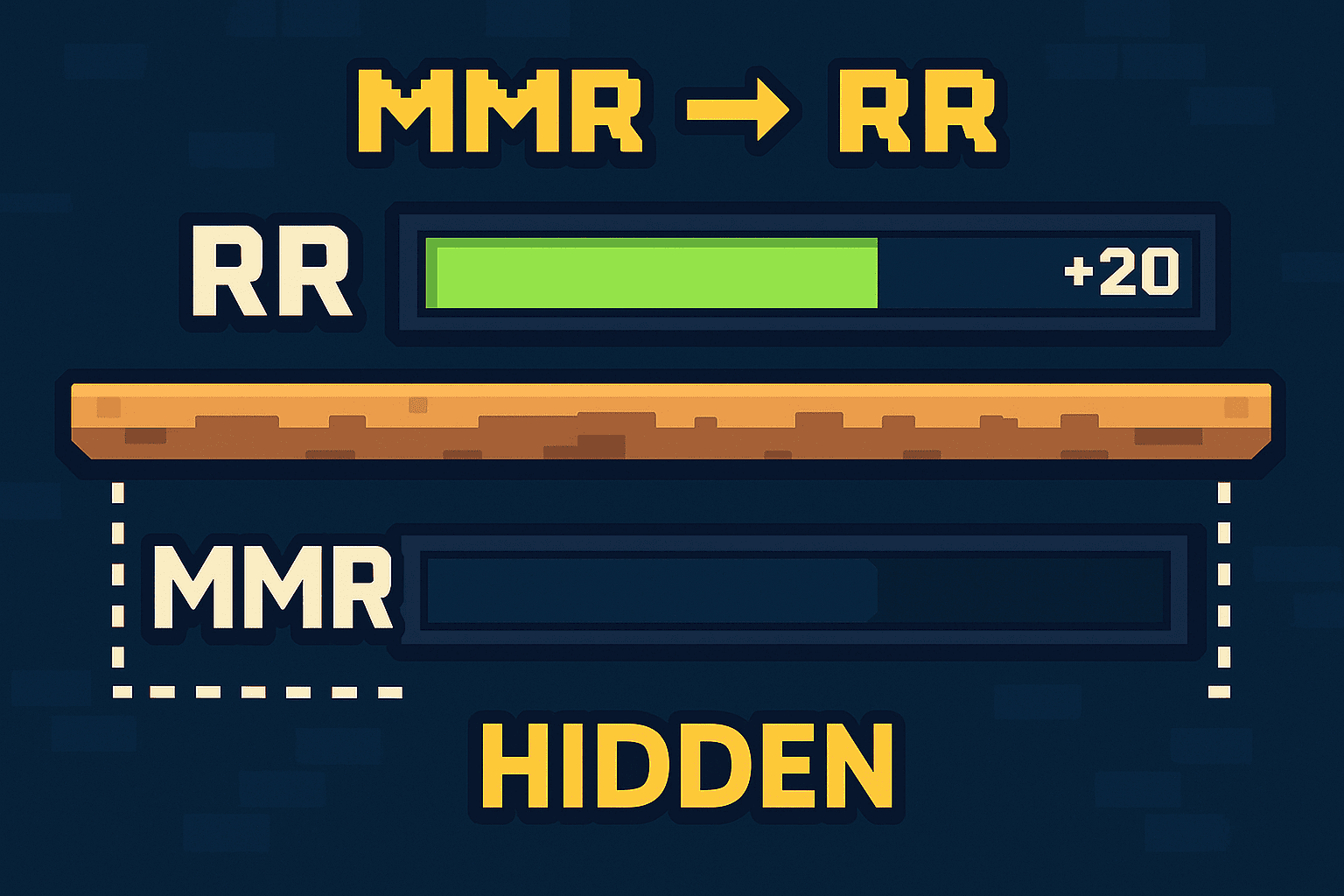
Think of MMR as your "true" skill level that the game believes you possess, while your visible rank acts as the public trophy. If your MMR exceeds your visible rank, the system provides extra RR to help you catch up quickly.
Your matchmaking rating operates similarly to ELO systems—it adjusts based on opponent quality and consistency. When your MMR and visible rank align closely, RR gains normalize. The strongest convergence occurs when your rank sits more than three tiers below your MMR.
Valorant Rank Distribution Analysis
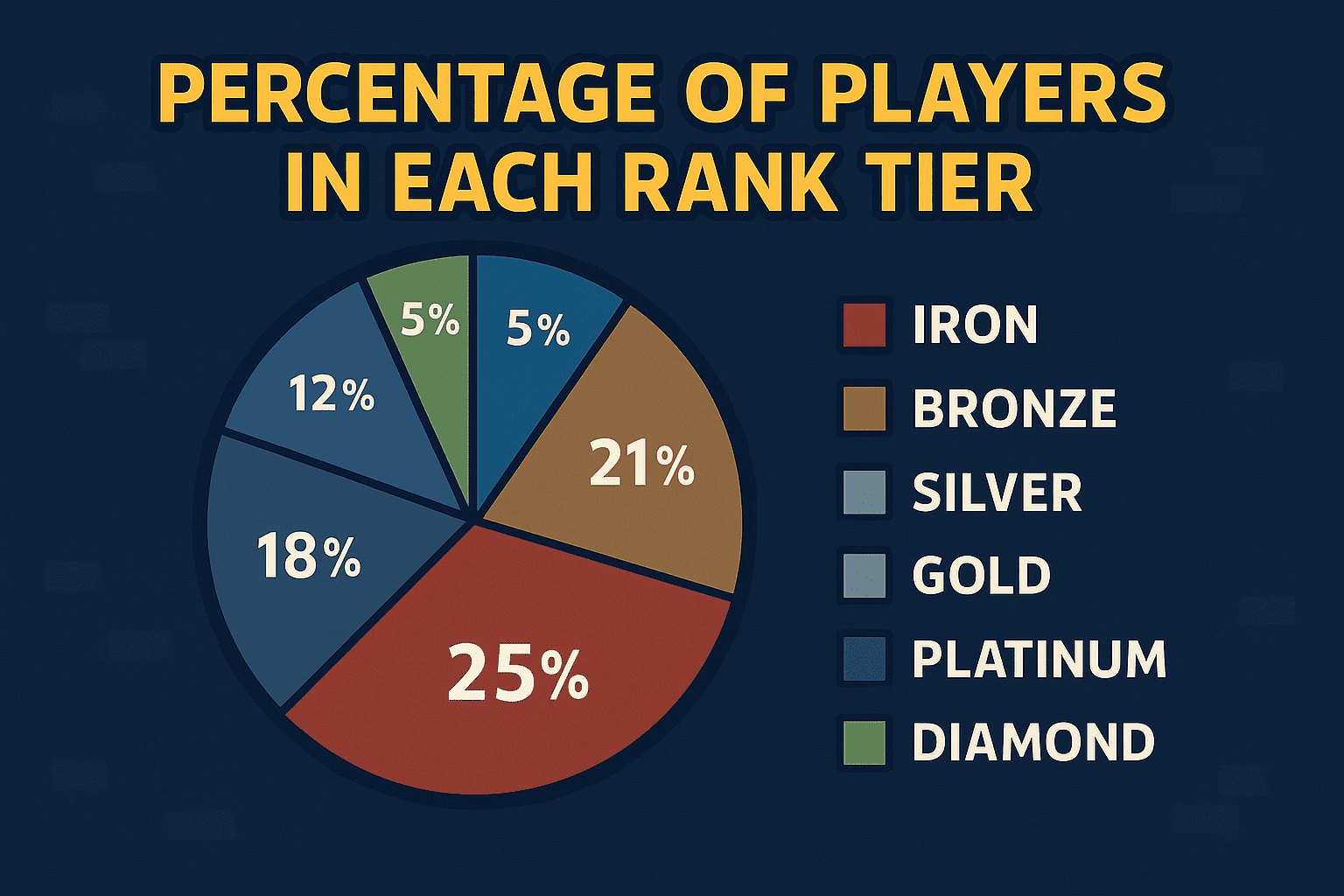
Current data reveals most players cluster in Silver and Gold tiers, forming Valorant's competitive backbone. Silver alone contains over 23% of players, making it the most populated rank tier.
If you've reached Platinum, you're better than approximately 75% of players. Diamond places you in the top 10%, while Ascendant and above represent the elite 6.5%. Understanding these percentages helps set realistic expectations—climbing out of Silver represents significant achievement requiring above-average skill development.
Using Rank Knowledge for Valorant Esports Betting
Your understanding of Valorant's ranking system provides valuable insights for analyzing professional matches. When you see a pro player peaked at Radiant with 1000+ RR, this indicates exceptional mastery translating directly to tournament performance.
Understanding MMR and RR systems gives insight into team form and individual consistency during competitive seasons. The immortal and radiant ranks especially matter when evaluating roster stability and competitive potential.
Key Analysis Points:
- Look for teams with consistently high-ranked players
- Consider recent rank changes as form indicators
- Evaluate individual player peak ranks vs. current performance
Put your Valorant ranking knowledge into practice by following VCT tournaments and other professional competitions on PLG.bet, where understanding player skill levels enhances your esports experience.
What Ranks Can Play Together: Party Restrictions Guide
Duo and Trio Queue Restrictions
Valorant implements rank restrictions to ensure fair matchmaking in smaller parties. For parties of two or three players, specific limitations prevent massive skill gaps that could ruin competitive integrity.
As a Gold player, you can queue with friends from Silver 1 up to Platinum 3. These restrictions ensure matches remain competitive while allowing friends with similar skills to play together.
| Lowest Rank in Party | Highest Allowed Rank |
|---|---|
| Iron-Bronze | Silver (any tier) |
| Silver | Gold (any tier) |
| Gold | Platinum (any tier) |
| Platinum+ | One tier above maximum |
Five-Stack Rules and RR Penalties
Five-player parties remove all rank restrictions, allowing any combination to play together. However, the system implements RR adjustments to compensate for potential unfairness.
Five-Stack Considerations:
- No rank restrictions apply
- Reduced RR gain for wide skill gaps
- Increased queue times possible
- Focus shifts to teamwork over individual performance
Proven Strategies to Rank Up Faster in Valorant
Fundamental Skills Development
Consistent rank progression requires focusing on skills that provide maximum competitive value. These fundamental areas matter most for advancing through the competitive ladder efficiently.
Skill Development Priorities:
- Crosshair placement at head level consistently
- Movement and positioning awareness
- Utility usage for team support
- Clear communication and callouts
Proper crosshair placement essentially provides free eliminations before engagements begin—it's the most impactful mechanical skill. Master economic management by understanding when to save credits, execute full buys, or attempt force-buy strategies.
Agent Selection and Role Mastery
Choose agents that complement your current skill level. In lower ranks, self-sufficient agents like Reyna or Phoenix provide more individual impact. In Platinum and above, information-gathering agents like Sova or Cypher become crucial for winning rounds strategically.
Recommended Agents by Role:
- Duelists: Jett, Reyna (lower ranks), Raze
- Controllers: Omen, Brimstone
- Initiators: Sova, Breach
- Sentinels: Killjoy, Cypher
Focus on mastering one agent per role thoroughly rather than playing multiple agents mediocrely.
When Do Valorant Ranks Reset: Understanding the System
Act and Episode Resets Explained
Valorant's 2025 Season system transitioned to a year-long structure with six Acts per season, each lasting approximately two months. The system now features one major reset at season start plus one midseason reset, replacing the traditional Episode-based structure.
The system eliminates frequent Act resets and maintains no rank decay for inactivity. Only season start and midseason require placement matches (5 each), while regular Acts 2-6 feature continuous progression without resets. This change provides more stable ranking progression throughout the year-long season structure, protecting players from rank decay penalties.
Reset Timeline:
- New Season: Hard reset, 5 placement matches required
- Midseason: Moderate reset, 5 placement matches
- Regular Acts (2-6): No rank reset, continuous progression
Placement Match Strategy
Approach placement matches with consistent gameplay rather than high-pressure mentality. The system rewards steady performance across all matches with more than one exceptional game followed by poor showings.
The act rank system tracks your highest-ranked wins throughout each competitive period. Your Valorant act rank reflects your peak achievement and consistency at that level.
Essential Placement Match Tips:
- Complete proper warm-up before starting
- Queue with a trusted duo when possible
- Focus on winning rounds through teamwork
- Select your most comfortable agents
Your Path to Ranking Success
Success in Valorant's competitive system requires understanding mechanics, developing fundamental skills, and maintaining a positive mindset. Your rank serves as progress symbol, but the continuous improvement journey provides real value.
Meaningful rank progression takes time and consistent effort. Focus on developing one skill area at a time rather than attempting everything simultaneously—this produces faster, more sustainable results.
Whether you're stuck in Silver or pushing for the immortal and radiant ranks, the same principles apply: deliberate practice, effective team coordination, and strategic thinking that adapts to different situations.
Your First 3 Action Items:
- Identify one fundamental skill to practice daily
- Learn one new utility lineup for your main agent
- Review one match recording weekly
Trust the process and enjoy the competitive journey. Your rank will follow naturally as your skills continue developing.