

Betting on NFL games starts with three simple choices: picking the winner with a moneyline, predicting the margin of victory using a point spread, or forecasting the combined score through totals. That is the core of how betting works in the National Football League, and once you understand these options, every other wager becomes easier to follow. You place these bets at a licensed sportsbook, compare odds, choose your stake, and track the result once the game is played.
The NFL sits at the center of sports betting. By the 2025 to 2026 season, legal sports betting is available in most US states, and professional football consistently attract the highest betting volume. The league’s fixed schedule, public injury reports, and massive data coverage make it more beginner-friendly than faster sports like basketball or niche markets with limited information.
In this guide, you will learn how NFL bets work, how odds are priced, and how to manage risk responsibly. You will also see practical examples that turn confusing numbers into clear decisions. By the end, you will know how to place smarter bets, not just more bets.
This article is built as a step-by-step roadmap. We start with explanations of bet types and odds. Then we move into spreads, moneylines, and totals with examples. You will learn bankroll basics and common mistakes to help you bet with confidence.
NFL Betting Basics
NFL betting basics start with understanding odds and how they guide every decision you make. Odds show how much you can win and how likely a result is, based on analysis from a bookmaker operating within regulated gambling markets. In NFL betting, American odds are the most common format. Negative odds like -200 mean you must risk 200 dollars to win 100, which signals the team is expected to win more often than not. Positive odds like +150 mean a 100-dollar bet returns 150 in profit, reflecting a less likely outcome.
For example, if the Kansas City Chiefs are listed at -180 against a weaker opponent, the odds suggest they are favored to win. If the Philadelphia Eagles sit at +140 in a tougher matchup, the market views them as underdogs with a realistic chance to surprise.
Odds also imply probability. A -200 line suggests roughly a two-thirds chance of winning, while +200 implies closer to one-third. These probabilities are not exact because bookmakers include a small margin called vig or juice. Vig is the built-in fee that ensures the sportsbook profits regardless of the outcome.
Once you understand how odds work, favorites and underdogs make sense.
Definition: Vig or Juice
Vig, also called juice, is the built-in fee sportsbooks include in odds. It slightly reduces true payouts and is how a sportsbook guarantees profit over time, regardless of game results.
Definition: Covering the Spread
Covering the spread means a team beats the point spread set by the sportsbook. A favorite must win by more than the spread, while an underdog can lose within the spread or win outright for the bet to cash.
Step-by-Step Guide to Betting on NFL
Betting on NFL games follows a simple process once you break it down into steps.
- Choose a sportsbook. This takes about ten minutes. Pick a licensed platform with clear regulation, competitive odds, solid user reviews, and reliable payouts. Online gambling platforms are popular because they offer mobile access, live lines, and fast account tools.
- Create and verify your account. Expect fifteen minutes. You will enter personal details and confirm your identity to meet legal gambling requirements.
- Learn the bet types. Spend twenty minutes reviewing moneylines, spreads, and totals so you know what you are selecting before placing a wager.
Pro Tip: Start with straight bets only. Avoid parlays until you understand pricing. - Pick your bet and calculate the payout. This step takes five minutes. A 100-dollar bet at -150 returns 66 profit. A 100-dollar bet at +120 returns 120 profit. A spread bet wins if your team covers the number.
- Place your wager. This is instant. Confirm stake, odds, and kickoff time before submitting.
- Track results and review. After the game, check outcomes and note what worked or failed.
Pro Tip: Use limits and cooling tools to avoid problem gambling habits.
Review closing lines and market movement weekly to understand how prices shift. This habit improves timing and patience over a full season, especially when injuries or weather change late in the week. Set a fixed stake size and never chase losses. Responsible planning keeps betting enjoyable and sustainable across the season. Stop when emotions rise and take breaks between weeks. Discipline matters more than predictions over long-term success.
Checklist before betting:
- Confirm sportsbook license
- Understand odds and payout
- Risk only affordable money
- Review injury news
- Track results consistently
Types of NFL Bets
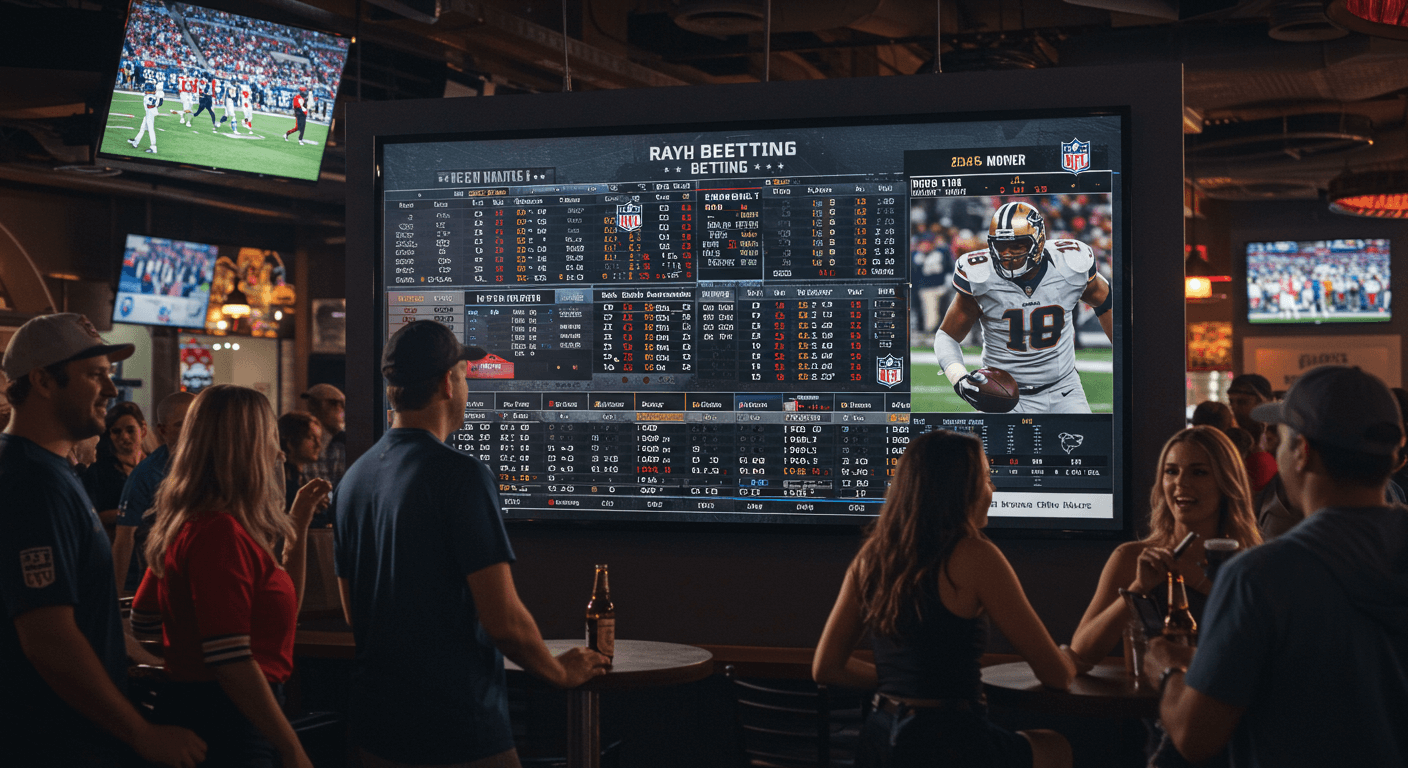
NFL betting offers several ways to wager on games, each with different risks and rewards. Understanding these options helps you choose bets that fit your knowledge level, budget, and goals before placing money on any matchup during the regular season.
Moneyline, Point Spread & Totals (Over/Under)
Moneyline bets are the simplest option. You pick the team you think will win outright. If a team is listed at +150 and you bet 100 dollars, you win 150 in profit and receive 250 total. Negative odds work the opposite way and require a higher risk for smaller returns.
Point spread betting balances mismatched teams by adding or subtracting points. A -3 favorite must win by four or more, while a +3 underdog can lose by two or still cash. If the final margin lands exactly on the number, the result is a push, and your stake is refunded. Key numbers like 3, 7, and 10 appear often because games commonly end there.
Totals, also called Over or Under, focus on combined points. If the line is 47.5, betting over wins at 48 or more. Weather, pace, injuries, and coaching style strongly affect total pricing.
Bookmakers apply vig, also known as juice, to every bet type, slightly reducing true odds.
| Bet Type | How It Works | Best For |
| Moneyline | Pick winner | Beginners |
| Point Spread | Bet margin |
Parlays, Prop Bets & Live Betting
Parlays combine multiple bets into one ticket, increasing payout while multiplying risk. A three-leg parlay might turn 100 dollars into 600, but all selections must win. In probability terms, odds are multiplied, not averaged. If each bet has a 50 percent chance, the combined chance drops to about 12 percent, which explains why only around 14 percent of three-leg parlays cash.
Risk Warning: Parlays look attractive, but favor the sportsbook over time.
Proposition bets focus on specific events within a game rather than the final score. Popular options include:
- Player props, such as passing yards or touchdowns
- Team props like total sacks
- Game props such asthe longest field goal
Their popularity mirrors fantasy football, where fans already track player performance closely.
Live betting allows wagers after kickoff, with odds changing every play. A common strategy is waiting for the first possession to finish before betting, when early nerves settle, and prices adjust. Another approach is betting totals after a fast opening drive inflates the number. This style rewards patience, discipline, and awareness rather than constant impulsive action alone.
Futures & Teasers
Futures bets focus on long-term outcomes rather than single games. The most popular option is wagering on the Super Bowl winner before the season begins. Preseason futures offer higher payouts but carry more uncertainty, while mid-season bets provide clearer information once injuries form and NFL Playoffs paths emerge. As teams clinch playoff spots, odds tighten, and value decreases.
Teasers are modified parlays that adjust point spreads in exchange for lower payouts. A common six-point teaser lets you move a minus seven favorite down to minus one or push a plus one underdog up to plus seven.
This works best when crossing key numbers like three and seven. For example, teasing two minus seven favorites down to minus one requires both teams to win outright. Teasers make mathematical sense only when the reduced odds fairly compensate for the extra probability gained by moving through those key ranges.
They are most effective in low total games with predictable scoring margins.
Understanding NFL Odds Formats
American odds are the standard format in US sports betting. They show how much you can win relative to a 100-dollar stake and allow easy comparison across markets. Odds are set by the bookmaker to balance action.
- Positive odds signal an underdog and show a profit on a 100 dollar bet. At +120, a 100 wager returns 120 profit and 220 total. At +200, a 100 bet wins 200 profit and pays 300.
- Negative odds represent favorites and show the required risk to win 100. At -110, you risk 110 to win 100 profit. At -150, you must risk 150 to earn 100.
Implied probability converts odds into a percentage chance. For positive odds, divide 100 by odds plus 100. For negative odds, divide odds by odds plus 100 to judge value.
Decimal and fractional odds appear outside the US, but platforms convert them automatically. Learning American odds first speeds decisions across football markets.
| Odds | Example | Result |
| +200 | 100 bet | 300 |
| -150 | 150 risk | 250 |
Positive odds formula: Positive odds: (Odds/100) × Stake = Profit.
NFL Betting Strategies & Tips
Successful NFL betting relies on strategy, not luck. As experience grows, bettors shift from guessing to using statistical probability and disciplined money management. Core ideas include line shopping for better prices, timing bets around market movement, and fading public opinion when lines inflate. Resources like Pro Football Reference help analyze matchups objectively. The sections below break these approaches into practical methods beginners and intermediate bettors can apply consistently and successfully today.
Beginner Strategies
Beginners should keep NFL betting simple and controlled.
- Start with single bets only. Straight wagers limit risk and make results easier to understand before moving to complex options.
- Focus on one bet type. Moneylines are ideal early because you only need to pick the winner.
- Keep stakes small. Risk one to two percent of your bankroll per bet to protect money during learning phases.
- Track every wager. Use a spreadsheet to record odds, stakes, results, and notes for honest self-review.
- Avoid chasing losses. Research matchups calmly and accept variance rather than forcing extra bets.
- Learn weekly schedules, injury reports, and weather updates before placing any wager each week consistently.
Bankroll Management
Your bankroll is the total amount of money set aside strictly for betting. Most bettors should risk between one and five percent per game, depending on confidence and experience. With a one-thousand-dollar bankroll, that means betting ten to fifty dollars on a single wager.
Many bettors use a unit system, where one unit equals one percent, to stay consistent. Never increase stake size during losing streaks, since variance is normal. Advanced bettors sometimes reference the Kelly Criterion, but beginners should keep sizing simple and disciplined at all times.
Bankroll rules: Set a fixed bankroll. Bet consistent units only. Never chase losses. Protect longevity and emotional control always carefully.
Using Statistics & Analysis
Math can help you win bets when used correctly. Statistics allow bettors to compare true probability against market prices and identify expected value where odds undervalue outcomes. Expected value simply means the long-term edge gained when risk and reward favor your position rather than emotion. Several NFL metrics consistently influence scoring and results.
- Red zone efficiency measuring touchdown conversion
- Turnover margin and pressure rates
- Yards per play on offense and defense
- Advanced metrics like DVOA and EPA
Matchups, injuries, weather, and coaching tendencies should always supplement numerical analysis. Data works best when combined with discipline, patience, and proper bankroll control principles. Resources such as Pro Football Reference provide historical context, but statistics guide decisions rather than guarantee wins.
NFL Key Numbers & Most Common Scores
Key numbers matter because NFL scoring creates repeated final margins. Games often land on 3, 7, and 10 due to the scoring system built around field goals and touchdowns with extra points. A field goal adds three points, while a touchdown plus conversion adds seven, shaping how bookmakers build spreads.
NFL Key Numbers by Frequency
| Margin | Approximate Frequency |
| 3 | About 14 percent |
| 7 | About 9 percent |
| 10 | About 6 percent |
Sportsbooks protect these numbers by setting lines just above or below them. That is why a spread of +7 offers more value than +6.5. With +7, you win if your team loses by exactly seven, which happens often. At +6.5, that common margin becomes a loss.
Practical application matters. If a team is listed at -6.5, waiting for -7 can improve long-term results even at slightly worse odds. Understanding key numbers helps bettors decide when to take points, lay points, or pass entirely. Over a full season, these small edges separate disciplined bettors from casual ones consistently overall.
Legal Aspects of NFL Betting
Important Legal Notice: As of December 2025, legal NFL betting continues to expand across the United States under state-by-state regulation rather than uniform federal law. Following the 2018 Supreme Court decision that removed the federal ban on sports betting, each state now decides whether to allow wagering, how it operates, and what rules apply.
Today, 39 states plus Washington, D.C., and Puerto Rico have legalized sports betting in some form, with 31 states offering mobile and online gambling at licensed sportsbooks. Missouri joined the list on December 1, 2025, after voter approval earlier in the year, and North Carolina earlier expanded online betting access.
Legal NFL betting typically requires bettors to be 21 years old or older in most states, though a few jurisdictions set the age at 18. Verification of age and identity is required by law before placing bets at any regulated sportsbook.
Responsible participation matters. Regulated operators include tools like deposit limits, self-exclusion, cooling-off periods, and wagering history reviews to help manage play safely.
Responsible Gambling Resources:
- Call 1-800-GAMBLER for confidential support
- Visit Gamblers Anonymous meetings for peer help
- Self-exclusion and limit-setting available through licensed sportsbooks
Avoid unregulated offshore betting sites, as they operate outside state laws and lack consumer protections enforced in licensed online gambling markets.
Online NFL Betting
Online NFL betting has become the preferred option for most bettors. Online gambling platforms offer convenience, better odds, shopping, and wider bet types than retail locations. A digital sportsbook allows mobile betting around the clock from anywhere legally permitted. Compared to a casino sportsbook with limited hours and locations, online platforms provide faster access, bonuses, and real-time markets during the NFL season, nationwide availability.
Best NFL Betting Apps & Legal Sportsbooks
Choosing the right app matters. A full comparison is available at PLG.BET for updated options. A quality sportsbook app should excel in mobile betting performance and pricing. Always compare odds since the same wager can differ by ten to fifteen points between books.
Key evaluation criteria include
- Proper licensing and regulation
- Competitive odds and low juice
- Wide bet variety and live markets
- Clean interface and fast loading
- Flexible deposits, withdrawals, and cash out
- Built-in bet tracking tools
Security support and reliability separate top apps.
State-Specific NFL Betting Laws
State laws vary widely. Nevada has long led legal betting with both retail and online options, while Michigan and Colorado offer full mobile wagering. Arizona also permits online sportsbooks through tribal compacts. In contrast, Texas and California still lack authorized NFL betting as of December 2025. Florida’s sports wagering remains limited by ongoing tribal and constitutional issues. Other states change quickly with new launches regularly, so always check current local rules before placing a wager under any legal gambling framework.
How to Start Legal NFL Betting
Starting legal NFL betting requires meeting age and location requirements set by your state. Before placing your first wager, you must verify identity and location through a licensed sportsbook. This approval process usually takes twenty-four to forty-eight hours and confirms eligibility to bet legally.
Age Verification & Legal Betting State Requirements
Most states require bettors to be twenty one or older, while Montana, Rhode Island, Washington DC, and Wyoming allow legal betting at eighteen. Sportsbooks enforce state jurisdiction using GPS-based geolocation, meaning you must be physically inside a legal state to place wagers.
Verification requires identity checks such as a driver’s license, passport, utility bill, and the last four digits of a SSN. Approval usually takes twenty four to forty eight hours. If verification fails, recheck details, enable location services, or contact support promptly.
Where to Bet on NFL Legally
You can bet on NFL games legally at retail or online sportsbooks. Retail options include casino sportsbooks, racetracks, and betting lounges offering cash wagers, immediate payouts, and a social atmosphere.
Online gambling platforms provide better odds, shopping bonuses, mobile access, and wider markets. Many bettors prefer online convenience while others enjoy in-person experiences. A full comparison of licensed options is available at PLG.BET to help choose the best sportsbook for your location based on state laws and personal preference.
Common NFL Betting Mistakes to Avoid
Even experienced bettors make mistakes, especially early. Learning to avoid common errors protects your money and improves long-term results. These mistakes are common because betting feels simple, but discipline separates entertainment from sustainable decision-making over a full season and across many wagers with patience, planning, and consistent self-control supported by clear rules and honest self-evaluation.
- Betting with emotions. Don’t wager on favorite teams out of loyalty. Do evaluate matchups objectively.
- Chasing losses. Don’t double bets after losing. Do accept variance and stick to planned stakes.
- Ignoring bankroll management. Don’t risk random amounts. Do use fixed units and percentages.
- Misusing parlays. Don’t chase big payouts without understanding math. Do learn probability before combining bets.
- Skipping line shopping. Don’t accept the first price you see. Do compare odds across sportsbooks.
- Betting without research. Don’t rely on headlines. Do review injuries, matchups, and trends.
Warning: If betting causes stress, secrecy, or financial pressure, seek help for problem gambling early.
