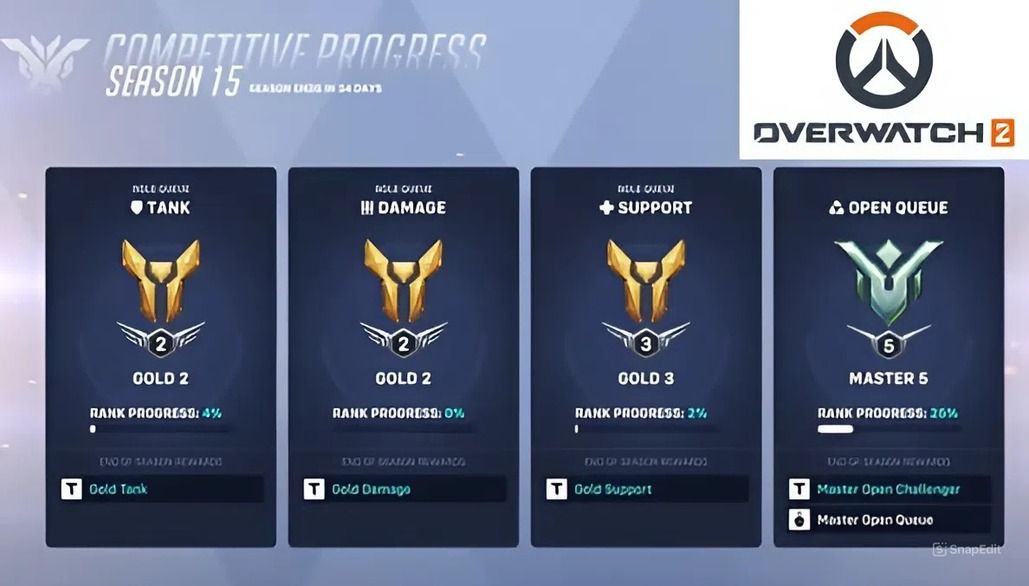
Overwatch 2 ranked system has its own complexities. Since Season 9's competitive overhaul transformed how players climb the ranks, the competitive ranking system has significantly evolved. This comprehensive guide explains everything from placement matches to reaching the coveted Top 500, offering insights into the current Overwatch 2 competitive environment.
The Complete Hierarchy of All Ranks in Overwatch 2
The Overwatch 2 ranks in order represent a carefully structured progression system that separates players across distinct skill tiers. Understanding these levels is crucial for anyone serious about competitive play in Overwatch. Across multiple seasons, the distribution of players within Overwatch 2 ranks has shown how each tier creates progressively more challenging competitive matches as players advance.

Here's the complete breakdown of all ow2 levels:
- Bronze (5-1)
- Silver (5-1)
- Gold (5-1)
- Platinum (5-1)
- Diamond (5-1)
- Master (5-1)
- Grandmaster (5-1)
- Champion (5-1)
- Top 500 (Leaderboard)
Each level houses approximately 10-15% of the player base, though Platinum and Gold tend to have the highest concentration. The introduction of Champion as a new rank has refined the distribution at higher levels, separating the elite from the truly exceptional. Each tier in the Overwatch 2 ranks presents unique challenges — Bronze emphasizes mastering basic mechanics, while Diamond and higher demand advanced game sense and strong competitive teamwork.
The Top 500 isn't technically a rank but rather an exclusive leaderboard showcasing the best players in each region. These top 500 players represent less than 1% of the competitive playerbase, making it the ultimate achievement in Overwatch.
Skill Divisions and Their Significance

Within each level, the numerical divisions from 5 being the lowest to 1 being the highest create incremental progression goals. This division system makes climbing feel more achievable. The jump from division 2 to 1 in any Overwatch 2 rank is particularly challenging, as players are often matched against opponents from the next competitive tier.
The visual distinction between divisions is subtle but meaningful — each number shows a different amount of progression indicators on your icon. Division 3 in the Overwatch 2 ranks is often where most players stabilize after placement matches, while divisions 5 and 1 mark the extremes of each competitive skill tier.
How the Overwatch 2 Competitive Ranks System Works
The ranked system works through a sophisticated algorithm that evaluates multiple performance factors beyond simple wins and losses. In Overwatch 2 competitive, the ranking system balances individual performance with overall team outcomes to determine each player’s class. The transition from the old SR system to the current tier-based approach has made progression more transparent, though the underlying MMR still drives matchmaking.
SR in Overwatch 2 technically doesn't exist anymore — it's been replaced with visible level progression bars that update after every match. However, many veteran players still use SR terminology colloquially when discussing ranks. The system now provides immediate feedback on your level progress, showing exactly how each competitive match impacts your standing.
- Performance evaluation after each match
- Comparison against players in your skill bracket
- Application of rank modifiers
- Immediate rank adjustment
- MMR recalibration behind the scenes
Old SR System vs. New Tier System
| Before: SR (Skill Rating) System |
|
| Now: Tier-Based Rank System |
|
Placement Matches and Initial Rank Determination

Placement matches serve as your entry point into competitive play each new competitive season. These 10 calibration games analyze your performance to establish your initial rank. In Overwatch 2 competitive, placement matches often result in conservative rankings, usually placing players one or two divisions below where they eventually stabilize.
Tips for Maximizing Placement Match Results:
- Play your strongest heroes consistently
- Communicate with your team actively
- Focus on staying alive rather than risky plays
- Complete all 10 matches in similar conditions
- Warm up in quick play before starting placements
The placement matches system underwent significant changes with the rank reset that occurred in Season 9. Now, your previous season's performance has less weight, making each competitive season feel like a fresh start. In Overwatch 2 competitive calibration games, the system now provides real-time updates showing projected rank after each match, reducing the anxiety of waiting until all 10 games are complete.
Understanding Rank Modifiers in Overwatch 2
Grade modifiers dramatically impact how quickly you gain or lose grade in Overwatch. These modifiers provide transparency into why some matches affect your grade more than others. Understanding each modifier has been crucial to my climbing strategy.
| Modifier | Icon | Effect on Rank Progress |
|---|---|---|
| Win Streak | 🔥 | +20-30% bonus progression |
| Loss Streak | ❄️ | -20-30% increased losses |
| Calibration | 🎯 | ±40% adjustment period |
| Uphill Battle | ⛰️ | +35% for unexpected wins |
| Expected | ✓ | Standard progression |
| Reversal | 🔄 | +25% comeback bonus |
Win or loss streaks significantly amplify your rank changes. In Overwatch 2 competitive, five-game win streaks can rapidly propel players through entire divisions within the grades. The Uphill Battle modifier rewards defeating higher-ranked opponents - some of my most memorable level gains came from these David-versus-Goliath victories where our team overcame a significant skill disadvantage.
Role Queue vs. Open Queue: Different Approaches to Overwatch 2 Comp Ranks
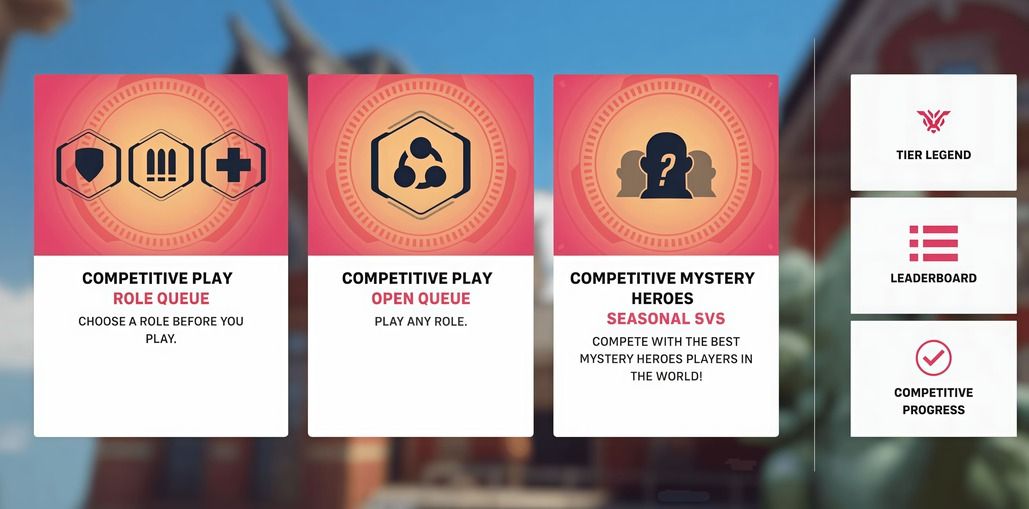
The two competitive game modes offer vastly different experiences in ranked mode. Role Queue assigns you a separate rank for each role (Tank, DPS, Support), acknowledging that your skills may vary across positions. Maintaining three different grades in Role Queue helps identify your strongest role while providing variety when one role becomes frustrating.
Open Queue provides one universal rank regardless of hero selection, creating a more flexible but chaotic environment. Without role restrictions, team compositions can range from standard 2-2-2 to wild experiments like four DPS. I've found Open Queue rewards adaptability - being willing to switch roles mid-match based on team needs often determines victory.
The meta differs significantly between modes. Role Queue enforces structured play with guaranteed team composition, while Open Queue often devolves into aggressive, DPS-heavy strategies. Reaching Diamond in both Overwatch 2 competitive modes demonstrates that skills from one mode do not always transfer directly to the other.
How to Unlock Competitive Mode in Overwatch 2
Getting access to competitive requires meeting specific prerequisites that differ for new and returning players. New players must win 50 quick play games before unlocking competitive mode - a requirement that ensures basic game knowledge before entering ranked mode. Veterans from Overwatch 1 receive immediate access, recognizing their existing experience.
Steps to Unlock Competitive:
- Complete First Time User Experience (FTUE) tutorial
- Win 50 Quick Play matches (new players only)
- Verify phone number via SMS Protect
- Reach account level 25
- Access Competitive Play menu
| The phone verification requirement has significantly reduced smurfing in competitive. In Overwatch 2 competitive, the barriers in place discourage players from creating multiple accounts to manipulate ranks, even when used for role practice. The 50-win requirement takes approximately 15-20 hours of gameplay, ensuring new players understand basic mechanics before impacting competitive matches. |
From Competitive Rankings to Esports Excellence
Understanding the competitive ranking system enhances appreciation for professional Overwatch play. When you see a pro player who peaked at Champion rank, you understand the mechanical precision and game sense required. The rank knowledge helps evaluate team performance during tournaments, as you recognize the difficulty of plays that might seem routine to casual viewers.
Watching how rank modifiers work in your own games provides insight into tournament momentum swings. Teams on win streaks build confidence similar to ladder climbing, while loss streaks can spiral even at the professional level. This understanding of competitive progression mechanics makes following the Overwatch League more engaging.
Tips for Analyzing Professional Matches:
- Compare hero picks to your rank's meta
- Notice positioning differences from ranked play
- Observe ultimate economy management
- Study communication patterns
- Identify adaptations between maps
Put your competitive insights into practice by following Overwatch League and top-tier tournaments on plg.bet/bets, where knowledge of ranks and team strategies makes every esports match more engaging.
Competitive Rewards in Overwatch 2

The competitive rewards system incentivizes consistent ranked mode participation through CP accumulation. You earn CP for every competitive match — 15 for wins and 5 for losses — allowing steady progress toward cosmetic goals.
1. Weapon Skins
- Golden Weapons — legacy reward, 3,000 Legacy CP.
- Jade Weapons — new rank reward (Season 9+), 3,000 CP, ultra-exclusive.
2. Competitive Points (CP)
- Earned per match: 10 CP (win), 5 CP (draw).
- Bonus CP from match progress milestones.
- Seasonal “Competitive Drives” offer large CP packs and unique signatures.
3. End-of-Season Rewards
- Bonus CP based on rank (Bronze ~65 up to Top 500 ~1,750+).
- Seasonal titles (e.g., Diamond Challenger).
4. Prestige Cosmetics
- Top 500 Animated Icon & Spray — ultimate status symbols.
Seasonal player icons, sprays, and exclusive variants.
Competitive Group Restrictions in Overwatch 2
Group restrictions ensure fair competitive matches by limiting rank disparities between party members. These limitations, based on your rank, prevent high-skilled players from boosting lower-ranked friends. From personal experience trying to play with friends across different skill tiers, these restrictions can be frustrating but ultimately maintain match integrity.
| Your Rank | Maximum Rank Difference |
|---|---|
| Bronze - Diamond | Within 2 major ranks |
| Master | Within 1 rank |
| Grandmaster | Within 3 divisions |
| Champion | Within 3 divisions |
When players are unable to queue together for Overwatch 2 competitive, Open Queue offers slightly more relaxed restrictions, while Quick Play helps maintain team chemistry. Upcoming seasonal changes aim to provide greater flexibility without compromising competitive integrity.
Tips for Climbing the Ranks in Overwatch 2
Successfully climbing ranks requires more than mechanical skill — it demands mental fortitude and strategic thinking. Focus on dying less rather than getting more eliminations; surviving means more opportunities to impact fights and gain or lose grade based on performance rather than respawn timers.
Top 5 Climbing Strategies:
- Master 2-3 heroes per role before expanding
- Review deaths to identify positioning errors
- Communicate ultimate status constantly
- Take breaks after two consecutive losses
- Focus on your gameplay, not teammates'
| A major breakthrough in Overwatch 2 competitive rank progression often comes from recognizing tilt patterns. Data shows that factors like fatigue can reduce win rates — for example, late-night play sessions may cause performance drops. Adjusting play schedules can significantly improve climbing rates through tiers such as Platinum into Diamond. |
Rank-Specific Strategies: What Are the Ranks in Overwatch 2 Really Like?
Each grade in Overwatch has distinct characteristics that require adapted strategies. Bronze and Silver focus on basic mechanics — simply staying alive and grouping up wins games. Gold introduces basic ultimate economy, while Platinum players begin coordinating combos. Diamond represents the mechanical skill ceiling for most players, where game sense becomes paramount.
Bronze/Silver Strategy:
- Focus on high-value heroes like Moira or Reaper
- Stay with your tank always
- Use natural cover extensively
Gold/Platinum Strategy:
- Track enemy ultimates
- Coordinate with one teammate minimum
- Master off-angles and flanking routes
Diamond+ Strategy:
- Perfect ability cycles
- Shotcall for your team
- Adapt hero picks mid-match
Extensive play across the Overwatch 2 ranks highlights how differently the competitive game feels at each level. Platinum often resembles organized chaos, while Diamond matches play out more like chess, with calculated and strategic engagements.
Mechanical Skills vs. Game Sense: What to Focus On
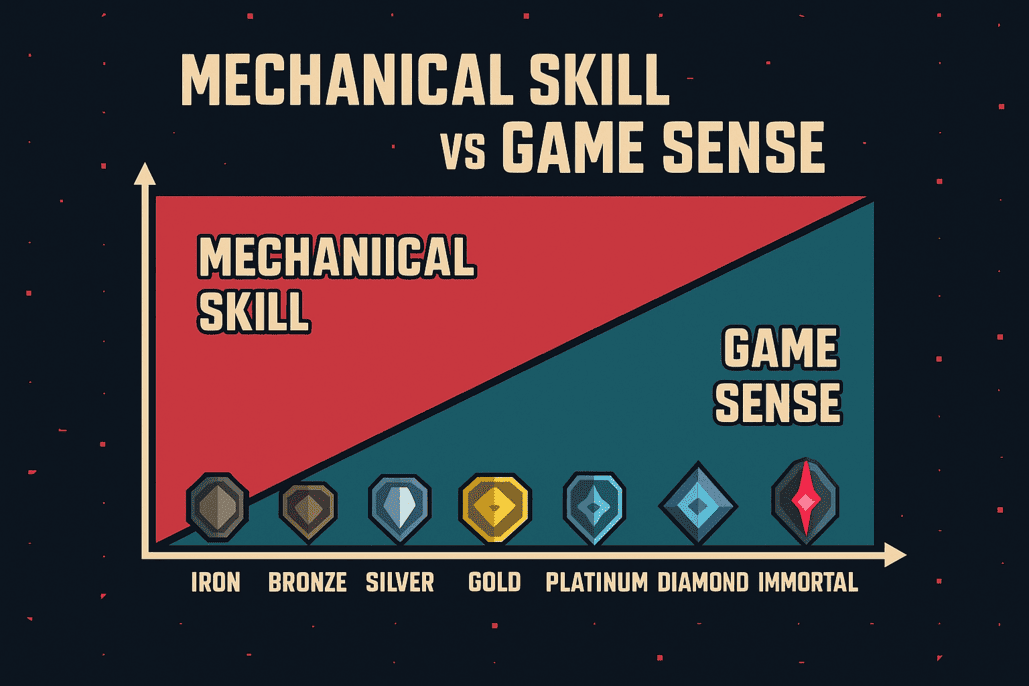
In Overwatch 2 competitive, the balance between mechanical skill and game sense shifts noticeably as players climb ranks. Below Platinum, raw mechanics can often carry games, with exceptional aim sometimes pushing players into Diamond. At Master and higher, however, success depends on advanced understanding of win conditions, ultimate economy, and macro positioning.
To sharpen skills for Overwatch 2 competitive, a mix of aim training and analytical tools can accelerate improvement:
|
Recent Changes to Overwatch 2's Competitive System
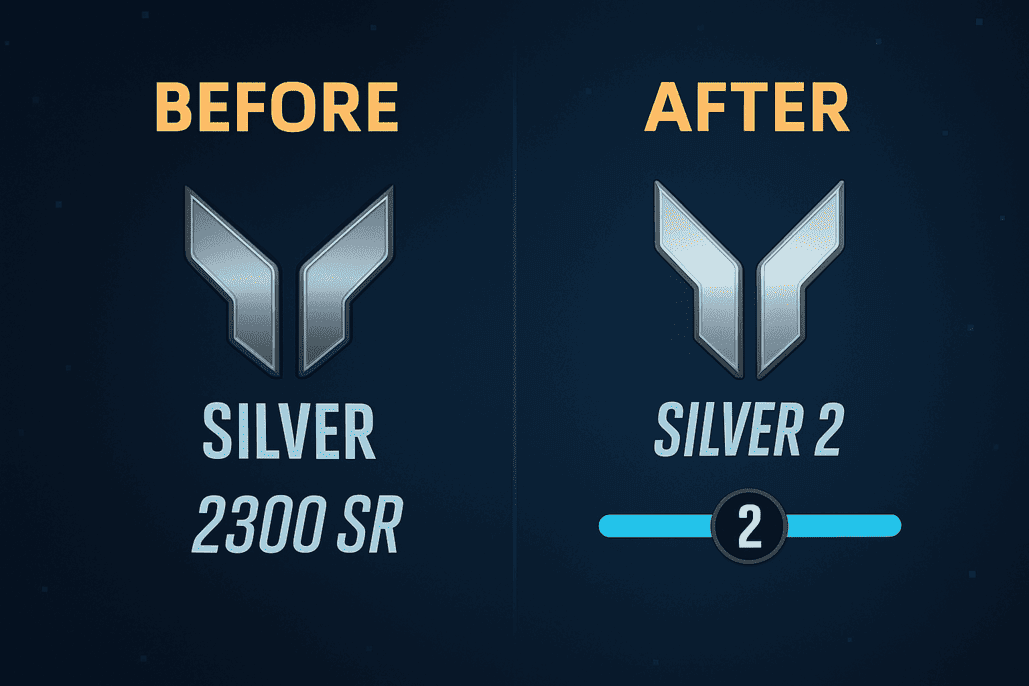
The rank reset and competitive rework in Season 9 fundamentally transformed Overwatch 2's competitive landscape. The complete grade reset redistributed the entire playerbase, addressing years of rank inflation. The rework in Overwatch 2 introduced immediate level updates after every match, replacing the previous system of updates every seven wins or 20 losses.
Additional Season 9 changes included refined grade modifiers and improved transparency in the competitive system. The update addressed longstanding community complaints about opaque progression. The current implementation provides clearer feedback on performance impact, though some mystery remains around MMR calculations.
The timeline of major changes shows consistent refinement:
- Season 9: Complete rank reset and system overhaul
- Season 10: Group restriction adjustments
- Season 11: Introduction of Jade weapons
- Season 12: Competitive Mystery Heroes limited event
The Relationship Between Visible Rank and Hidden MMR

Your visible rank and hidden MMR often diverge, creating confusing match and rank experiences. MMR adjusts gradually based on long-term performance, while visible grade can swing dramatically with streaks. The grade information screen shows your visible progression, but MMR determines your actual matches.
In Overwatch 2 competitive, players often encounter “MMR hell,” where wins yield minimal rank gains because matchmaking rating has not yet caught up to performance. Conversely, after breaks, matches can remain relatively balanced despite rank decay, since MMR decreases more gradually.
Through extensive play in Overwatch 2 competitive, several misconceptions about matchmaking rating (MMR) have proven false:
|
Differences in Gameplay Across the Ranks
The competitive game transforms completely across different ranks. Bronze matches resemble team deathmatch with objectives as afterthoughts. By Platinum, teams execute basic strategies like dive compositions. Diamond and above features complex macro play with planned rotations and resource management.
Communication quality scales with rank dramatically. Bronze features minimal callouts, Gold introduces basic target calling, while Master lobbies coordinate complex strategies. The pace accelerates at higher ranks - Platinum team fights last 30 seconds, while Grandmaster teams disengage and reset within 10 seconds of lost fights.
Future of Competitive Overwatch
The competitive future looks promising with continued system refinements and new events like the competitive drive event. The new event called competitive drive introduces alternative ranking experiences, testing innovations before potential integration into standard competitive. The next competitive drive event promises unique modifiers that could reshape how we approach ranked mode.
My hopes for future improvements include separate MMR decay rates for different roles, expanded Top 500 to recognize more elite players, and seasonal rank rewards beyond CP. The competitive ecosystem continues evolving based on community feedback, suggesting ongoing improvements to the climbing experience.